DISCLAIMER — Not financial advice. Educational content only, not an offer or solicitation to buy or sell any security. Biotech and small/mid-cap stocks are highly speculative and volatile and can result in a partial or total loss of capital. Do your own research and consult a licensed advisor where appropriate. / Contenuti a solo scopo informativo e didattico, non costituiscono consulenza finanziaria né offerta o sollecitazione al pubblico risparmio ai sensi delle normative CONSOB e SEC. Le azioni biotech e le small/mid cap sono strumenti altamente speculativi e volatili e possono comportare la perdita parziale o totale del capitale investito. Si raccomanda di effettuare sempre le proprie ricerche e, se necessario, di rivolgersi a un consulente abilitato.

Merlintrader Trading Pub
Biotech catalyst news and analysis. FDA PDUFA tracker
Space · Defense · AI Sector Hub
Space, Defense & AI Stocks Hub 2026: The New Infrastructure Race
Space systems, defense technology and artificial intelligence are increasingly converging into one of the most important strategic investment themes of the decade.
The market is no longer looking at space, defense and artificial intelligence as three completely separate categories. Satellites need AI. Defense systems need autonomous software. Drones need secure supply chains. Military planning increasingly depends on data, sensors, cloud infrastructure and real-time analytics. Space infrastructure is becoming more relevant for national security, and AI infrastructure is becoming more relevant for both commercial and defense applications.
That convergence is why this sector deserves a dedicated hub. The story is not simply about rockets, fighter jets, chips or software in isolation. It is about the emergence of a broader strategic technology stack where aerospace, defense, data, autonomy, orbital infrastructure and AI computing increasingly overlap.
This does not mean every company tied to space, defense or AI is automatically attractive. The sector includes mature prime contractors, speculative small-cap space names, drone companies, quantum and AI infrastructure plays, satellite operators, launch providers, defense software platforms and semiconductor leaders. Their risk profiles are very different.
Some companies already generate large recurring revenue from government and defense contracts. Others are still pre-profit, early-stage or highly dependent on financing. Some names trade like industrial compounders. Others trade like retail-driven momentum stocks. Some are real infrastructure leaders. Others may only be riding the theme.
This page is designed as a long-term reference point for readers who want to follow the space-defense-AI ecosystem in a structured way. The goal is not to promote the sector blindly, but to separate durable trends from short-term hype, and to map the companies that could matter most as the next infrastructure cycle develops.
What this hub will cover
- Major space, defense and AI infrastructure themes
- Public companies exposed to launch, satellites, drones, autonomy and defense software
- The difference between mature contractors and speculative emerging players
- Government spending, geopolitical risk, earnings quality and commercial execution
How this page approaches the sector
- With a neutral, data-aware and risk-aware perspective
- Without treating every AI or defense headline as structural proof
- Without assuming all space stocks benefit from the same catalysts
- With attention to contracts, cash burn, dilution, margins and long-term positioning
The objective is simple: to build a practical hub for investors and traders who want to track the companies shaping the next phase of space, defense and AI infrastructure without losing sight of valuation, execution and balance-sheet risk.
Sector History
From Aerospace Giants to AI-Enabled Defense Systems
The space-defense-AI theme did not appear overnight. It is the result of several long-running cycles that are now converging: traditional defense spending, commercial space development, drone warfare, satellite infrastructure, AI acceleration and geopolitical rearmament.
For decades, the defense market was dominated by large prime contractors and long-cycle government procurement. Companies such as Lockheed Martin, Northrop Grumman, RTX, General Dynamics and L3Harris built their models around major programs, defense budgets, aircraft, missiles, sensors, radar, classified systems and government contracts.
At the same time, the commercial space industry developed through a very different path. Launch companies, satellite operators and space infrastructure players attempted to reduce costs, increase launch cadence and create new markets around communications, Earth observation, broadband, national security and space-based data.
Phase 1
The old defense model: scale, contracts and prime contractors
The traditional defense sector was built around long-duration programs, high barriers to entry and deep government relationships. Prime contractors benefited from procurement cycles, national security priorities and complex systems that smaller companies could not easily replicate.
This model remains important. Large defense companies still anchor the sector because governments continue to need aircraft, missile defense, naval systems, sensors, communications and classified capabilities. But the market is now adding a new layer on top of that legacy structure.
Phase 2
The commercial space wave: launch, satellites and orbital infrastructure
Commercial space changed the market’s imagination. Investors began to look beyond traditional aerospace and toward launch services, reusable systems, small satellites, Earth observation, satellite communications, space manufacturing and future orbital infrastructure.
The challenge is that commercial space is capital intensive. Many companies need years of development before reaching scale, and the gap between a compelling mission and a sustainable business model can be wide.
Phase 3
The drone and autonomy cycle: software enters the battlefield
Drones, autonomous systems, counter-drone technology and battlefield software have changed how investors think about defense innovation. The market increasingly understands that the future of defense is not only about large platforms, but also about smaller, faster, cheaper and more intelligent systems.
This is where AI becomes central. Autonomous navigation, target recognition, sensor fusion, mission planning, logistics, communications and decision support all depend on software and data infrastructure.
Phase 4
The current phase: convergence of space, defense and AI
The current market phase is defined by convergence. Satellites provide data. AI interprets it. Drones act on it. Defense networks distribute it. Cloud and edge systems process it. Launch providers and space infrastructure companies make the orbital layer more accessible.
This creates a more complex but potentially more powerful investment map. The winners may not be only the largest defense contractors or the loudest space startups. They may be the companies that sit at the critical points where hardware, software, data, autonomy and national security meet.
The history of the sector is not a straight line from defense to space to AI. It is a convergence story. The next cycle may reward companies that can combine real contracts, advanced technology, execution discipline and strategic relevance.
Market Drivers
What Could Drive the Space-Defense-AI Theme in 2026 and Beyond
This sector is driven by more than hype. The major catalysts include geopolitics, defense budgets, launch demand, satellite data, drone adoption, AI infrastructure and the growing need for resilient supply chains.
Structural drivers
- Geopolitical rearmament: higher defense urgency can support procurement, modernization and readiness spending.
- Drone warfare: growing demand for drones, counter-drone systems, autonomy and battlefield intelligence.
- Space as national security infrastructure: satellites, communications, surveillance and orbital resilience are becoming strategically critical.
- AI-enabled defense: software, data fusion, autonomy and decision systems are becoming more central to defense modernization.
- Supply-chain security: governments and companies increasingly care about domestic or allied production capacity.
What still creates risk
- Long procurement cycles: government contracts can take time and may not convert quickly into revenue.
- Capital intensity: many space and aerospace companies require large investment before profitability.
- Dilution risk: speculative companies may need repeated financing.
- Execution delays: launch, manufacturing, certification and flight-test schedules can slip.
- Valuation risk: strong themes can attract excessive pricing before fundamentals catch up.
The most important distinction is between narrative and funded demand. A company can be exposed to a powerful theme and still fail to create shareholder value if contracts are delayed, margins are weak, cash burn is too high or dilution offsets operational progress.
On the other hand, companies that can convert strategic relevance into funded contracts, recurring revenue, defense programs, software adoption or commercial scale may be able to stand out in a sector where many stories are still early.
The key takeaway is that space, defense and AI should not be treated as one automatic bull trade. The theme is powerful, but the companies must still be judged on contracts, cash, execution, margins, customer quality and capital discipline.
Sector Map
The Space, Defense & AI Landscape: A Practical Market Map
This is not one sector. It is a connected ecosystem made up of large contractors, emerging defense-tech companies, launch providers, satellite operators, drone platforms, AI software names and semiconductor infrastructure leaders.
Defense primes and major contractors
These are the large, established companies with deep government relationships, major programs and long defense cycles. They tend to be less speculative, but also less explosive than small-cap defense-tech names.
LMTNOCRTXGDLHXBA
Defense tech, autonomy and drones
This group is more directly tied to the modernization of defense through autonomy, software, drones, counter-drone systems, battlefield intelligence and faster procurement models.
PLTRAVAVKTOSRCATUMACONDS
Space infrastructure and launch
These companies are tied to launch services, space systems, orbital infrastructure, satellite manufacturing, space logistics and the broader commercialization of the space economy.
RKLBLUNRASTSPLMDAIFJET
AI infrastructure and compute layer
AI infrastructure supports both commercial and defense use cases. Semiconductors, data centers, cloud, networking and advanced compute are increasingly part of the national-security technology stack.
NVDAAMDAVGOTSMASMLSMCI
The key is that these groups should not be evaluated with the same framework. A mature defense contractor is judged on backlog, margins, procurement visibility and capital returns. A small-cap space company may be judged on launch cadence, liquidity and contract conversion. An AI infrastructure company may be judged on demand durability, capex cycles and competitive positioning.
That is why this hub separates the sector into practical groups. The goal is to help readers understand not only which tickers belong to the theme, but also why they behave differently in the market.
Ticker Universe
Main Space, Defense & AI Tickers Traded by U.S. Investors
The space-defense-AI universe includes mega-cap technology leaders, large defense contractors, mid-cap aerospace suppliers and highly speculative small-cap names. Separating them by market role helps avoid treating the whole theme as one uniform trade.
Defense & Aerospace Majors
LMT — Lockheed MartinNOC — Northrop GrummanRTX — RTX CorporationGD — General DynamicsLHX — L3Harris TechnologiesBA — BoeingHII — Huntington IngallsTXT — Textron
Defense Tech / Drones / Autonomy
PLTR — Palantir TechnologiesAVAV — AeroVironmentKTOS — Kratos DefenseRCAT — Red Cat HoldingsUMAC — Unusual MachinesONDS — Ondas HoldingsSOUN — SoundHound AIBBAI — BigBear.ai
Space / Satellites / Launch
RKLB — Rocket LabLUNR — Intuitive MachinesASTS — AST SpaceMobilePL — Planet LabsFJET — Starfighters SpaceSIDU — Sidus SpaceSPIR — Spire GlobalSATL — Satellogic
AI Infrastructure / Semiconductors
NVDA — NVIDIAAMD — Advanced Micro DevicesAVGO — BroadcomTSM — Taiwan SemiconductorASML — ASML HoldingSMCI — Super Micro ComputerARM — Arm HoldingsMU — Micron Technology
ETFs and broader baskets
ITA — iShares U.S. Aerospace & Defense ETFXAR — SPDR S&P Aerospace & Defense ETFUFO — Procure Space ETFARKX — ARK Space Exploration & Innovation ETFBOTZ — Global X Robotics & AI ETFAIQ — Global X Artificial Intelligence & Technology ETF
This ticker universe is designed as a practical starting point. Some names are mature cash-generating companies. Others are speculative, volatile, financing-sensitive or heavily narrative-driven. The goal is to map the opportunity set without pretending all tickers carry the same risk.
Cycle Analysis
Why This Cycle May Be Different — Or Why It Could Still Disappoint
Space, defense and AI are all powerful themes, but powerful themes do not automatically create good investments. The next phase will likely depend on which companies convert strategic relevance into revenue, contracts and durable margins.
Why this cycle could be different
- Defense modernization is increasingly tied to software, data and autonomy
- Space is becoming part of national security infrastructure
- AI infrastructure is now central to both commercial and government demand
- Drones and counter-drone systems are moving from niche to strategic priority
- Geopolitical pressure may support multi-year procurement and readiness spending
Why it may still disappoint
- Small-cap space companies can burn cash for years before reaching scale
- Defense contracts may be slow, competitive and politically dependent
- AI valuations can move faster than earnings quality
- Dilution risk remains high for early-stage hardware and aerospace names
- Not every company using AI, drones or space language has durable differentiation
The most realistic view is selective. The sector has real structural drivers, but investors should not treat the theme as a single automatic winner. The strongest companies will likely be those that combine strategic relevance with funded demand, operational execution, balance-sheet strength and credible long-term positioning.
This hub is built to follow that differentiation. The goal is to track the winners, the high-risk emerging names, the speculative momentum stories and the companies that may become more important as space, defense and AI infrastructure continue to converge.
The key takeaway is not simply that space, defense and AI are “hot” themes. The key takeaway is that they are increasingly connected. That connection could create a powerful long-term market cycle — but only for companies capable of turning strategic importance into real financial performance.
Explore Merlintrader
Continue Reading on Merlintrader
Explore the latest market updates, sector hubs and stock-specific deep dives published on Merlintrader.
Space · Defense · AI Sector Hub
Space, Defense & AI Stocks Hub 2026: la nuova corsa alle infrastrutture strategiche
Sistemi spaziali, tecnologia per la difesa e intelligenza artificiale stanno convergendo in uno dei temi strategici più importanti del decennio.
Il mercato non guarda più a spazio, difesa e intelligenza artificiale come tre categorie completamente separate. I satelliti hanno bisogno di AI. I sistemi di difesa hanno bisogno di software autonomo. I droni hanno bisogno di supply chain sicure. La pianificazione militare dipende sempre di più da dati, sensori, cloud infrastructure e analisi in tempo reale. L’infrastruttura spaziale diventa sempre più rilevante per la sicurezza nazionale, e l’infrastruttura AI diventa sempre più rilevante sia per applicazioni commerciali sia per applicazioni defense.
Questa convergenza è il motivo per cui il settore merita un hub dedicato. La storia non riguarda semplicemente razzi, caccia, chip o software presi separatamente. Riguarda l’emergere di uno strategic technology stack più ampio, dove aerospace, difesa, dati, autonomia, infrastruttura orbitale e AI computing si sovrappongono sempre di più.
Questo non significa che ogni società legata a spazio, difesa o AI sia automaticamente interessante. Il settore include prime contractor maturi, small-cap spaziali speculative, società drone, piattaforme software defense, operatori satellitari, launch provider, leader semiconduttori e nomi AI infrastructure. I profili di rischio sono molto diversi.
Alcune società generano già grandi ricavi ricorrenti da contratti governativi e defense. Altre sono ancora pre-profit, early-stage o fortemente dipendenti dal financing. Alcuni nomi si muovono come compounder industriali. Altri trattano come momentum stock guidate dal retail. Alcuni sono veri leader infrastrutturali. Altri potrebbero semplicemente cavalcare il tema.
Questa pagina è pensata come punto di riferimento di lungo periodo per i lettori che vogliono seguire l’ecosistema space-defense-AI in modo strutturato. L’obiettivo non è promuovere il settore alla cieca, ma separare trend duraturi da hype di breve termine e mappare le società che potrebbero contare di più mentre si sviluppa il prossimo ciclo infrastrutturale.
Cosa seguirà questo hub
- Principali temi space, defense e AI infrastructure
- Società quotate esposte a launch, satelliti, droni, autonomia e defense software
- Differenza tra contractor maturi e player emergenti più speculativi
- Spesa governativa, rischio geopolitico, qualità degli earnings ed execution commerciale
Come questa pagina affronta il settore
- Con prospettiva neutrale, attenta ai dati e ai rischi
- Senza trattare ogni headline AI o defense come prova strutturale
- Senza assumere che tutte le space stock beneficino degli stessi catalyst
- Con attenzione a contratti, cash burn, diluizione, margini e posizionamento di lungo periodo
L’obiettivo è semplice: costruire un hub pratico per investitori e trader che vogliono seguire le società che stanno plasmando la prossima fase di space, defense e AI infrastructure senza perdere di vista valutazione, execution e rischio di bilancio.
Storia del Settore
Dai giganti aerospace ai sistemi defense potenziati dall’AI
Il tema space-defense-AI non è nato all’improvviso. È il risultato di più cicli di lungo periodo che stanno convergendo: spesa defense tradizionale, sviluppo commerciale dello spazio, drone warfare, infrastruttura satellitare, accelerazione AI e riarmo geopolitico.
Per decenni, il mercato defense è stato dominato da grandi prime contractor e da procurement governativi di lungo ciclo. Società come Lockheed Martin, Northrop Grumman, RTX, General Dynamics e L3Harris hanno costruito i loro modelli attorno a grandi programmi, budget defense, aircraft, missili, sensori, radar, sistemi classificati e contratti governativi.
Allo stesso tempo, l’industria spaziale commerciale si è sviluppata attraverso un percorso molto diverso. Launch companies, operatori satellitari e player space infrastructure hanno cercato di ridurre i costi, aumentare la launch cadence e creare nuovi mercati attorno a comunicazioni, Earth observation, broadband, sicurezza nazionale e dati spaziali.
Fase 1
Il vecchio modello defense: scala, contratti e prime contractor
Il settore defense tradizionale è stato costruito su programmi di lunga durata, barriere all’ingresso elevate e relazioni governative profonde. I prime contractor hanno beneficiato di cicli procurement, priorità di sicurezza nazionale e sistemi complessi che le società più piccole non potevano replicare facilmente.
Questo modello resta importante. Le grandi società defense continuano ad ancorare il settore perché i governi hanno bisogno di aircraft, missile defense, sistemi navali, sensori, comunicazioni e capacità classificate. Ma il mercato sta aggiungendo un nuovo strato sopra questa struttura storica.
Fase 2
L’ondata commerciale dello spazio: launch, satelliti e infrastruttura orbitale
Lo spazio commerciale ha cambiato l’immaginario del mercato. Gli investitori hanno iniziato a guardare oltre l’aerospace tradizionale verso launch services, sistemi riutilizzabili, small satellites, Earth observation, satellite communications, space manufacturing e futura infrastruttura orbitale.
La sfida è che lo spazio commerciale è capital intensive. Molte società hanno bisogno di anni di sviluppo prima di raggiungere scala, e la distanza tra una missione affascinante e un business model sostenibile può essere ampia.
Fase 3
Il ciclo droni e autonomia: il software entra nel campo di battaglia
Droni, sistemi autonomi, counter-drone technology e battlefield software hanno cambiato il modo in cui gli investitori pensano all’innovazione defense. Il mercato comprende sempre di più che il futuro della difesa non riguarda solo grandi piattaforme, ma anche sistemi più piccoli, rapidi, economici e intelligenti.
È qui che l’AI diventa centrale. Navigazione autonoma, target recognition, sensor fusion, mission planning, logistica, comunicazioni e decision support dipendono tutti da software e infrastruttura dati.
Fase 4
La fase attuale: convergenza tra spazio, difesa e AI
L’attuale fase di mercato è definita dalla convergenza. I satelliti forniscono dati. L’AI li interpreta. I droni agiscono su quei dati. Le reti defense li distribuiscono. Cloud ed edge systems li processano. Launch provider e space infrastructure companies rendono lo strato orbitale più accessibile.
Questo crea una mappa di investimento più complessa ma potenzialmente più potente. I vincitori potrebbero non essere solo i maggiori defense contractor o le startup spaziali più rumorose. Potrebbero essere le società posizionate nei punti critici dove hardware, software, dati, autonomia e sicurezza nazionale si incontrano.
La storia del settore non è una linea retta da defense a space ad AI. È una storia di convergenza. Il prossimo ciclo potrebbe premiare le società capaci di combinare contratti reali, tecnologia avanzata, disciplina execution e rilevanza strategica.
Market Drivers
Cosa può guidare il tema Space-Defense-AI nel 2026 e oltre
Questo settore è guidato da più della semplice narrativa. I principali catalyst includono geopolitica, budget defense, domanda launch, dati satellitari, adozione dei droni, infrastruttura AI e bisogno crescente di supply chain resilienti.
Driver strutturali
- Riarmo geopolitico: maggiore urgenza defense può supportare procurement, modernizzazione e readiness spending.
- Drone warfare: domanda crescente di droni, counter-drone systems, autonomia e battlefield intelligence.
- Spazio come infrastruttura di sicurezza nazionale: satelliti, comunicazioni, sorveglianza e resilienza orbitale diventano strategici.
- Defense abilitata dall’AI: software, data fusion, autonomia e decision systems diventano centrali nella modernizzazione.
- Supply-chain security: governi e aziende prestano sempre più attenzione a capacità produttiva domestica o alleata.
Cosa crea ancora rischio
- Cicli procurement lunghi: i contratti governativi richiedono tempo e possono non convertirsi rapidamente in revenue.
- Capital intensity: molte società space e aerospace richiedono grandi investimenti prima della profittabilità.
- Rischio diluizione: le società speculative possono avere bisogno di financing ripetuti.
- Ritardi execution: launch, manufacturing, certification e flight-test schedule possono slittare.
- Rischio valutazione: temi forti possono attirare pricing eccessivo prima che i fondamentali seguano.
La distinzione più importante è tra narrativa e domanda finanziata. Una società può essere esposta a un tema potente e fallire comunque nel creare valore per gli azionisti se i contratti ritardano, i margini sono deboli, il cash burn è troppo alto o la diluizione compensa i progressi operativi.
Dall’altra parte, le società capaci di trasformare rilevanza strategica in contratti finanziati, revenue ricorrente, programmi defense, adozione software o scala commerciale possono distinguersi in un settore dove molte storie sono ancora early.
Il takeaway chiave è che space, defense e AI non vanno trattati come un unico bull trade automatico. Il tema è potente, ma le aziende vanno comunque giudicate su contratti, cassa, execution, margini, qualità dei clienti e disciplina del capitale.
Mappa del Settore
Il panorama Space, Defense & AI: una mappa pratica del mercato
Non è un solo settore. È un ecosistema collegato fatto di grandi contractor, società defense-tech emergenti, launch provider, operatori satellitari, piattaforme drone, software AI e leader dell’infrastruttura semiconduttori.
Defense primes e major contractors
Sono le grandi società consolidate con relazioni governative profonde, programmi importanti e cicli defense lunghi. Tendono a essere meno speculative, ma anche meno esplosive rispetto ai piccoli nomi defense-tech.
LMTNOCRTXGDLHXBA
Defense tech, autonomia e droni
Questo gruppo è più direttamente legato alla modernizzazione della difesa tramite autonomia, software, droni, counter-drone systems, battlefield intelligence e modelli procurement più rapidi.
PLTRAVAVKTOSRCATUMACONDS
Space infrastructure e launch
Queste società sono legate a launch services, sistemi spaziali, infrastruttura orbitale, satellite manufacturing, space logistics e commercializzazione più ampia dell’economia spaziale.
RKLBLUNRASTSPLMDAIFJET
AI infrastructure e compute layer
L’infrastruttura AI supporta sia use case commerciali sia defense. Semiconduttori, data center, cloud, networking e advanced compute diventano sempre più parte dello stack tecnologico di sicurezza nazionale.
NVDAAMDAVGOTSMASMLSMCI
Il punto chiave è che questi gruppi non vanno valutati con lo stesso framework. Un defense contractor maturo si giudica su backlog, margini, visibilità procurement e ritorni di capitale. Una small-cap space può essere giudicata su launch cadence, liquidità e conversione contratti. Una società AI infrastructure può essere giudicata su durata della domanda, cicli capex e posizionamento competitivo.
Per questo l’hub separa il settore in gruppi pratici. L’obiettivo è aiutare i lettori a capire non solo quali ticker appartengono al tema, ma anche perché si comportano diversamente sul mercato.
Universo Ticker
Principali ticker Space, Defense & AI trattati dagli investitori USA
L’universo space-defense-AI include mega-cap tecnologiche, grandi defense contractor, fornitori aerospace mid-cap e nomi small-cap altamente speculativi. Separarli per ruolo di mercato aiuta a evitare di trattare tutto il tema come un trade uniforme.
Defense & Aerospace Majors
LMT — Lockheed MartinNOC — Northrop GrummanRTX — RTX CorporationGD — General DynamicsLHX — L3Harris TechnologiesBA — BoeingHII — Huntington IngallsTXT — Textron
Defense Tech / Droni / Autonomia
PLTR — Palantir TechnologiesAVAV — AeroVironmentKTOS — Kratos DefenseRCAT — Red Cat HoldingsUMAC — Unusual MachinesONDS — Ondas HoldingsSOUN — SoundHound AIBBAI — BigBear.ai
Space / Satelliti / Launch
RKLB — Rocket LabLUNR — Intuitive MachinesASTS — AST SpaceMobilePL — Planet LabsFJET — Starfighters SpaceSIDU — Sidus SpaceSPIR — Spire GlobalSATL — Satellogic
AI Infrastructure / Semiconduttori
NVDA — NVIDIAAMD — Advanced Micro DevicesAVGO — BroadcomTSM — Taiwan SemiconductorASML — ASML HoldingSMCI — Super Micro ComputerARM — Arm HoldingsMU — Micron Technology
ETF e panieri più ampi
ITA — iShares U.S. Aerospace & Defense ETFXAR — SPDR S&P Aerospace & Defense ETFUFO — Procure Space ETFARKX — ARK Space Exploration & Innovation ETFBOTZ — Global X Robotics & AI ETFAIQ — Global X Artificial Intelligence & Technology ETF
Questo universo ticker è pensato come punto di partenza pratico. Alcuni nomi sono società mature e cash-generating. Altri sono speculativi, volatili, sensibili al financing o fortemente narrative-driven. L’obiettivo è mappare l’opportunità senza fingere che tutti i ticker abbiano lo stesso rischio.
Analisi del Ciclo
Perché questo ciclo potrebbe essere diverso — o perché potrebbe ancora deludere
Space, defense e AI sono temi potenti, ma i temi potenti non creano automaticamente buoni investimenti. La prossima fase dipenderà probabilmente da quali società riusciranno a trasformare rilevanza strategica in revenue, contratti e margini duraturi.
Perché questo ciclo potrebbe essere diverso
- La modernizzazione defense è sempre più legata a software, dati e autonomia
- Lo spazio sta diventando parte dell’infrastruttura di sicurezza nazionale
- L’infrastruttura AI è ormai centrale per domanda commerciale e governativa
- Droni e counter-drone systems passano da nicchia a priorità strategica
- La pressione geopolitica può sostenere procurement e readiness spending multi-year
Perché potrebbe comunque deludere
- Le small-cap space possono bruciare cassa per anni prima di raggiungere scala
- I contratti defense possono essere lenti, competitivi e politicamente dipendenti
- Le valutazioni AI possono correre più velocemente della qualità degli earnings
- Il rischio diluizione resta alto per nomi hardware e aerospace early-stage
- Non tutte le società che usano linguaggio AI, droni o spazio hanno differenziazione duratura
La lettura più realistica è selettiva. Il settore ha driver strutturali reali, ma gli investitori non dovrebbero trattare il tema come un singolo vincitore automatico. Le società più forti saranno probabilmente quelle capaci di combinare rilevanza strategica, domanda finanziata, execution operativa, forza di bilancio e posizionamento credibile di lungo periodo.
Questo hub nasce per seguire proprio questa differenziazione. L’obiettivo è monitorare i vincitori, i nomi emergenti ad alto rischio, le storie speculative di momentum e le società che potrebbero diventare più importanti mentre space, defense e AI infrastructure continuano a convergere.
Il takeaway centrale non è semplicemente che space, defense e AI siano temi “caldi”. Il punto è che sono sempre più collegati. Questa connessione potrebbe creare un potente ciclo di lungo periodo — ma solo per le società capaci di trasformare importanza strategica in performance finanziaria reale.
Esplora Merlintrader
Continua a leggere su Merlintrader
Esplora gli ultimi aggiornamenti di mercato, gli hub settoriali e i deep dive pubblicati su Merlintrader.
Latest Insights
SES AI (NYSE: $SES) surprises with earnings beat
SES reported Q1 revenue of $6.7M, above expectations, driven mainly by its Energy Storage Systems business. The company reaffirmed full-year guidance of $30–35M, signaling confidence in continued growth.
The key focus now shifts to execution: expansion in North America through ATG EPower, scaling of drone battery production, and development of its AI-driven Molecular Universe platform.
Read full analysis →SES AI (NYSE: $SES) sorprende con earnings beat
SES ha riportato ricavi Q1 di $6.7M, sopra le attese, trainati principalmente dal business Energy Storage Systems. La società ha confermato la guidance annuale di $30–35M.
Ora il focus si sposta sull’execution: espansione in Nord America con ATG EPower, crescita delle batterie per droni e sviluppo della piattaforma AI Molecular Universe.
Leggi analisi completa →- SpaceX (Nasdaq: $SPCX): The Real “X Day” for Public Markets and the New Space Trade
 SpaceX’s historic public-market debut is more than an IPO. It is the moment Wall Street gets a direct, liquid benchmark for reusable launch, Starlink, Starship, satellite infrastructure, space-enabled communications and the broader commercial space economy.
 - MDA Space Ltd. (TSX: $MDA / NYSE: $MDA): Canada’s Space Champion Enters the Global Defense-Orbit Race
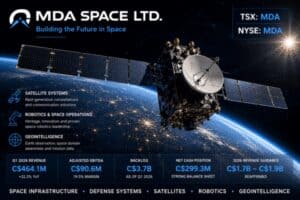 MDA Space is not a typical speculative space stock. It is a Canadian space and defense technology company with real revenue, a large backlog, positive adjusted EBITDA, and growing exposure to satellite constellations, space robotics, missile warning, and sovereign orbital infrastructure.
 - SpaceX IPO: Why $SPCX Could Reprice the Public Space Stock Narrative
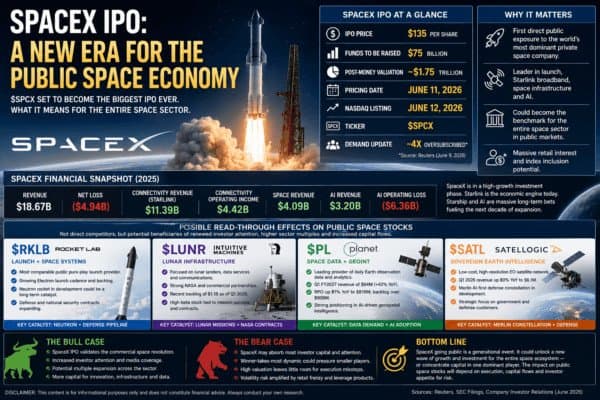 SpaceX is not just another listing. A record IPO at a reported $1.75 trillion valuation would turn Elon Musk’s rocket, Starlink and AI platform into the first true public-market benchmark for the modern space economy, with possible indirect read-through effects for $RKLB, $LUNR, $PL and $SATL.
 - AI Drones and Counter-Drone Radar Are Back in Focus: $JFB and $MPTI Put the Defense Tech Trade on Watch
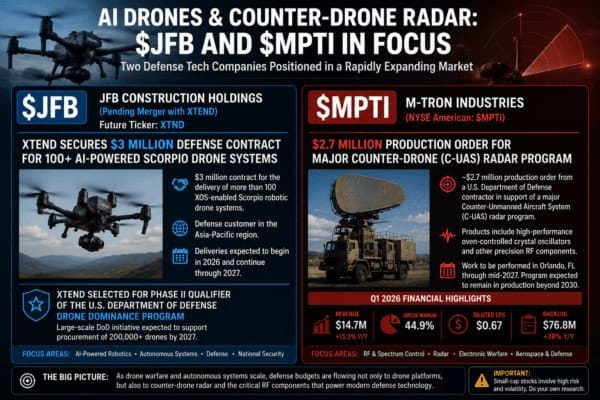 Fresh contract news from XTEND, the pending merger target of JFB Construction Holdings, and M-tron’s growing RF exposure to counter-drone radar programs highlight a broader trader theme: autonomous defense systems are no longer a futuristic niche, but an increasingly active procurement lane.
 - Brand Engagement Network (Nasdaq: $BNAI): From January Spike to a Broader AI Execution Story
 BNAI has added new corporate events since the January squeeze — a pending Cataneo acquisition, an Accelevate investment, Q1 liquidity improvements and continued international AI expansion. The story is more developed, but the stock remains speculative, thin, headline-sensitive and vulnerable to violent swings.
 - Marvell Technology (Nasdaq: $MRVL): Why the AI Infrastructure Trade Suddenly Has a New Star
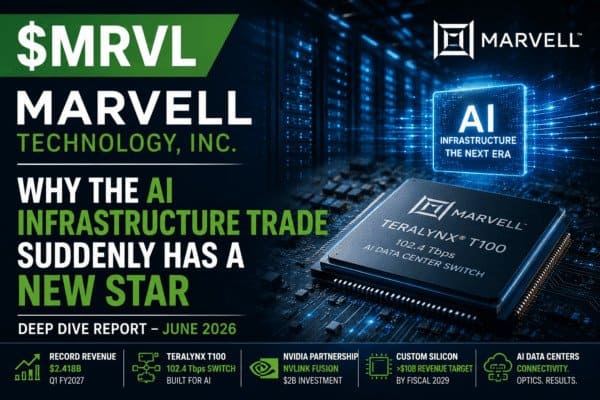 After Nvidia CEO Jensen Huang pushed Marvell into the center of the AI conversation, $MRVL has become one of the most watched semiconductor stocks in the market. The real story is not only the headline. It is custom silicon, high-speed switching, optical connectivity, data-center power limits, and whether Marvell can grow into a valuation that now prices in a much larger future.
 - Laser Photonics Corporation (Nasdaq: $LASE): Anti-Drone Laser Deep Dive After MEIA Vulcan Selection
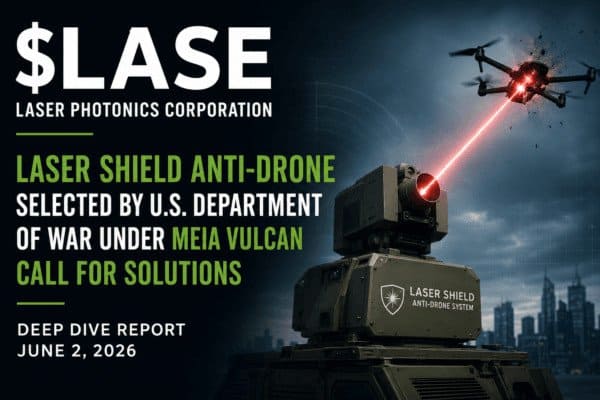 Nasdaq: $LASE Defense Technology Published June 3, 2026 Laser Photonics Corporation (Nasdaq: $LASE): Anti-Drone Laser Deep Dive After MEIA Vulcan Selection Laser Photonics has moved back into the speculative small-cap spotlight after its Laser Shield Anti-Drone system was selected under the MEIA Vulcan Call for Solutions. The story now combines counter-drone optionality, directed-energy ambition, government… Read more: Laser Photonics Corporation (Nasdaq: $LASE): Anti-Drone Laser Deep Dive After MEIA Vulcan Selection
 - Virgin Galactic (NYSE: $SPCE): From Space Tourism Dream to the May 2026 Repricing
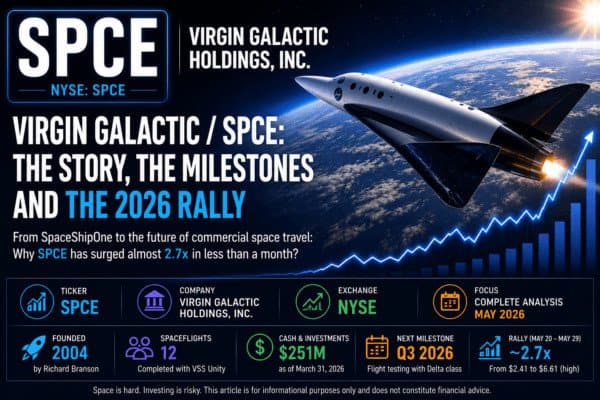 An editorial deep dive tracing Virgin Galactic’s story from the original commercial-space dream to the latest high-volume rally, the Delta-class restart narrative, and the risks that still define one of the market’s most emotional space stocks.
 - Okta Inc. (Nasdaq: $OKTA): Identity Security, AI Agents And The Cash-Flow Re-Rating Test
 Merlintrader Deep Dive Cybersecurity AI Agents Cash Flow Re-Rating Microsoft Competition Risk “` Okta Inc. (Nasdaq: $OKTA): Identity Security, AI Agents And The Cash-Flow Re-Rating Test Okta is no longer a pure hypergrowth SaaS story. After Q1 FY2027, the cleaner question is whether the market is willing to re-rate a mature identity-security platform with moderate… Read more: Okta Inc. (Nasdaq: $OKTA): Identity Security, AI Agents And The Cash-Flow Re-Rating Test
 - U.S. Drone Funding Talks: What the Rumor Really Means for $UMAC, $RCAT, $ONDS, $KTOS and $AVAV
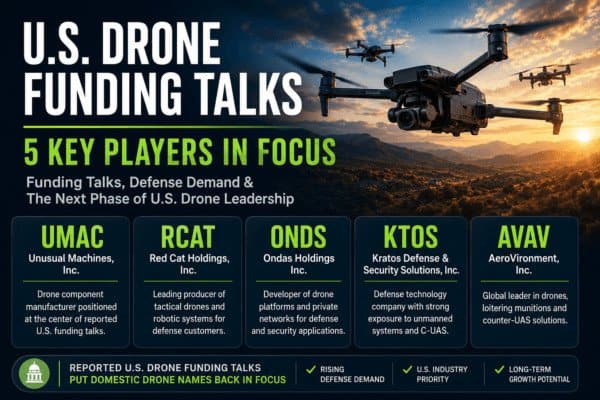 Clean read: the rumor is not the same for every ticker. Unusual Machines appears closest to the specific reported funding discussion among the listed public names. Red Cat, Ondas, Kratos and AeroVironment are better understood as sector beneficiaries unless direct funding, contracts or Office of Strategic Capital support are confirmed by filings, official releases or named government awards.
 - SpaceX IPO Filing Puts the New Space Trade Back in Motion — Why $RKLB, $RDW and $ASTS Moved Today
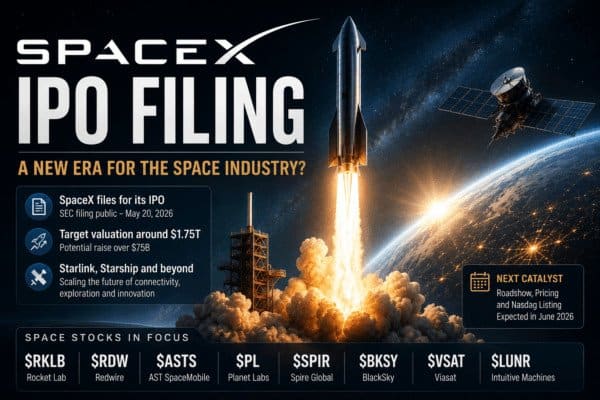 The SpaceX IPO filing has turned into a market-wide valuation event for the space sector. The most important point is not that SpaceX is going public — that had already been widely expected — but that the filing gives investors a new, highly visible reference point for how public markets may price the combined story of reusable launch, Starlink connectivity, satellite infrastructure, defense-linked space services, orbital logistics and long-duration AI/compute ambitions.
 - Quantum Cyber N.V. (Nasdaq: $QUCY): From Mainz Biomed to an Autonomous Defense Platform
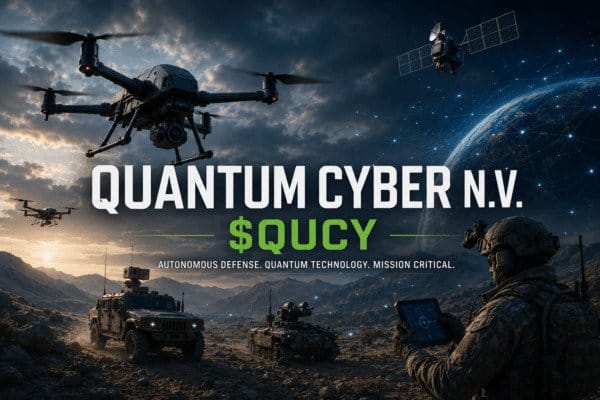 A full deep dive on the most important issue behind QUCY: whether the market is looking at the early assembly of a defense-tech platform, or at a highly speculative micro-cap pivot that still has to turn press releases, patent filings and procurement ambition into verifiable contracts and revenue.
 - Quantum Leap, One Month Later: Washington Puts Real Money Behind the Quantum Trade — $QBTS $RGTI $IONQ
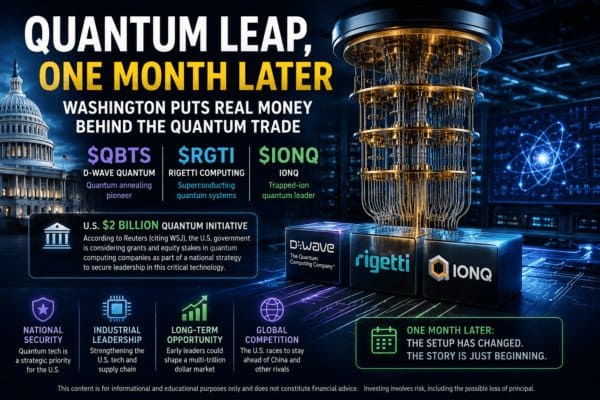 A month after quantum computing stocks broke into the trader conversation, the setup has changed again. The sector is still early, volatile and valuation-sensitive, but the new U.S. funding headlines move the debate from pure future-tech speculation toward industrial policy, national security and strategic infrastructure.
 - EagleNXT / AgEagle Aerial Systems (NYSE American: $UAVS): U.S.-Made eBee VISION, Army Awards and the Counter-Drone Pivot
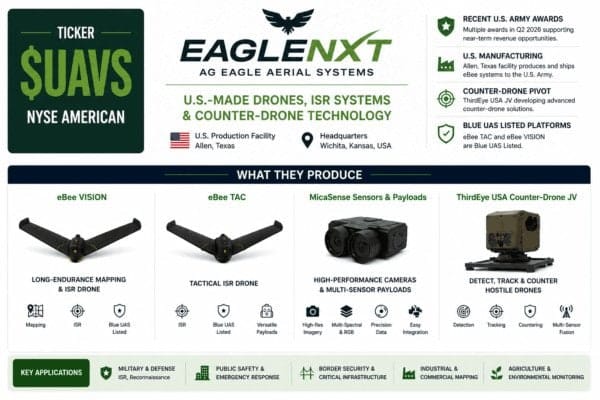 A full Merlintrader deep dive on UAVS: the company’s transition from an agricultural and mapping-drone vendor into a defense, public-safety, sensor and counter-drone platform; the recent U.S. Army orders; the Allen, Texas manufacturing shift; the ThirdEye USA counter-UAS venture; the Aerodrome loitering-munition option; the financial reality behind the headlines; and the catalysts that can decide whether this remains a speculative micro-cap story or becomes a more credible U.S.-made unmanned-systems supplier.
 - Golden Dome, Current Situation: $RKLB, $RTX and $VOYG in the New U.S. Space-Based Missile Defense Race
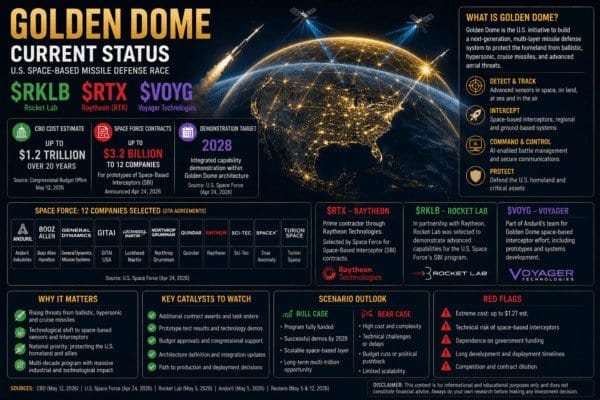 Golden Dome, Current Situation: $RKLB, $RTX and $VOYG in the New U.S. Space-Based Missile Defense Rac
Scanner for active traders

Try ChartsWatcher free, then unlock 10% OFF with SAVE10
ChartsWatcher is a real-time scanner for momentum traders: fast movers, unusual volume and rotations — so you can focus on the few tickers that matter right now, instead of watching hundreds of charts.
Start with the free version. When you upgrade, use SAVE10 for 10% OFF your first paid period.
Start free – then use SAVE10
No credit card required to start. Apply SAVE10 when upgrading.

Recommended platform

One platform. All your brokers.
Medved Trader connects multiple brokers in one workspace, with pro charts, hotkeys and fast execution — without changing your broker accounts.
A single cockpit for positions, Level II and multi-broker order routing, built for active day & swing traders.
Get 1 Month Free ➔
Multi-broker workflow + customizable layouts in one platform.

 Monica.im – the AI assistant I use every day
If you find value in the work I publish on Merlintrader and want a practical AI assistant for research and writing, you can sign up using this referral link. Click here to try Monica.im and support the site
Find out how I use AI on Merlintrader: AI, retail and Merlintrader
Disclosure: some of the links in the promotional blocks above are affiliate or referral links. If you choose to subscribe or sign up through them, Merlintrader may receive a small commission or benefit at no extra cost to you.