DISCLAIMER — Not financial advice. Educational content only, not an offer or solicitation to buy or sell any security. Biotech and small/mid-cap stocks are highly speculative and volatile and can result in a partial or total loss of capital. Do your own research and consult a licensed advisor where appropriate. / Contenuti a solo scopo informativo e didattico, non costituiscono consulenza finanziaria né offerta o sollecitazione al pubblico risparmio ai sensi delle normative CONSOB e SEC. Le azioni biotech e le small/mid cap sono strumenti altamente speculativi e volatili e possono comportare la perdita parziale o totale del capitale investito. Si raccomanda di effettuare sempre le proprie ricerche e, se necessario, di rivolgersi a un consulente abilitato.
Merlintrader Trading Pub
Biotech catalyst news and analysis. FDA PDUFA tracker
Merlintrader Trading Pub
Biotech catalyst news and analysis. FDA PDUFA tracker
Category Reports Biotech
Tickers reports and analysis
Foundayo gets there first, and it is a pill: why this approval really changes the competitive setup for Altimmune and Viking
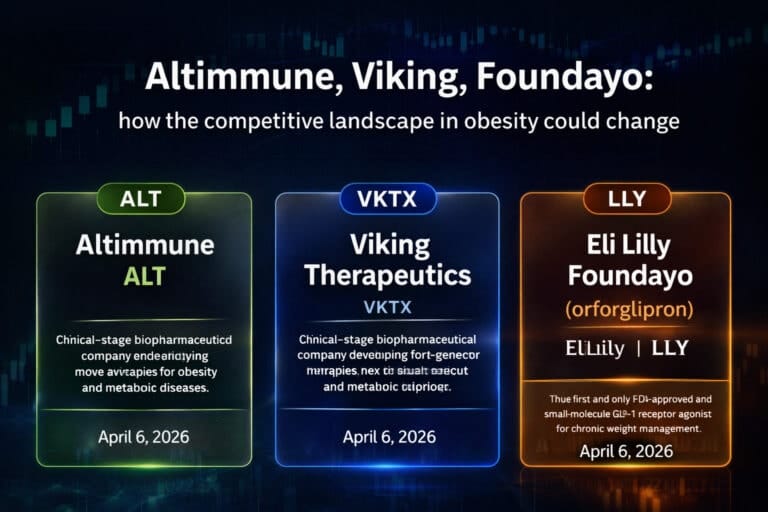
The FDA approval of Foundayo, Eli Lilly’s oral small-molecule GLP-1, does not automatically destroy the cases for Altimmune or Viking Therapeutics. But it does make the field more selective and far less forgiving. Lilly is not just early. Lilly is early with an approved product, near-term availability, an already powerful weight-management brand, a pill format that lowers the psychological barrier to starting therapy, and a commercial message built around access and simplicity. From this point forward, it is no longer enough to say that an obesity candidate has promising data. The real question is why the market should wait for it when the category leader has already put a real pill, ready for launch and ready for normalization inside the treatment pathway, on the table.
Eli Lilly ( $LLY ) — Foundayo’s FDA approval may be more than a product launch
The FDA approval of Foundayo, the brand name for oral small-molecule GLP-1 orforglipron, matters well beyond the usual “new drug approved” headline. Lilly already had one of the most powerful obesity franchises in the world through Zepbound. What it lacked was a simpler oral front door into the same therapeutic universe. Foundayo changes that. It adds a once-daily pill, no food restrictions, no water restrictions and an immediate commercial launch path. More importantly, it gives Lilly a second format that could widen the patient funnel, reduce psychological barriers to treatment initiation and deepen control over the obesity journey from entry-level adoption to higher-intensity therapy.
Omeros ( $OMER ): the post-approval story is finally turning, early commercial momentum is here, and the next upside chapter may be starting
The new March 31, 2026 press release did not simply deliver an earnings update. It effectively marked the first real post-approval checkpoint for Omeros. The company is no longer only a regulatory event story. After the December 23, 2025 FDA approval of YARTEMLEA for TA-TMA and the January 2026 U.S. launch, the central question has changed. The market is now asking whether the company can convert medical need, regulatory exclusivity and first-mover status into a durable commercial franchise.
Aquestive Therapeutics After the CRL ( $AQST ): what changed, what still matters, and how much balance-sheet room is left
Where the story stands today is more nuanced than the tape action around the January disappointment made it look. The FDA did not throw out the Anaphylm package because the drug failed on efficacy, because the core clinical bridge broke, or because major chemistry, manufacturing, and controls issues surfaced. The company’s February disclosure said the Complete Response Letter was focused on administration, labeling guidance, human factors deficiencies, and one supportive pharmacokinetic study tied to the packaging and labeling changes. In plain English, this was bad news, but it was not the same thing as a fundamental collapse of the program.
The market then needed a second question answered: would management actually get the FDA onto a defined remediation path, or would this turn into a vague, open-ended delay? The March 30 Type A meeting update is important because it is the first sign that the post-CRL process is becoming more concrete. AQST said the FDA gave clarifying feedback on both the PK and human factors study designs, acknowledged the changes to the pouch opening mechanism, and aligned on the concept of using labeling language to manage potential chewing of the film rather than demanding additional clinical data. That does not mean approval is in the bag. It does mean the company has moved from uncertainty to a more actionable playbook.
Axsome Therapeutics ( $AXSM ) — March 31, 2026 deep dive: setup to the April 30 PDUFA
A full follow-up report built from the January 2, 2026 setup and updated through March 31, 2026, focused on the Alzheimer’s disease agitation PDUFA, commercial momentum, management depth, cash and dilution risk, ownership, sell-side posture, retail sentiment, forward catalysts, scenarios, red flags and bottom line.
Agios Pharmaceuticals ( $AGIO ): the story did not end with the sickle-cell disappointment

Agios is not the same story it was one year ago, and it is not even the same story it was right after the market reacted badly to the November 2025 RISE UP data. The cleanest way to frame the company today is not as a single-product binary biotech and not as a fully de-risked rare-disease compounder either. It sits somewhere in the middle. There is now a real commercial base, a very strong balance sheet by biotech standards, a broader geographic footprint for mitapivat in thalassemia, and a reopened regulatory path in sickle cell disease that most investors had at least partially discounted after the mixed Phase 3 readout.
Sangamo Therapeutics ( $SGMO ) — Q4 2025 earnings, rolling BLA progress, cash pressure and dilution risk
Sangamo’s March 30, 2026 earnings release did not break the SGMO story. It clarified it. The company still has one asset that can genuinely change perception — ST-920 in Fabry disease — and one problem that can still overwhelm everything else — money. The clinical and regulatory side remains credible enough to keep the name alive. The balance sheet remains weak enough to keep common shareholders on a short leash.
Summit Therapeutics (SMMT): ELCC 2026 posters, stronger cash, and why retail is trying to rebuild the ivonescimab story
The latest Summit update does not magically erase the old debate around overall survival, but it does add new material that retail traders and long-form biotech readers can use to reframe the case: deeper intracranial data, quality-of-life support, a visible FDA date, and a balance sheet that gives the company room to keep pushing an unusually broad ivonescimab program.
Viridian Therapeutics ( $VRDN ): why the stock crashed on “positive” REVEAL-1 data
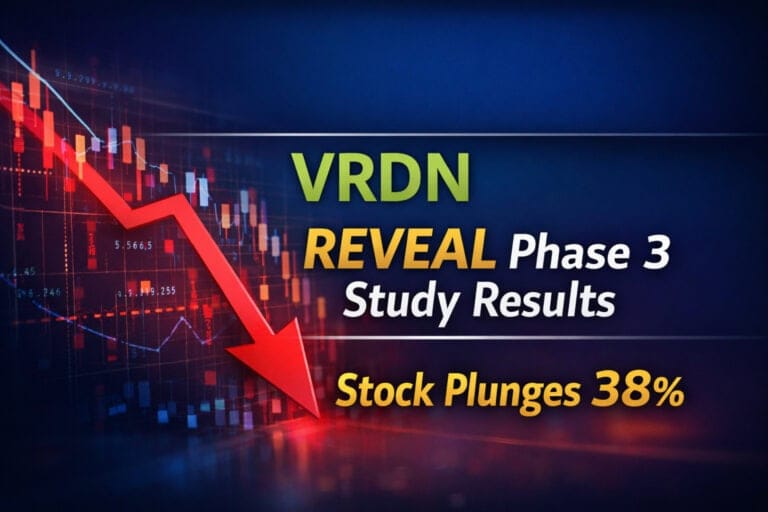
Viridian’s REVEAL-1 press release was positive in the narrow, technical sense that matters most for binary biotech trading: the phase 3 trial hit its primary endpoint. Elegrobart, the company’s subcutaneous IGF-1R antibody for active thyroid eye disease, delivered a 54% proptosis responder rate in the every-four-week arm and 63% in the every-eight-week arm, versus 18% on placebo. The Q4W arm also showed strong diplopia data, including 51% complete resolution versus 16% on placebo. That is not failure language. That is a live asset with real activity. And yet the stock was hit as if something had gone badly wrong.
Replimune ( $REPL) • Biotech • Oncolytic Immunotherapy
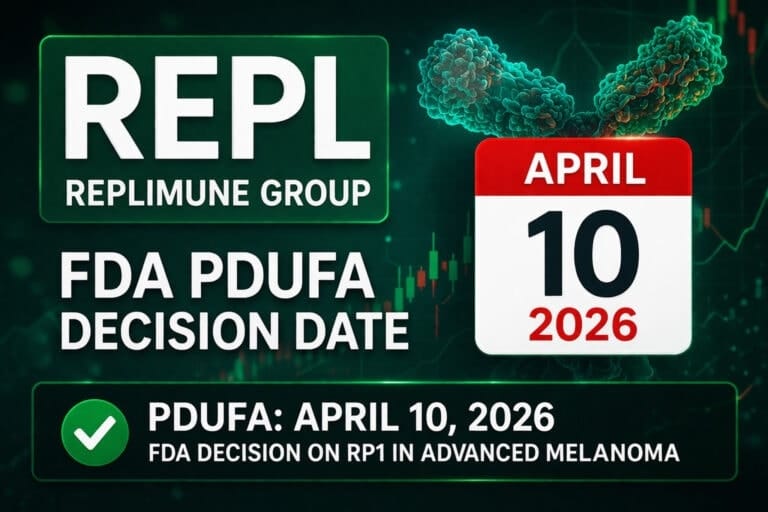
Replimune is not a “nice little pipeline story” going into spring 2026. It is a high-beta, high-volatility, very real binary event name whose valuation, narrative, financing flexibility, and strategic credibility are all tied in a major way to one date: April 10, 2026. That is the FDA target action date for the resubmitted BLA for RP1 plus nivolumab in advanced melanoma after anti-PD-1 failure. The market already treated the October 2025 acceptance of the resubmission as a major event, and for good reason. This was not a routine update. It was the market’s signal that the story had gone from post-CRL damage control back to live regulatory possibility.
Altimmune ( $ALT ) May Be One of the Last Shots on Goal in the Obesity-MASH Convergence 2026
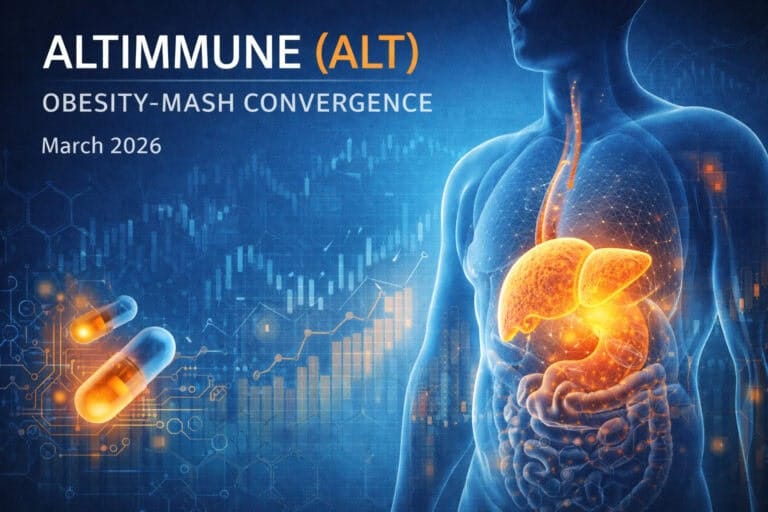
After Breakthrough Therapy Designation, 48-week IMPACT data, a financing reset and a clearer 2026 roadmap, the real question is no longer whether Altimmune can generate attention. The real question is whether pemvidutide still deserves to be viewed as one of the last relatively clean independent shots on goal at the intersection of obesity, MASH and broader metabolic-liver disease.
Nektar Therapeutics ( $NKTR ): a full deep dive March 29 2026
Nektar has gone from being, for years, a biotech many investors considered tired and heavily scarred to one of the most discussed U.S. biotech stories of 2025–2026. The reason is not empty narrative. It is the combination of the clinical relaunch of rezpegaldesleukin, two dermatology indications that reignited attention, a balance sheet materially strengthened after the large February 2026 financing, and a pipeline that, while still far from commercial stage, now looks much more readable than it did just twelve months ago.
Wall Street weekly recap ($SPY) and next-week setup – March 30–April 3
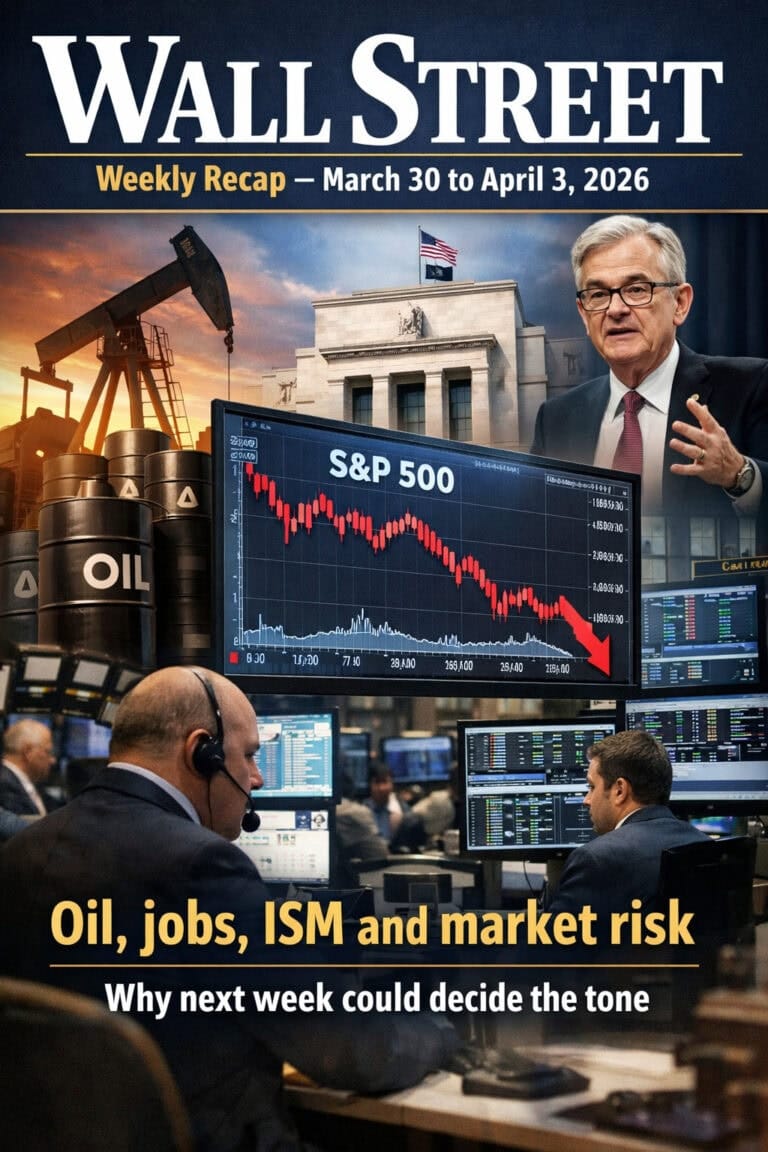
The week that just ended was not simply another ugly week for equities. It was a deeper tightening of market tolerance. By Friday, March 27, the S&P 500 had closed at 6,368.85, the Dow at 45,166.64, the Nasdaq at 20,948.36 and the Russell 2000 at 2,449.70. The S&P 500, Dow and Nasdaq all recorded a fifth straight weekly loss, while the Dow confirmed correction territory from its February high and the Nasdaq and Russell were already there. The message was blunt: this is no longer a market that shrugs off macro stress and instantly rotates back into the same crowded stories.
Rocket Pharmaceuticals ( $RCKT ) — KRESLADI approved, PRV granted, and what this changes now
Rocket Pharmaceuticals (RCKT) — KRESLADI approved, PRV granted, and what this changes now | Merlintrader Static Finviz chart loads without affiliate parameters. Referral is applied only if the reader clicks through to the interactive page. RCKT deep dive · approval…
Genmab A/S ( $GMAB ) — Large-Cap Biotech Growth and Pipeline Expansion
Genmab occupies an unusual position in biotechnology. It is neither a pure commercial pharmaceutical company with fully mature revenue streams nor a fragile development-stage biotech whose future depends on one clinical event and the next financing window. That in-between status is precisely what makes the company interesting. It already has a meaningful economic engine through Darzalex-related royalties, yet it still offers real upside if management can broaden the company’s commercial base and sustain the productivity of its antibody platform.
SeaStar Medical ( $ICU )the clinical case is stronger, but the balance sheet still has not caught up . Updated mach 30 with Addendum
SeaStar Medical has spent the last month moving out of the zone where it could be dismissed as a tiny, story-heavy healthcare name with a nice scientific pitch and not much underneath it. The pediatric commercial story is now more tangible, the post-approval burden around SAVE has eased, and the adult pivotal trial has crossed the halfway mark. But that progress has not erased the core financial problem. This is a company with a more credible operating narrative than it had a few months ago, yet still one that openly says it does not have enough capital to fund the next twelve months of planned operations. That tension is the whole ICU story right now.
Corcept Therapeutics ( $CORT ): FDA Approval of Lifyorli and the Path from CRL Devastation to Oncology Redemption
In one of the most striking turnarounds in biotech over the past three months, Corcept Therapeutics has moved from potential extinction to validation of a core thesis. On March 25, 2026, the U.S. FDA approved Lifyorli™ (relacorilant) in combination with nab-paclitaxel for adults with platinum-resistant ovarian, fallopian tube, or primary peritoneal cancer who have received one to three prior systemic regimens. This is Corcept's second commercially approved product and, more importantly, the first FDA-approved selective glucocorticoid receptor antagonist (SGRA) in oncology.
This approval comes exactly 12 weeks after the December 31, 2025 Complete Response Letter (CRL) that sent CORT plummeting 50% in a single day and raised serious questions about whether Corcept's relacorilant program was a scientific and commercial mirage. It also arrives 5 weeks after the Federal Circuit affirmed that Corcept's key Korlym patents do not prevent Teva's generic, further pressuring the company's legacy cash engine.
The stock opened up +40% on the approval news, erasing much of the CRL damage. But the narrative is now far more complex: Cushing's syndrome access to relacorilant has been effectively closed off until Corcept runs a new trial (likely 3-5 years away), while ovarian cancer and emerging programs in MASH, ALS, and other indications are now in focus. The balance sheet remains strong (>$500M cash, profitable), but investor sentiment has fractured into those betting on Lifyorli's oncology success and those worried about execution, dilution, and the class action lawsuits now pending against management.
NRx Pharmaceuticals ( $NRXP ) After FY2025: A Multi-Asset Story with Regulatory, Commercial, and Strategic Upside
EN IT Merlintrader Deep Dive | NRXP NRx Pharmaceuticals After FY2025: A Multi-Asset Story with Regulatory, Commercial, and Strategic Upside NRx is no longer just a one-line speculative ketamine story. After the March 2026 annual report and earnings call, the…
Rezolute ( $RZLT ) after the FDA meeting: the congenital HI story is not dead, but the bar is still high
Rezolute remains a classic high-volatility rare-disease biotech story, but the shape of the binary has changed. After sunRIZE missed its primary endpoint in December 2025, many traders effectively treated congenital hyperinsulinism as broken. The March 2026 FDA update forces a more careful read. The agency did not endorse management’s interpretation, yet it also did not dismiss the program outright. Instead, FDA encouraged the submission of comprehensive reports from sunRIZE and the ongoing open-label extension, together with the relevant analysis datasets, for independent evaluation.
ADMA Biologics, Culper Research, and the revenue quality debate ( $ADMA ) (UPDATED march 27 2026 ADMA Fires Back at Culper)
On March 24, 2026, Culper Research disclosed a short position in ADMA Biologics and published a report arguing that the company’s growth story would be overstated by what it described as a channel stuffing scheme involving rebates, extended payment terms, inventory loading, and an undisclosed related-party distributor. Public summaries of the report say Culper’s central claim is stark: absent the alleged sell-in distortion, ADMA’s 2025 revenue would have declined rather than grown. That was enough to break the prior narrative around ADMA as a premium commercial plasma story with unusually strong operating leverage.