DISCLAIMER — Not financial advice. Educational content only, not an offer or solicitation to buy or sell any security. Biotech and small/mid-cap stocks are highly speculative and volatile and can result in a partial or total loss of capital. Do your own research and consult a licensed advisor where appropriate. / Contenuti a solo scopo informativo e didattico, non costituiscono consulenza finanziaria né offerta o sollecitazione al pubblico risparmio ai sensi delle normative CONSOB e SEC. Le azioni biotech e le small/mid cap sono strumenti altamente speculativi e volatili e possono comportare la perdita parziale o totale del capitale investito. Si raccomanda di effettuare sempre le proprie ricerche e, se necessario, di rivolgersi a un consulente abilitato.

Merlintrader Trading Pub
Biotech catalyst news and analysis. FDA PDUFA tracker
Merlintrader Trading Pub
Biotech catalyst news and analysis. FDA PDUFA tracker
Genmab A/S ( $GMAB ) — Large-Cap Biotech Growth and Pipeline Expansion
Genmab occupies an unusual position in biotechnology. It is neither a pure commercial pharmaceutical company with fully mature revenue streams nor a fragile development-stage biotech whose future depends on one clinical event and the next financing window. That in-between status is precisely what makes the company interesting. It already has a meaningful economic engine through Darzalex-related royalties, yet it still offers real upside if management can broaden the company’s commercial base and sustain the productivity of its antibody platform.
SeaStar Medical ( $ICU )the clinical case is stronger, but the balance sheet still has not caught up . Updated mach 30 with Addendum
SeaStar Medical has spent the last month moving out of the zone where it could be dismissed as a tiny, story-heavy healthcare name with a nice scientific pitch and not much underneath it. The pediatric commercial story is now more tangible, the post-approval burden around SAVE has eased, and the adult pivotal trial has crossed the halfway mark. But that progress has not erased the core financial problem. This is a company with a more credible operating narrative than it had a few months ago, yet still one that openly says it does not have enough capital to fund the next twelve months of planned operations. That tension is the whole ICU story right now.
Kodiak Sciences ( $KOD ): GLOW2 hits cleanly, Zenkuda clears the second major diabetic retinopathy hurdle
Positive GLOW2 topline data do more than add one more green headline to the tape. They materially strengthen the diabetic retinopathy package around Zenkuda, reduce the “one-study wonder” risk left after GLOW1, and push the KOD debate toward the next question that really matters: how much value the market should assign to a program that now looks BLA-ready across multiple retinal settings, while still carrying the memory of earlier setbacks and the need to deliver again in DAYBREAK.
Artelo Biosciences ( $ARTL ) — Final March 2026 Update: hard Nasdaq deadline, fragile balance sheet, and a real separation between pipeline promise and financing reality
Next Catalyst / Prossimo catalyst: March 30, 2026 Nasdaq compliance deadline on the stockholders’ equity rule, based on the company’s disclosed panel extension. EN / IT toggle inside the content area, with mirrored sections. EN IT Artelo Biosciences (ARTL) —…
Corcept Therapeutics ( $CORT ): FDA Approval of Lifyorli and the Path from CRL Devastation to Oncology Redemption
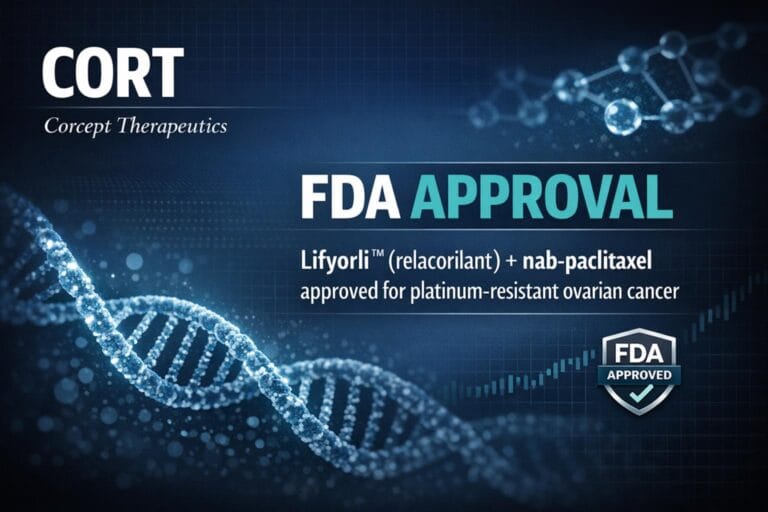
In one of the most striking turnarounds in biotech over the past three months, Corcept Therapeutics has moved from potential extinction to validation of a core thesis. On March 25, 2026, the U.S. FDA approved Lifyorli™ (relacorilant) in combination with nab-paclitaxel for adults with platinum-resistant ovarian, fallopian tube, or primary peritoneal cancer who have received one to three prior systemic regimens. This is Corcept's second commercially approved product and, more importantly, the first FDA-approved selective glucocorticoid receptor antagonist (SGRA) in oncology.
This approval comes exactly 12 weeks after the December 31, 2025 Complete Response Letter (CRL) that sent CORT plummeting 50% in a single day and raised serious questions about whether Corcept's relacorilant program was a scientific and commercial mirage. It also arrives 5 weeks after the Federal Circuit affirmed that Corcept's key Korlym patents do not prevent Teva's generic, further pressuring the company's legacy cash engine.
The stock opened up +40% on the approval news, erasing much of the CRL damage. But the narrative is now far more complex: Cushing's syndrome access to relacorilant has been effectively closed off until Corcept runs a new trial (likely 3-5 years away), while ovarian cancer and emerging programs in MASH, ALS, and other indications are now in focus. The balance sheet remains strong (>$500M cash, profitable), but investor sentiment has fractured into those betting on Lifyorli's oncology success and those worried about execution, dilution, and the class action lawsuits now pending against management.
NRx Pharmaceuticals ( $NRXP ) After FY2025: A Multi-Asset Story with Regulatory, Commercial, and Strategic Upside
EN IT Merlintrader Deep Dive | NRXP NRx Pharmaceuticals After FY2025: A Multi-Asset Story with Regulatory, Commercial, and Strategic Upside NRx is no longer just a one-line speculative ketamine story. After the March 2026 annual report and earnings call, the…
Intuitive Machines ( $LUNR ) Aggressive 2026 Guidance, and the $180.4M NASA CLPS Award
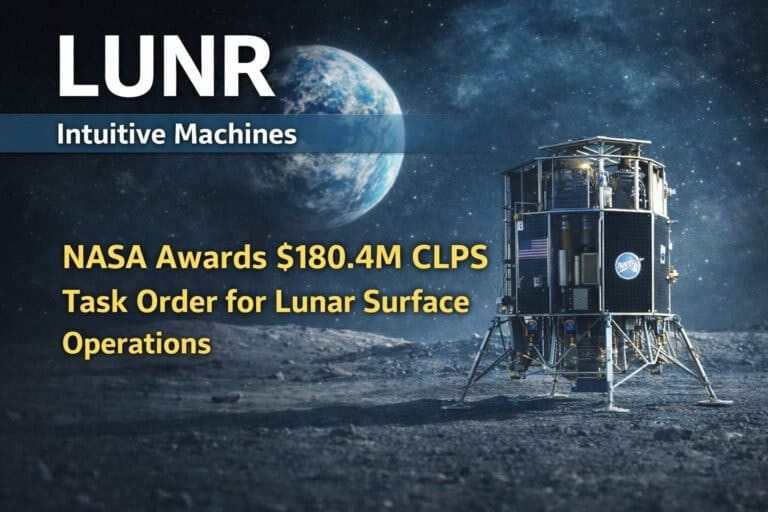
Intuitive Machines is now asking the market to believe two things at the same time. First, that FY2025 weakness was transitional rather than structural. Second, that the combined company after the Lanteris acquisition can grow into a much larger, more diversified space and defense platform without losing control of margins, working capital, or mission execution.
The tension is obvious. On one side, the March 19, 2026 results were underwhelming: full-year revenue of $210.1 million, fourth-quarter revenue of $44.8 million, negative free cash flow of $56.0 million, and a business still relying heavily on external capital to support growth. On the other side, management is now pointing to a very different 2026 picture: full-year revenue guidance of $900 million to $1.0 billion, positive adjusted EBITDA, roughly $943 million of combined backlog as of late February, and then a fresh $180.4 million NASA CLPS award announced on March 24 that pushes the contract narrative forward again.
The problem is that backlog and awards are not the same thing as clean execution. A company can win contracts, accumulate backlog, and still disappoint shareholders if the gross margin profile stays weak, if receivables do not convert into cash in a timely way, if integration creates friction, or if high-visibility missions keep generating mixed operational outcomes. That is why this story now has to be judged on business quality, not just on headline wins.
Rezolute ( $RZLT ) after the FDA meeting: the congenital HI story is not dead, but the bar is still high
Rezolute remains a classic high-volatility rare-disease biotech story, but the shape of the binary has changed. After sunRIZE missed its primary endpoint in December 2025, many traders effectively treated congenital hyperinsulinism as broken. The March 2026 FDA update forces a more careful read. The agency did not endorse management’s interpretation, yet it also did not dismiss the program outright. Instead, FDA encouraged the submission of comprehensive reports from sunRIZE and the ongoing open-label extension, together with the relevant analysis datasets, for independent evaluation.
Sidus Space Inc ( $SIDU ) Space Infrastructure, Commercial Payloads, Capital Pressure and the March 31 Earnings Test
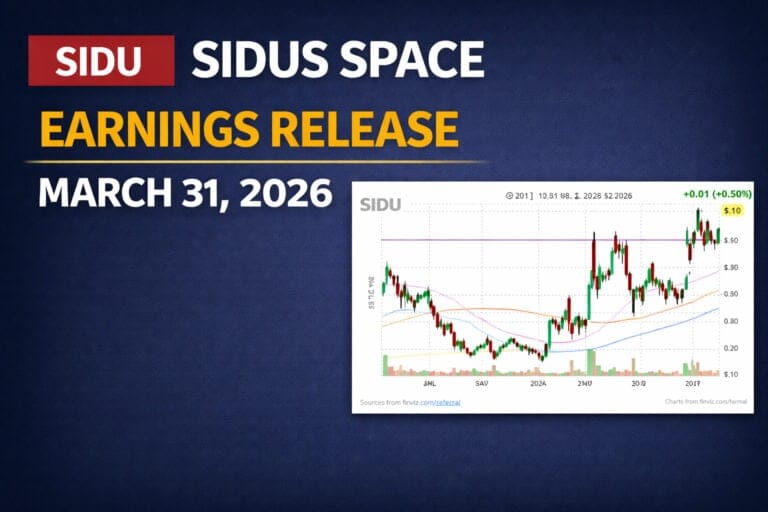
Sidus Space heads into its March 31 earnings event with a familiar mix of promise and pressure. On one side, the company continues to build the narrative it wants the market to believe: a nimble space infrastructure player with satellite heritage, hosted payload capability, and a path toward recurring higher-value data services. On the other side, the financial picture remains fragile, commercial scale is still limited, and capital structure risk has become impossible to ignore.
The stock therefore sits in a classic micro-cap tension zone. Technical milestones and partnerships are real, but the real question is whether they are beginning to translate into more stable revenue visibility. That is why the upcoming earnings call matters so much. It is less about one quarter in isolation and more about whether management can narrow the gap between operational progress and financial credibility.
ADMA Biologics, Culper Research, and the revenue quality debate ( $ADMA ) (UPDATED march 27 2026 ADMA Fires Back at Culper)
On March 24, 2026, Culper Research disclosed a short position in ADMA Biologics and published a report arguing that the company’s growth story would be overstated by what it described as a channel stuffing scheme involving rebates, extended payment terms, inventory loading, and an undisclosed related-party distributor. Public summaries of the report say Culper’s central claim is stark: absent the alleged sell-in distortion, ADMA’s 2025 revenue would have declined rather than grown. That was enough to break the prior narrative around ADMA as a premium commercial plasma story with unusually strong operating leverage.
Planet Labs ( $PL ): Berlin expansion adds industrial depth to a stock already repriced by earnings

Today’s Berlin manufacturing update is not a “headline contract” event, but it matters because it fits the exact story the market has been rewarding in recent weeks: Planet is being re-rated less as a pure imagery vendor and more as a strategic geospatial infrastructure platform with sovereign, defense and AI-linked relevance.
Sangamo Therapeutics ( $SGMO ) – Fabry BLA, delivery platform and dilution risk

NASDAQ: SGMO · Biotech · Genomic Medicine · Fabry / CNS Delivery Sangamo Therapeutics (SGMO) – Fabry BLA, delivery platform and dilution risk Biotech report – focus on ST-920 in Fabry disease, Lilly partnership, capital structure and 2026 scenarios. Report…
ImmunityBio’s FDA warning letter is serious — but the market now has to separate management risk from the medicine itself. ( $IBRX )
EN IT Chart source: Finviz. Referral applies only on click. IBRX • Warning Letter • Regulatory Credibility ImmunityBio’s FDA warning letter is serious — but the market now has to separate management risk from the medicine itself ImmunityBio’s sharp March…
Spire Global ( SPIR ): Satellite Data Monetization Re-Rated by Execution, Not Hype

Spire Global is no longer an early-stage “space story” being valued on imagination alone. The company has already built and deployed one of the largest listening constellations in low Earth orbit, it has exited a major strategic restructuring, and it now trades on a far more concrete question: can the business convert its satellite infrastructure and government relevance into durable profitability?
That question became more important after the company’s fourth-quarter and full-year 2025 results on March 18, 2026. Reported fourth-quarter revenue was $15.8 million. Because the maritime business was sold in April 2025, the year-over-year comparison needs context: management highlighted that fourth-quarter revenue was up 44% versus the comparable ex-maritime base, while the company also improved non-GAAP gross margin to 43%, reduced operating cash outflow to -$4.3 million, and closed the year with $81.8 million in cash and no debt.
Satellogic ( $SATL )Slingshot expansion, Merlin roadmap and the next defense-style de-risking cycle
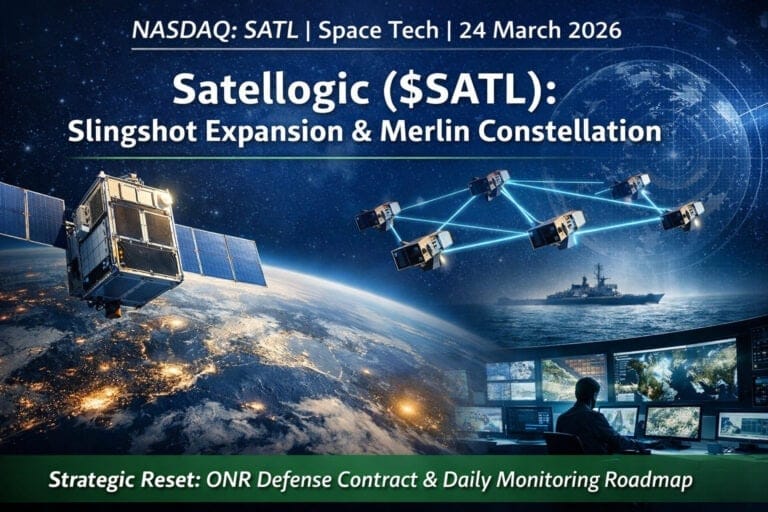
The March 24 update matters because it pushes Satellogic further away from the old “small-cap imagery vendor” label and deeper into a more valuable identity: a company trying to build low-latency, defense-relevant, AI-enabled orbital infrastructure. Slingshot II and III expand the ONR-linked roadmap to eight dedicated ISL-ready assets, while Merlin remains the bigger medium-term prize: a daily global one-meter monitoring architecture meant to scale persistent awareness, not just occasional imaging.
For Merlintrader readers, the setup is familiar. The story you already outlined in earlier SATL pieces still holds: this is a volatile, execution-sensitive space small-cap, but the quality of the narrative has improved. Revenue accelerated sharply in Q4 2025, full-year revenue rose to $17.7 million, the balance sheet is much stronger than a year ago, and remaining performance obligations of $65.1 million give the company more visibility than it used to have. At the same time, the stock is still a classic “prove it” story: the market wants delivery, not just roadmap slides.
Ocugen Inc ( $OCGN ) after the OCU410 12-month readout: alive, arguable, and still risky
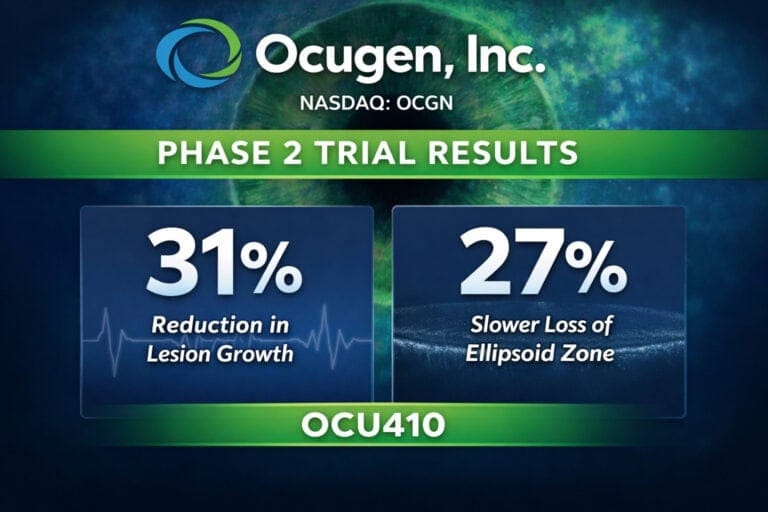
There is a lazy way to write this story and a careful way to write it. The lazy way is to say OCU410 either crushed expectations or disappointed the market. The careful way is to admit that the March 24 readout leaves enough evidence for both sides to keep arguing. Ocugen reported that the medium dose chosen for Phase 3 showed a 31% reduction in geographic atrophy lesion growth versus control at 12 months with statistical significance, a 27% slower decline in ellipsoid zone integrity, and no OCU410-related serious adverse events or adverse events of special interest reported to date. That is enough to keep the program alive, credible, and worthy of ongoing attention. It is not enough to eliminate all doubt.
AeroVironment ( $AVAV ): Defense Tech Giant in Integration Mode

In March 2026, AVAV reported Q3 results that exposed cracks in the integration story: revenue of $408M and record backlog of $1.1B masked a $151.3M goodwill impairment (BlueHalo), net loss of $156.6M, and revised guidance now expecting a loss of $218–201M despite $1.85–1.95B revenue. The market repriced sharply downward, then stabilized.
The bull case: validated DoD procurement relationships, $2.1B quarterly bookings, massive secular tailwinds in drone warfare and counter-UAS demand, and optionality from space/directed energy segments.
The bear case: BlueHalo integration is tougher than expected, margins are under pressure, negative free cash flow is burning through runway, and competition from nimble startups (Anduril, Shield AI) and larger primes is intensifying.
Ondas ( $ONDS ): the final 2025 earnings release turns a drone story into a much bigger test of execution

Defense / Autonomy / Earnings Deep Dive Ondas (ONDS): from drone story to autonomous defense platform? Why the final 2025 earnings release may be the most important ONDS document yet The March 23, 2026 release did more than confirm a…
IDEAYA Biosciences ($IDYA): darovasertib timing shift, OptimUM-02 setup, and a full pre-readout deep dive
IDEAYA is one of the more interesting oncology small/mid-cap stories going into spring 2026 because the company sits at the intersection of three things the market tends to pay up for: a registrational catalyst, a platform narrative that is broader than a single-asset biotech, and a balance sheet that is unusually strong for a company still in the clinical stage. The key near-term question is not whether IDEAYA has science or ambition. It does. The real question is narrower and more practical: can darovasertib plus crizotinib in first-line HLA-A2-negative metastatic uveal melanoma deliver a result in OptimUM-02 that is clean enough, strong enough, and regulatorily usable enough to support a credible accelerated-approval path in the United States?
Palantir ( $PLTR ) and the Pentagon raise the stakes: Maven becomes core military infrastructure, not just another AI tool
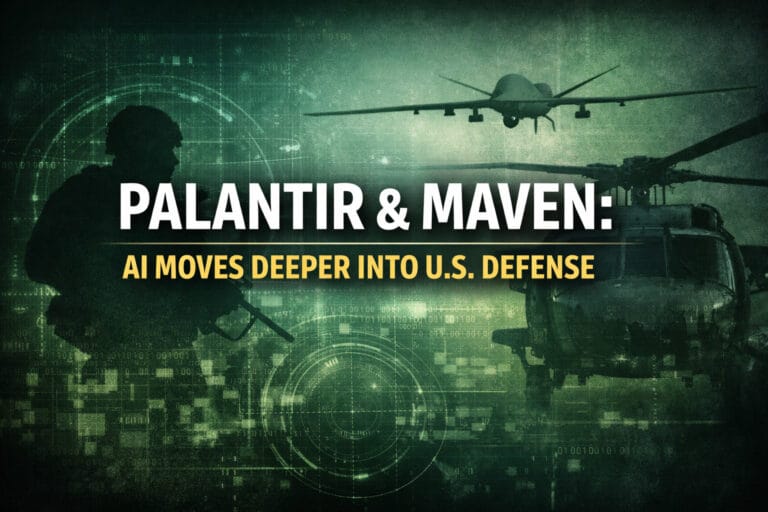
The Pentagon’s move to formalize Maven as a “program of record” matters far beyond one headline. It strengthens Palantir’s strategic position, deepens its lock-in inside U.S. defense workflows and forces the market to ask a bigger question: is PLTR still just an AI trade, or is it becoming a permanent layer of military decision infrastructure?