DISCLAIMER — Not financial advice. Educational content only, not an offer or solicitation to buy or sell any security. Biotech and small/mid-cap stocks are highly speculative and volatile and can result in a partial or total loss of capital. Do your own research and consult a licensed advisor where appropriate. / Contenuti a solo scopo informativo e didattico, non costituiscono consulenza finanziaria né offerta o sollecitazione al pubblico risparmio ai sensi delle normative CONSOB e SEC. Le azioni biotech e le small/mid cap sono strumenti altamente speculativi e volatili e possono comportare la perdita parziale o totale del capitale investito. Si raccomanda di effettuare sempre le proprie ricerche e, se necessario, di rivolgersi a un consulente abilitato.
Merlintrader Trading Pub
Biotech catalyst news and analysis. FDA PDUFA tracker
Merlintrader Trading Pub
Biotech catalyst news and analysis. FDA PDUFA tracker

Merlintrader trading Blog
Biotech deep dives anchored to primary sources
OMER Yartemlya (narsoplimab) / TA-TMA
OMER / Yartemlya (narsoplimab) — label expectations for TA-TMA: what is reasonable to anticipate (and what would be a surprise)
This article is built around one simple idea: before the label is public, you can only discuss “expectations” seriously if you anchor them to official sources, peer-reviewed evidence, and observable regulatory patterns. This is not a “tip.” It is a disciplined reading exercise.
The “documentable” backdrop: Omeros has repeatedly referenced outcomes for narsoplimab in TA-TMA, including expanded access experience and analyses using external controls. Below are only verifiable references.
Official IR source on EAP publication
Official IR source on external control
Peer-review index (PubMed)
Trade media (FDA timeline)
Important note about what this piece is (and is not)
The “anticipations” below are reasoned hypotheses based on public sources and observable patterns. They are not privileged information, not guaranteed, and can be wrong.
The final label is the only source of truth. This is not investment advice, not a solicitation, and not a recommendation.
The “anticipations” explained rigorously (with sources)
Method first: we cannot know the label until it is public. What we can do is assess what is consistent with the available literature and the company’s official communications.
1) Indication: why HSCT-associated TA-TMA is a reasonable expectation
Official communications and the scientific record repeatedly place narsoplimab in TA-TMA in the post-transplant setting and describe an enriched “severe/high-risk” population. PubMed’s indexed abstract explicitly references enrichment with severe TA-TMA and notes no concerning safety signals within the described dataset. Source: PubMed index entry (American Journal of Hematology, 2025). Link
Omeros’ official IR releases reference publication(s) tied to global expanded access and external matched controls highlighting survival outcomes in TA-TMA. Sources: Omeros IR releases dated Sep 2, 2025 and Oct 16, 2025. Link 1 · Link 2
Cautious interpretation (not a claim of fact): if the public evidence base is framed around “high-risk” TA-TMA, conservative population wording in the final label would not be surprising.
2) “High-risk”: why a single phrase may matter more than any number
When peer-reviewed publications explicitly describe cohorts “enriched with severe TA-TMA,” label framing often stays aligned with that evidentiary footprint. That does not automatically imply hard prescribing barriers. It can simply reflect a label that stays close to the studied population. Sources: PubMed index (American Journal of Hematology, 2025) and Nature/Bone Marrow Transplantation (2024) discussing efficacy and safety in high-risk TA-TMA. PubMed · Nature (2024)
This is not “the label will say X.” It is “given the public record, that framing would be consistent and therefore plausible.”
3) Safety: what can be stated without guessing
We can only cite what is written. In the PubMed indexed abstract, the text indicates that no “concerning safety signals” were observed. That is scientific context (within the limits of an abstract), not a regulatory guarantee. Link
Additional peer-review context on safety/efficacy in high-risk TA-TMA is discussed in the Nature/Bone Marrow Transplantation (2024) publication. Link
What cannot be claimed ahead of time: boxed warnings, REMS requirements, and final restriction language. Those are FDA decisions and become facts only when the label is published.
4) FDA timeline and regulatory context: use reputable trade media (and keep it separate from hypotheses)
For scheduling and timeline changes, it is appropriate to cite an authoritative trade source that documented the delay and context. Fierce Biotech reported the FDA delay and referenced the broader regulatory backdrop for the second approval attempt. Link
This matters because it helps separate chronology (fact) from interpretive expectations (hypothesis).
How to use this piece without turning it into a “trade call”
People often fixate on a binary outcome. But short-term reactions can be driven by wording: how the population is defined, what limitations are implied, and how safety is framed. This article is meant to help you read the label intelligently, not to tell you what to do.
- When the official communication drops, compare the key phrases to the public evidence cited above (peer-review + IR).
- If you see “high-risk” language, it is not automatically negative. It may simply reflect “fit to evidence.”
- If you see extra access constraints or unexpected requirements, that would be truly new information versus the cited public record.
Repeated on purpose: nothing here is a buy/sell suggestion. It is a reading framework.
Clickable sources (official / peer-review / reputable media only)
- Omeros IR — Publication survival outcomes in TA-TMA (EAP), Sep 2, 2025: Link
- Omeros IR — Survival benefits vs external control, Oct 16, 2025: Link
- PubMed — “Narsoplimab Results in Excellent Survival…” (American Journal of Hematology, 2025): Link
- Nature / Bone Marrow Transplantation (2024) — safety/efficacy in high-risk TA-TMA: Link
- Fierce Biotech — FDA delay (timeline/context), Aug 15, 2025: Link
More OMER coverage on Merlintrader trading Blog
OMER / Yartemlya (narsoplimab) — “anticipazioni” sulla label TA-TMA: cosa è ragionevole aspettarsi (e cosa sarebbe una sorpresa)
Questo articolo ruota attorno a un concetto semplice: prima che la label sia pubblica, si può discutere in modo serio solo di scenari ragionevoli basati su documenti ufficiali, peer-review e pattern regolatori osservabili. Non è una “soffiata”. È un esercizio di lettura critica dei dati disponibili.
Il contesto “documentabile”: Omeros ha comunicato più volte risultati e analisi sull’uso di narsoplimab in TA-TMA, incluse pubblicazioni legate al programma di expanded access e confronti con controlli esterni ben abbinati. Qui sotto trovi solo riferimenti verificabili.
Fonte ufficiale (IR) su publication EAP
Fonte ufficiale (IR) su external control
Peer-review (indice PubMed)
Media di settore (timeline FDA)
Nota importante sulla natura di questo articolo
Le “anticipazioni” qui sotto sono ipotesi ragionate basate su fonti pubbliche e pattern regolatori: non sono informazioni privilegiate, non sono garantite, e possono risultare errate.
La label finale è quella che conta. Questo testo non è consulenza finanziaria, non è un invito a operare e non sostituisce fonti ufficiali.
Le “anticipazioni” spiegate in modo rigoroso (con fonti)
Partiamo dal punto metodologico: non possiamo conoscere la label prima che sia pubblica. Quello che possiamo fare è valutare cosa è coerente con la letteratura disponibile e con le comunicazioni ufficiali dell’azienda.
1) Indicazione: perché è ragionevole aspettarsi un perimetro “HSCT-associated TA-TMA”
Le comunicazioni ufficiali e i contenuti scientifici di riferimento descrivono l’impiego in TA-TMA nel contesto post-trapianto e, soprattutto, una popolazione arricchita per severità. In PubMed, l’abstract sottolinea esplicitamente l’enrichment con TA-TMA “severe/high-risk” e menziona assenza di segnali di sicurezza preoccupanti nel dataset descritto. Fonte: indice PubMed (American Journal of Hematology, 2025). Link
Anche Omeros, in comunicati ufficiali, richiama pubblicazioni e analisi orientate agli outcome di sopravvivenza in TA-TMA nell’ambito del global expanded access program e confronti con controlli esterni ben abbinati. Fonti: comunicati IR Omeros del 2 settembre 2025 e del 16 ottobre 2025. Link 1 · Link 2
Interpretazione prudente (non un fatto): se la popolazione pubblicata e discussa è “high-risk”, è plausibile che la label mantenga un linguaggio conservativo coerente con quel perimetro.
2) “High-risk”: perché quella parola potrebbe contare più di qualunque numero
Quando una pubblicazione peer-reviewed descrive esplicitamente una coorte “enriched with severe TA-TMA”, ciò può riflettersi nel modo in cui viene descritta la popolazione target (senza che ciò implichi automaticamente barriere prescrittive forti). Questa dinamica è spiegabile senza speculare: è un modo standard di mantenere la label aderente ai dati disponibili. Fonti: PubMed (American Journal of Hematology, 2025) e Nature/Bone Marrow Transplantation (2024) sul profilo di efficacia/sicurezza in high-risk TA-TMA. Link PubMed · Link Nature (2024)
Nota: non stiamo dicendo “la label conterrà questa frase”. Stiamo dicendo che, data la base documentale citata, quel framing è una possibilità concreta e non sorprendente.
3) Sicurezza: cosa si può dire senza inventare nulla
Possiamo citare solo ciò che è scritto nelle fonti. Nella scheda PubMed collegata allo studio real-world, l’abstract include l’indicazione che non sono emersi “concerning safety signals”. Questa è un’informazione scientifica (nei limiti di un abstract) e non una promessa regolatoria. Link
Una conferma ulteriore sul profilo in high-risk TA-TMA arriva dalla pubblicazione Nature/Bone Marrow Transplantation (2024), che discute efficacia e sicurezza in quel contesto. Link
Quello che non possiamo affermare: assenza o presenza di boxed warning, REMS o restrizioni specifiche. Queste sono decisioni FDA e diventano “fatti” solo quando la label è pubblica.
4) Timeline FDA e contesto regolatorio: l’unico modo serio è citare media affidabili
Per le date e i cambi di calendario, è corretto usare una fonte di settore affidabile che riporti il rinvio e la nuova scadenza. Fierce Biotech ha riportato il delay e il contesto della seconda attempt di approval. Link
Questo serve a separare la cronologia (fatto) dalle ipotesi interpretative (opinione).
Come usare questo pezzo senza trasformarlo in “consiglio operativo”
Chi segue un catalyst tende a fissarsi sul “sì/no”. Ma spesso il movimento dipende dalle parole: come viene definita la popolazione, quali limitazioni vengono suggerite, come viene raccontata la sicurezza. Questo articolo serve per arrivare preparati a leggere la label, non per dire cosa fare.
- Quando esce la comunicazione ufficiale, confronta le frasi chiave con la base documentale citata sopra (peer-review e IR).
- Se vedi un linguaggio “high-risk”, non è automaticamente negativo: può essere semplicemente “aderenza ai dati”.
- Se compaiono vincoli extra o requisiti non attesi, quello sarebbe un elemento davvero nuovo rispetto alle fonti pubbliche citate.
Ripetizione intenzionale: niente di quanto sopra è un invito a comprare o vendere. È una griglia di lettura.
Fonti cliccabili (solo ufficiali / peer-review / media affidabili)
- Omeros IR — Publication survival outcomes in TA-TMA (EAP), 2 Sep 2025: Link
- Omeros IR — Survival benefits vs external control, 16 Oct 2025: Link
- PubMed — “Narsoplimab Results in Excellent Survival…” (American Journal of Hematology, 2025): Link
- Nature / Bone Marrow Transplantation (2024) — safety/efficacy in high-risk TA-TMA: Link
- Fierce Biotech — FDA delay (timeline/regulatory context), 15 Aug 2025: Link
Altri articoli correlati su OMER (Merlintrader trading Blog)
OMER — Chart (Finviz)

Scanner for active traders

Try ChartsWatcher free, then unlock 10% OFF with SAVE10
ChartsWatcher is a real-time scanner for momentum traders: fast movers, unusual volume and rotations — so you can focus on the few tickers that matter right now, instead of watching hundreds of charts.
Start with the free version. When you upgrade, use SAVE10 for 10% OFF your first paid period.
Start free – then use SAVE10
No credit card required to start. Apply SAVE10 when upgrading.
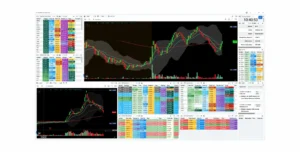
Recommended platform

One platform. All your brokers.
Medved Trader connects multiple brokers in one workspace, with pro charts, hotkeys and fast execution — without changing your broker accounts.
A single cockpit for positions, Level II and multi-broker order routing, built for active day & swing traders.
Get 1 Month Free ➔
Multi-broker workflow + customizable layouts in one platform.
 Monica.im – the AI assistant I use every day
If you find value in the work I publish on Merlintrader and want a practical AI assistant for research and writing, you can sign up using this referral link. Click here to try Monica.im and support the site
Find out how I use AI on Merlintrader: AI, retail and Merlintrader
Disclosure: some of the links in the promotional blocks above are affiliate or referral links. If you choose to subscribe or sign up through them, Merlintrader may receive a small commission or benefit at no extra cost to you.