Skip to content
06/15/2026
  • Biotech Tools Hub
  • Voce di menu
  • Voce di menu
  • Voce di menu
  • Voce di menu
  • Our Profile on PRLog
Merlintrader Trading Pub

Merlintrader Trading Pub

Biotech catalyst news and analysis. FDA PDUFA tracker

DISCLAIMER — Educational content only. Not financial advice. Stocks can be volatile and may cause capital loss.
Read Disclaimer
Primary Menu
  • Merlintrader
    • About Merlintrader
    • Merlintrader Blog
    • Daily Briefing
    • Daily Watchlist
    • Discord
    • Latest News
    • Small & Medium Caps
    • CHARTSWATCHER 10% OFF !
    • Disclaimer
  • Cannabis Stocks Hub 2026
    • Cannabis Stocks HUB 2026: A Possible Reset for a Broken Sector $MSOS, $TLRY, $CGC, $CRON, $ACB
    • Tilray Brands (Nasdaq: $TLRY): Cannabis, Beverage and Medical Cannabis Stock Hub
  • Space, Defense & AI Hub 2026
    • BlackSky Technology Inc. (NYSE: $BKSY) Stock Hub
    • BigBear.ai Holdings (NYSE: $BBAI)
    • Castellum, Inc. (NYSE American: $CTM) Stock Hub
    • Intuitive Machines (Nasdaq: $LUNR) Stock Hub
    • Ondas Holdings (NASDAQ: $ONDS) Stock Hub
    • Palladyne AI Corp. (Nasdaq: $PDYN) Stock Hub
    • Planet Labs PBC (NYSE: $PL)
    • POET Technologies (NASDAQ: $POET): Company Story,
    • Red Cat Holdings (NASDAQ: $RCAT)
    • Redwire Corporation (NYSE: $RDW) Stock Hub
    • Rocket Lab Corporation (Nasdaq: $RKLB) Stock Hub
    • Satellogic Inc. (Nasdaq: $SATL)
  • Biotech Stocks Hub
    • ADMA Biologics (Nasdaq: $ADMA)
    • Agios Pharmaceuticals (Nasdaq: $AGIO) Stock Hub
    • Alpha Tau Medical Ltd. (Nasdaq: $DRTS)
    • Altimmune Inc. (Nasdaq: $ALT )
    • Aquestive Therapeutics (Nasdaq: $AQST Stock Hub.
    • Ardelyx, Inc. (Nasdaq: $ARDX) Stock Hub
    • BioCryst Pharmaceuticals (Nasdaq: $BCRX) Stock Hub
    • Capricor Therapeutics (Nasdaq: $CAPR) Stock Hub
    • Corcept Therapeutics $CORT Stock Hub
    • CorMedix Therapeutics (Nasdaq: $CRMD) Stock Hub
    • Cytokinetics, Incorporated (Nasdaq: $CYTK)
    • Fate Therapeutics (Nasdaq: $FATE): Stock Hub
    • Geron Corporation (Nasdaq: $GERN) Stock Hub
    • ImmunityBio, Inc. (Nasdaq: $IBRX) Stock Hub
    • Iovance Biotherapeutics (Nasdaq: $IOVA)
    • MannKind Corporation (Nasdaq: $MNKD) Stock Hub
    • Microbot Medical Inc. (Nasdaq: $MBOT) Stock Hub
    • Moleculin Biotech (Nasdaq: $MBRX) Stock Hub
    • Novavax, Inc. (Nasdaq: $NVAX) Stock Hub
    • NRx Pharmaceuticals (Nasdaq: $NRXP) Stock Hub
    • Ocugen, Inc. (Nasdaq: $OCGN) Stock Hub
    • Ocular Therapeutix (Nasdaq: $OCUL) Stock Hub
    • Omeros Corporation (Nasdaq: $OMER): Stock Hub
    • Outlook Therapeutics (Nasdaq: $OTLK): Stock Hub
    • Protalix BioTherapeutics (NYSE American: $PLX) Stock Hub
    • SeaStar Medical Holding Corporation (Nasdaq: $ICU) Stock Hub
    • SELLAS Life Sciences Group (Nasdaq: $SLS) Stock Hub.
    • Summit Therapeutics (Nasdaq: $SMMT) Stock Hub
    • Travere Therapeutics (Nasdaq: $TVTX)
    • Viridian Therapeutics (Nasdaq: $VRDN)
  • FREE CATALYST CALENDAR
    • Catalyst Total Tracker
  • Merlintrader Travel Pub

Home - Reports Biotech - Outlook Therapeutics Inc ($OTLK)

  • Reports Biotech
  • OTLK

Outlook Therapeutics Inc ($OTLK)

A post-CRL, post-Type A meeting request deep dive on ONS-5010/LYTENAVA, EU/UK launch reality, funding pressure and how much option value is left in a sub-$35M market cap.
4 months ago (Last updated: 4 weeks ago) 1 view
Deep dive – Outlook Therapeutics (NASDAQ: OTLK)

Outlook Therapeutics after the December 2025 CRL – can Lytenava still find a path to the US wet AMD market?

A post-CRL, post-Type A meeting request deep dive on ONS-5010/LYTENAVA, EU/UK launch reality, funding pressure and how much option value is left in a sub-$35M market cap.
Updated: 13 February 2026 Author: Merlintrader – RunUP Biotech
Wet AMD – anti-VEGF EU / UK approved Three FDA CRLs (2023–2025) Type A meeting requested (Feb 2026) High retail attention
Block 0 – Finviz chart (daily, 12 months)
OTLK – Outlook Therapeutics daily chart (Finviz)
Click the chart to open the full OTLK page on Finviz (with indicators and full-screen view). Price / market cap data in this report are approximate and refer to early February 2026.
Snapshot – where OTLK stands today
Share price (approx.)
~$0.45–0.50
Market cap
~$30–32M
Cash (30 Sep 2025)
$8.1M
ATM proceeds after FY end
$14.9M
FY 2025 net loss
~$62.4M
Lead asset
ONS-5010 / LYTENAVA
High burn Thin cash Single-asset story Commercial EU / UK
Financial data based on Outlook Therapeutics’ FY 2025 10-K and year-end press release, plus subsequent ATM sales disclosed in December 2025.
Market view – equity is pricing a narrow corridor
Implied confidence in eventual US approval
Retail engagement / speculation
Institutional sponsorship (approximate, qualitative)
The tape reflects a binary bet: either a negotiated path back to the FDA table, or a long, dilutive grind funded mainly by EU/UK sales and new capital.
Risk radar – 12–24 month window
Regulatory risk (US)
Very high
Financing / dilution
Very high
Execution (EU/UK launch)
High
IP / competitive pressure
High
CRL overhang Going-concern language EU ramp uncertainty Anti-VEGF class validated
This is a fragile capital structure wrapped around a single high-stakes product – not a conservative dividend payer.

1. Executive Summary – what changed after the December CRL and the February Type A request

Outlook Therapeutics is a single-asset, high-beta story built around ONS-5010/LYTENAVA, an ophthalmic formulation of bevacizumab for wet age-related macular degeneration (wet AMD). In Europe and the UK, LYTENAVA already has marketing authorisation and is commercially available in markets such as Germany and the United Kingdom, where it is positioned as a regulated alternative to off-label Avastin repackaging for retinal injections. In the United States, however, the company is coming off a third FDA Complete Response Letter (CRL) in December 2025, again citing a lack of substantial evidence of effectiveness despite an expanded data package and a second Phase 3 trial. The share price compressed into the $0.4–0.5 range, and the market cap now sits around $30–32M, reflecting both the regulatory overhang and balance-sheet stress.

On 11 February 2026 the company announced that it had submitted a Type A meeting request to the FDA to discuss the December CRL, the interpretation of NORSE TWO and NORSE EIGHT, and what exactly constitutes “confirmatory evidence” in this context. Management argues that the totality of data – an adequate and well-controlled Phase 3 trial (NORSE TWO), a second controlled study (NORSE EIGHT) showing a coherent trajectory beyond the week-8 primary endpoint, mechanistic and pharmacodynamic evidence of VEGF inhibition, and natural history comparisons – should be sufficient to meet the substantial-evidence standard.

Financially, Outlook enters this phase with limited firepower. As of 30 September 2025, cash and cash equivalents stood at $8.1M, not including $14.9M of net proceeds from at-the-market (ATM) sales completed after the fiscal year-end. The FY 2025 net loss was about $62.4M, and both the 10-K and quarterly filings highlight substantial doubt about the company’s ability to continue as a going concern without additional capital. EU/UK sales of LYTENAVA are still in the early ramp phase and are not yet sufficient to fund a US-focused, multi-year regulatory strategy on their own.

This deep dive looks at three core questions: (1) how strong the clinical and regulatory case for LYTENAVA really is after three CRLs; (2) what the EU/UK launch can realistically contribute; and (3) whether the current valuation still embeds meaningful option value once you factor in dilution, timing and execution risk. It is not investment advice and should be read strictly as educational material for traders and investors who want to understand how a “borderline evidence” story behaves when it collides with both regulators and the capital markets.

Merlintrader coverage: this report complements earlier Outlook Therapeutics notes on Merlintrader, including:
– Outlook Therapeutics – first look at the wet AMD bet
– OTLK – Outlook Therapeutics: EU launch vs. FDA risk

2. Company and drug overview – why ONS-5010 matters in wet AMD

Outlook Therapeutics is a US-listed biopharmaceutical company focused almost entirely on the development and commercialisation of ONS-5010/LYTENAVA, an ophthalmic formulation of bevacizumab for retinal diseases. The basic thesis is straightforward: bevacizumab (Avastin) is already widely used off-label in ophthalmology for wet AMD because it is cheaper than branded anti-VEGF agents, but compounding and repackaging raise concerns about sterility, consistency and dosing. A fully regulated, ophthalmic-grade formulation with standardised manufacturing, stability data and pharmacovigilance could, in theory, capture a meaningful share of that off-label volume.

The company’s EU and UK approvals validate the basic pharmacology and positioning: LYTENAVA is authorised for neovascular (wet) AMD in adults, with a dosing schedule aligned to standard anti-VEGF practice and a safety profile consistent with both ranibizumab and intravitreal injections more broadly. The key challenge is not whether the mechanism makes sense, but whether the US regulator is satisfied with the magnitude, consistency and robustness of the effect relative to current standard of care, and whether the trial design – including comparator regimen and dosing – is acceptable as a basis for US labelling.

From an investor’s perspective, this is not a platform company with a diversified pipeline. The value of OTLK equity is almost entirely tied to one drug in one major indication, plus potential label expansions (e.g. other retinal diseases) that are only meaningful if LYTENAVA is first firmly anchored with a successful wet AMD launch.

Indication: wet AMD Mechanism: anti-VEGF (bevacizumab) Formulation: ophthalmic, intravitreal Single-asset dependence

3. US regulatory timeline – three CRLs and a Type A meeting request

3.1 Key milestones and setbacks

The regulatory history of ONS-5010 in the US is unusually complex and is essential to understanding both the current valuation and the risk profile:

  • Initial BLA submission and withdrawal in 2022 after FDA requested additional information and the company opted to regroup.
  • First CRL in 2023, with the FDA citing mainly manufacturing issues and deficiencies identified during pre-approval inspections.
  • Resubmission in 2025, supported by data from the NORSE programme and updated manufacturing controls.
  • Second CRL on 28 August 2025, this time focused on the lack of substantial evidence of effectiveness, with specific reference to clinical efficacy and the comparison with ranibizumab.
  • Third CRL dated 30 December 2025 and disclosed on 31 December 2025, again stating that the total package did not provide sufficient confirmatory evidence to support approval.

The December CRL is particularly important because it arrived after extensive dialogue and after the company believed it had aligned with the FDA on what would be needed for a successful resubmission. The agency’s position – that further confirmatory evidence is still required – shows that the bar for “substantial evidence” in this crowded, highly competitive space is materially higher than what might be acceptable in a truly orphan, high-unmet-need setting.

3.2 The Type A meeting request (February 2026)

In February 2026 Outlook announced that it had submitted a Type A meeting request to the FDA to clarify the December CRL and seek a more precise definition of the additional evidence required. In parallel, the company reiterated its confidence in the clinical package, emphasising:

  • NORSE TWO as a single, adequate and well-controlled Phase 3 trial with clinically meaningful gains in visual acuity at 12 months, including a significantly higher proportion of patients achieving three-line (15-letter) improvements.
  • NORSE EIGHT, a second Phase 3 study that did not meet its primary endpoint at eight weeks but which showed a positive trajectory through 12 weeks, consistent with expectations for an anti-VEGF mechanism and with the durability pattern seen in NORSE TWO.
  • A broad set of mechanistic, pharmacodynamic and natural-history data designed to demonstrate that the observed improvements are unlikely to be explained by disease fluctuations or comparator regimen alone.

Type A meetings are, by definition, focused high-priority interactions usually reserved for stalled or problematic applications. The key here is whether the FDA is willing to outline a concrete, achievable path – for example, acceptance of a specific new trial design, acceptance of longer-term follow-up data as confirmatory evidence, or a targeted “bridging” study – or whether the feedback remains generic, in which case the company faces years of uncertainty and significant capital needs without a clear probability-weighted payoff.

Primary sources: Outlook Therapeutics’ press release on the December 2025 CRL and the February 2026 Type A meeting request, plus FDA-related reporting from major newswires on the August and December CRLs.

4. Clinical evidence – NORSE TWO, NORSE EIGHT and the “totality of data” argument

The core of Outlook’s case rests on the NORSE clinical programme. NORSE TWO is the backbone: a Phase 3, randomised, controlled trial comparing ONS-5010 with ranibizumab in patients with wet AMD, using standard visual-acuity endpoints at 12 months. The study met its primary endpoint, with a higher proportion of patients gaining at least three lines (15 letters) of vision and strong performance on key secondary endpoints (mean change from baseline, proportions gaining one or two lines, and preservation of vision). Safety was consistent with both the control arm and the broader intravitreal anti-VEGF class.

NORSE EIGHT was designed as an additional Phase 3 trial to provide confirmatory evidence, with an early primary endpoint at eight weeks. The study did not meet that primary endpoint, which is one of the main reasons the FDA remains unconvinced. However, Outlook emphasises that beyond the eight-week snapshot the trajectory through 12 weeks – and beyond, where available – is coherent with NORSE TWO and with the pharmacodynamic profile of an anti-VEGF agent. They argue that the failure at week eight is a function of design choices and comparator regimen rather than a true lack of efficacy.

On top of these two trials, the company points to:

  • Mechanistic and pharmacodynamic data demonstrating VEGF inhibition at the ocular level.
  • Natural-history data sets showing that the observed visual improvements are a clear departure from what would be expected in untreated or suboptimally treated populations.
  • Real-world and regulatory experience in the EU and UK, where the same product has been authorised for wet AMD and is now being used in clinical practice.

The problem is that the US bar is not “some evidence of activity”; it is a fairly strict definition of substantial evidence of effectiveness, usually anchored in one or more robustly positive, well-controlled trials with clinically compelling endpoints. A mixed picture – one strong trial, one imperfect confirmatory trial and a composite of mechanistic and natural-history evidence – is intrinsically harder to defend, especially in a market that already has effective approved options.

Key risk: even if a future dialogue with the FDA yields a path forward, it may involve running another trial with a different design or comparator strategy, which would require time, money and patient recruitment in a crowded anti-VEGF landscape. That is a non-trivial lift for a company with a constrained balance sheet.

5. EU and UK – where LYTENAVA is already real

While the US story is dominated by CRLs, Europe tells a very different story. The European Commission granted marketing authorisation for LYTENAVA (bevacizumab gamma) for wet AMD in 2024, followed by MHRA approval in the UK. In June 2025 the company began commercial launches in Germany and the UK, positioning LYTENAVA as the first and only authorised ophthalmic formulation of bevacizumab for wet AMD in those markets.

This is not just a label: it confers three strategic advantages.

  • Regulatory credibility: being approved by the EMA and MHRA shows that major regulators outside the US are comfortable with the benefit–risk profile and the clinical data.
  • Commercial foothold: even modest early sales provide real-world validation and help refine pricing, access and positioning versus other anti-VEGF options.
  • Strategic optionality: a product with existing approvals and a working supply chain is inherently more interesting for potential partners, even if US approval remains uncertain.

The big caveat is scale: wet AMD is a large market, but accessing it requires negotiation with public payers, formulary inclusion, and physician behaviour change away from entrenched branded anti-VEGF agents and cheaper, established compounding solutions. Early LYTENAVA revenue is not yet large enough to change the balance-sheet picture on its own, and Outlook will likely remain dependent on external financing for the foreseeable future.

Regulatory sources: EU and UK approval decisions for LYTENAVA, EMA EPAR documentation and publicly available materials describing the indication, dosing and clinical data package behind the European marketing authorisation.

6. Financials, cash runway and dilution risk

For a story like OTLK, balance-sheet analysis is almost as important as pipeline analysis. As of 30 September 2025, Outlook reported:

  • Cash and cash equivalents: $8.1M.
  • Additional ATM proceeds after year-end: $14.9M in net cash inflows.
  • Net loss for FY 2025: approximately $62.4M.

The company’s own filings state that, absent additional capital, existing resources are not sufficient to fund operations for 12 months from the date of filing – classic going-concern language. With the December CRL and the need for further regulatory work, the path forward will almost certainly involve a combination of:

  • Continued use of the ATM facility (if market conditions permit).
  • Potentially dilutive equity or equity-linked financings.
  • Structured deals around EU/UK or ex-US rights, such as regional partnerships or royalty transactions.

At a market cap of roughly $30–32M and a share price below $1, the scope for large equity raises at current levels is limited without severe dilution. Any step-up in valuation would likely require either a materially clearer FDA path (after a successful Type A meeting) or stronger-than-expected traction and cash-flow visibility from the European launch.

Financing takeaway: investors should assume multiple future capital raises and factor in the risk that these may need to be executed from a position of relative weakness if regulatory news remains ambiguous or negative.

7. Strategic options and scenario map (2026–2028)

With three CRLs behind it and a small but real EU/UK business, Outlook’s strategic menu over the next 24–36 months is relatively narrow but still meaningful. At a high level, three scenarios stand out:

7.1 Constructive FDA path

In the most optimistic scenario, the Type A meeting results in a clear roadmap that the company can realistically execute: perhaps a limited, targeted study with refined endpoints or a commitment to a longer-term follow-up data set that the FDA would be willing to treat as confirmatory. In that case, the story becomes a timing and funding problem: can OTLK raise enough capital on acceptable terms to execute that plan while EU/UK revenue ramps, without crushing existing shareholders?

7.2 Ambiguous feedback and extended limbo

A more neutral scenario is one in which the Type A meeting yields general guidance but no specific, actionable design. The company may still pursue additional analyses or small studies, but the probability of a near-term filing resuscitation remains low. Equity then trades mostly as a levered option on EU/UK performance and the possibility that a partner, acquirer or future data set can change the FDA narrative.

7.3 Strategic pivot or restructuring

In the most bearish scenario, regulatory progress stalls, capital becomes too expensive and the company is forced to explore strategic alternatives: aggressive cost cuts, asset sales, regional licensing or even a broader restructuring. EU/UK approvals retain some value, but the equity could be heavily impaired if additional financing comes in the form of highly dilutive or senior instruments.

Key question for traders: does the current ~$30–32M valuation already assume that the US will never be approved and that EU/UK will only partially monetise the wet AMD opportunity, or is there still room for disappointment? The answer will depend heavily on what the company actually discloses after the Type A meeting.

8. Risk factors and red flags

This is not a conservative, low-volatility equity. Some of the key risk dimensions include:

  • Regulatory risk: three CRLs in a row signal a fundamental disagreement between the company and the FDA on what constitutes adequate evidence. That is qualitatively different from a single CRL resolved by a straightforward manufacturing fix.
  • Concentrated asset risk: with no broad pipeline, any negative regulatory or commercial development for LYTENAVA hits the entire equity story at once.
  • Financing and dilution: a small-cap biotech with going-concern language, high annual losses and limited cash is structurally exposed to frequent, sometimes opportunistic capital raises.
  • Competitive pressure: the wet AMD space includes multiple approved anti-VEGF therapies with long track records, and ophthalmologists are conservative when choosing between well-known branded drugs, hospital protocols for compounding, and new entrants.
  • Execution risk in EU/UK: simply having an approved label does not guarantee rapid adoption, especially where treatment algorithms, reimbursement rules and clinic logistics are already optimised around existing agents.
Bottom line on risk: OTLK is fundamentally a speculative, event-driven equity. Position-sizing, time horizon and tolerance for volatility are far more important here than any attempt to model an “average” outcome.

9. Sentiment – what Reddit, Stocktwits and X are telling you

Community sentiment around Outlook Therapeutics has been intense and highly polarised. A dedicated investor subreddit and an active stream on Stocktwits show that retail traders have followed every regulatory twist and price spike, often with aggressive upside expectations and target prices disconnected from traditional valuation frameworks.

Before the latest CRL sequence, sentiment metrics and message-volume data pointed to “extremely bullish” retail positioning, with heavy focus on the narrative of “first FDA-approved bevacizumab eye formulation” and the perceived arbitrage between off-label Avastin and a fully regulated product. After the December 2025 CRL, the tone shifted: while some holders remain convinced that the FDA will eventually concede, others explicitly question the management team’s ability to navigate the regulatory process and express fatigue with repeated disappointments.

On X (Twitter), the stock appears mainly in high-volatility, short-term trading threads: OTLK is used as a vehicle for intraday moves around news, volume spikes and short-term technical setups, rather than as a long-term conviction position.

Sentiment takeaway: the online crowd has not abandoned OTLK, but expectations are now fractured. Any news after the Type A meeting – positive or negative – is likely to trigger sharp, sentiment-driven swings amplified by social-media feedback loops.

Sentiment references are based on publicly visible discussions on Reddit, Stocktwits and X (Twitter). These are opinions of non-professional traders and commentators and should never be treated as research or advice.

10. Where OTLK fits (or not) in a catalyst / run-up strategy

For traders who focus on “run-up to catalyst” patterns, Outlook Therapeutics is a special case. The classic run-up model relies on fairly clean, date-driven events (PDUFAs, panel meetings, Phase 2/3 readouts) where probability and payoff can be vaguely framed. Here, by contrast, the December CRL and the Type A meeting request have pushed the story into a grey zone: there is no fixed approval date on the calendar, and the next catalyst is qualitative information about what, if anything, the FDA is willing to accept as a way forward.

That does not mean there are no trading opportunities. Instead, it means that:

  • Moves are likely to cluster around information micro-events (Type A scheduling, meeting outcome summaries, updated guidance, financing announcements) rather than a single binary date.
  • Short-term swings may be driven more by liquidity and positioning than by fundamental updates, given the small float and heavy retail participation.
  • Any future, clearly dated regulatory submission or resubmission would re-create a more traditional run-up setup – but only if the company survives financially and if the market believes the new dossier is materially different from the ones that have already failed.
Traders who use OTLK in a run-up strategy should treat it as a high-volatility satellite, not a core position, and should be explicit about whether they are trading around news flow or speculating on a long-dated recovery of the US regulatory story.

11. Key links and primary sources

For deeper work and to verify every number and claim, always go back to primary documents and official sources. A non-exhaustive but practical list:

  • Outlook Therapeutics investor relations newsroom – regulatory updates, CRL disclosures and the February 2026 Type A meeting request press release.
  • FY 2025 Form 10-K and recent Forms 10-Q – detailed financial statements, cash-runway and going-concern language.
  • EMA and UK regulatory documentation for LYTENAVA – indication, dosing, clinical data and safety profile used for EU/UK approval decisions.
  • Major international newswires coverage (e.g. regulatory news from global agencies) on the August and December 2025 CRLs, including description of the FDA’s stated concerns about efficacy.
  • Peer-reviewed ophthalmology articles describing the clinical performance of bevacizumab-based regimens for wet AMD and the NORSE programme design.

This report is designed to be read together with Merlintrader’s previous notes on Outlook Therapeutics: Outlook Therapeutics – first look at the wet AMD bet and OTLK – Outlook Therapeutics: EU launch vs. FDA risk .

This article is provided strictly for educational and informational purposes. It is not, and must not be interpreted as, an offer to buy or sell any financial instrument, nor as personalised investment, legal, tax or accounting advice. The author is not a licensed financial advisor and does not provide investment recommendations or portfolio management services. All opinions expressed are based on publicly available information such as SEC filings, official regulatory documents (FDA, EMA, MHRA and other authorities), company press releases and coverage from major international newswires at the time of writing. Figures and dates may change quickly; readers must always verify data directly from the latest primary sources before taking any investment decision.

Trading and investing in biotech and small-cap equities can result in substantial losses, including the loss of all capital invested. Past performance is not indicative of future results. Each reader is solely responsible for their own decisions and should consult qualified, independent professionals where appropriate.

For full legal information and disclaimers, please refer to:
Disclaimer
and https://merlintrader.com/condizioni-duso-e-info-privacy/ .

Quick thesis snapshot

OTLK is a high-risk, high-beta equity where value is concentrated in one ophthalmic bevacizumab product. EU/UK approvals validate the concept, but repeated US CRLs, a thin balance sheet and a crowded competitive field make the path forward uncertain and potentially very dilutive.

OTLK in one paragraph

A tiny market cap, a real but early European business and an unresolved fight with the FDA over how much evidence is “enough” in wet AMD. Between those three poles, the share price behaves more like an option than a classic investment.

Key monitoring points

  • Scheduling and outcome of the Type A meeting.
  • Any specific guidance on further trials or data sets.
  • Size and terms of the next financing transaction.
  • Early revenue traction and access wins in Germany/UK.
  • Shifts in retail sentiment after major headlines.

Run-up vs. long-term angle

For short-term traders, OTLK is mainly a volatility vehicle around news flow. For longer-term, catalyst-driven investors, the key is whether a credible, funded path to a US label ever emerges – and whether they are willing to sit through multiple funding cycles while waiting.

Deep dive – Outlook Therapeutics (NASDAQ: OTLK)

Outlook Therapeutics dopo la CRL di dicembre 2025 – Lytenava ha ancora una strada verso il mercato USA?

Analisi approfondita post-CRL e post richiesta di Type A meeting su ONS-5010/LYTENAVA, realtà del lancio EU/UK, pressione finanziaria e quanto valore opzionale resta in una capitalizzazione sotto i 35 milioni di dollari.
Aggiornato: 13 febbraio 2026 Autore: Merlintrader – RunUP Biotech
Wet AMD – anti-VEGF Approvato in UE / UK Tre CRL FDA (2023–2025) Type A meeting richiesto (feb 2026) Forte attenzione retail
Blocco 0 – Grafico Finviz (daily, 12 mesi)
OTLK – Outlook Therapeutics grafico giornaliero (Finviz)
Clicca sul grafico per aprire la pagina completa di OTLK su Finviz (indicatori e vista full-screen). Prezzo e market cap sono indicativi e si riferiscono ai primi giorni di febbraio 2026.
Snapshot – dove si trova oggi OTLK
Prezzo azione (circa)
~0,45–0,50 $
Market cap
~30–32 M$
Cassa (30 set 2025)
8,1 M$
Proventi ATM post FY
14,9 M$
Perdita netta FY 2025
~62,4 M$
Asset principale
ONS-5010 / LYTENAVA
Burn elevato Cassa limitata Story mono-asset Commerciale in UE / UK
Dati finanziari tratti dal 10-K FY 2025 di Outlook Therapeutics e dal comunicato di fine anno, inclusi i proventi da ATM comunicati a dicembre 2025.
Market view – cosa sta prezzando il mercato
Fiducia implicita in un’approvazione USA
Coinvolgimento / speculazione retail
Sponsorship istituzionale (qualitativa)
Il prezzo riflette un “binario compresso”: o si trova una via negoziata con la FDA, oppure il titolo resta intrappolato in un lungo percorso diluitivo finanziato da vendite EU/UK e nuovo capitale.
Risk radar – finestra 12–24 mesi
Rischio regolatorio (USA)
Molto alto
Finanziamento / diluizione
Molto alto
Execution (lancio EU/UK)
Alto
Pressione competitiva
Alta
CRL persistente Going-concern Ramp EU incerto Classe anti-VEGF consolidata
OTLK non è il classico titolo “difensivo”: è un equity ad alto beta dove il rischio di execution e di capitale è strutturalmente elevato.

1. Executive Summary – cosa è cambiato dopo la CRL di dicembre e la richiesta di Type A

Outlook Therapeutics è, in pratica, una scommessa concentrata su un solo asset: ONS-5010/LYTENAVA, una formulazione oftalmica di bevacizumab per la degenerazione maculare umida legata all’età (wet AMD). In Europa e nel Regno Unito il farmaco è già autorizzato e in fase di lancio commerciale in Paesi come Germania e UK, dove viene proposto come alternativa regolata all’uso off-label di Avastin. Negli Stati Uniti, invece, la storia è dominata da tre Complete Response Letter della FDA, l’ultima datata fine dicembre 2025, che insiste sulla mancanza di “substantial evidence of effectiveness” nonostante un pacchetto dati ampliato e un secondo studio di Fase 3.

L’11 febbraio 2026 l’azienda ha comunicato di aver richiesto un Type A meeting con la FDA per discutere l’ultima CRL e cercare di capire in modo più preciso quale tipo di evidenza confermatoria l’agenzia considera accettabile. La posizione di Outlook è chiara: NORSE TWO, come studio di Fase 3 adeguato e controllato con endpoint visivi a 12 mesi, più NORSE EIGHT (pur negativo sull’endpoint a 8 settimane ma con un andamento coerente fino a 12 settimane), uniti a dati meccanicistici, farmacodinamici e di storia naturale, dovrebbero soddisfare lo standard regolatorio.

Il problema è che, lato bilancio, il margine di manovra è stretto. Al 30 settembre 2025 la società riportava 8,1 M$ di cassa, a cui si aggiungono 14,9 M$ di proventi netti dall’ATM dopo la chiusura dell’esercizio, contro una perdita netta annua di circa 62,4 M$. Nel 10-K e nelle trimestrali viene esplicitamente riconosciuto un “substantial doubt” sulla capacità di continuare l’operatività senza ulteriori fonti di capitale. Le vendite EU/UK di LYTENAVA sono ancora in fase iniziale e non bastano, da sole, a sostenere una strategia USA pluriennale.

Questo deep dive ha tre obiettivi: (1) valutare quanto è solido, davvero, il dossier clinico e regolatorio dopo tre CRL; (2) capire cosa può realisticamente portare il lancio europeo in termini di cassa e credibilità; (3) stimare se ai prezzi attuali resta ancora vero valore opzionale una volta messi sul tavolo diluizione, tempistiche e execution risk. Non è un invito all’acquisto o alla vendita, ma un documento educativo per chi vuole inquadrare una storia “borderline” nel rapporto tra evidenza, regolatori e mercati.

Copertura Merlintrader: questo report integra le note già pubblicate su Merlintrader, tra cui:
– Outlook Therapeutics – prima lettura sulla scommessa wet AMD
– OTLK – Outlook Therapeutics: lancio europeo vs rischio FDA

2. Azienda e farmaco – perché ONS-5010 è rilevante nella wet AMD

Outlook Therapeutics è una small cap biotech focalizzata quasi esclusivamente su ONS-5010/LYTENAVA. Il concetto è intuitivo: bevacizumab è già usato su larga scala off-label in oculistica per la wet AMD perché costa meno rispetto agli anti-VEGF branded, ma il percorso di compounding e repackaging introduce rischi di sterilità, consistenza e dosing. Una formulazione oftalmica autorizzata, con filiera produttiva certificata, studi di stabilità e farmacovigilanza dedicata, può – in teoria – catturare parte di quel volume e offrire un profilo rischio/beneficio più trasparente.

L’autorizzazione in UE e UK dimostra che regolatori importanti fuori dagli USA ritengono accettabile il rapporto beneficio–rischio di LYTENAVA per la wet AMD. Il nodo è il mercato americano: un ambiente molto più competitivo, con standard di evidenza elevati e un portafoglio di alternative consolidate. La domanda chiave non è se il meccanismo funzioni – la classe anti-VEGF è ben validata – ma se i dati generati da Outlook siano sufficientemente robusti, coerenti e ben disegnati rispetto all’attuale standard of care.

Dal punto di vista dell’investitore, non siamo davanti a una “platform story” con 5–6 asset indipendenti. Qui il valore dell’equity è quasi interamente legato a un solo farmaco, in una sola indicazione principale, con eventuali estensioni (altre patologie retiniche) che diventano davvero interessanti solo se prima si consolida un lancio di successo nella wet AMD.

Indicazione: wet AMD Meccanismo: anti-VEGF (bevacizumab) Formulazione: oftalmica intravitreale Dipendenza da un solo asset

3. Timeline regolatoria USA – tre CRL e una richiesta di Type A

La storia regolatoria di ONS-5010 negli Stati Uniti è lunga e tortuosa:

  • Prima BLA presentata e poi ritirata nel 2022 dopo richieste aggiuntive della FDA.
  • Prima CRL nel 2023, in larga parte focalizzata su aspetti produttivi e ispezioni pre-approvazione.
  • Nuova sottomissione nel 2025 con il programma NORSE e processi produttivi rivisti.
  • Seconda CRL il 28 agosto 2025, con focus spostato sul mancato raggiungimento della “substantial evidence of effectiveness”.
  • Terza CRL datata 30 dicembre 2025 (comunicata il 31), che ribadisce la richiesta di ulteriori evidenze confermatorie nonostante l’espansione del pacchetto dati.

La CRL di dicembre è quella che ha fatto più rumore, perché arriva dopo mesi di confronto in cui la società riteneva di essersi allineata con la FDA sui requisiti per una BLA “riparata”. Il messaggio che passa è che, in un mercato affollato e con alternative efficaci, l’asticella per parlare di “substantial evidence” è più alta rispetto a contesti orfani o ultra-rari.

La richiesta di Type A meeting di febbraio 2026 è, di fatto, un tentativo di far mettere nero su bianco all’agenzia che cosa serva davvero: un nuovo studio? Un endpoint diverso? Una finestra temporale più lunga per NORSE EIGHT? Oppure la posizione è che, in questa classe terapeutica e in questo segmento di pazienti, il rischio/beneficio di un nuovo bevacizumab autorizzato non è sufficientemente superiore allo status quo?

Fonti primarie: comunicati di Outlook Therapeutics sulle CRL di agosto e dicembre 2025 e sulla richiesta di Type A meeting di febbraio 2026, oltre alla copertura delle principali agenzie stampa internazionali.

4. Evidenza clinica – NORSE TWO, NORSE EIGHT e il tema della “totalità dei dati”

Il cuore della tesi di Outlook è il programma NORSE. NORSE TWO è lo studio cardine: Fase 3 randomizzata e controllata, ONS-5010 vs ranibizumab in pazienti con wet AMD, endpoint visivi a 12 mesi. Lo studio ha raggiunto l’endpoint primario, con una quota più alta di pazienti che guadagnano almeno tre linee (15 lettere) di acuità visiva e risultati convincenti anche sugli endpoint secondari chiave.

NORSE EIGHT è stato disegnato come secondo studio di Fase 3 per fornire evidenza confermatoria, con un endpoint primario a 8 settimane. Qui il problema: l’endpoint a 8 settimane non è stato centrato. Il messaggio della società è che, guardando oltre le 8 settimane, il profilo di risposta fino a 12 settimane è coerente con NORSE TWO e con quanto ci si aspetta da un anti-VEGF, ma la FDA continua a considerare insufficiente questo tipo di argomentazione, almeno in questa indicazione.

A NORSE TWO e NORSE EIGHT si aggiungono dati meccanicistici, farmacodinamici e di storia naturale che puntano a dimostrare che i miglioramenti osservati non sono compatibili con la semplice variabilità della malattia. La questione, però, non è se il farmaco “funzioni” in assoluto, ma se i dati prodotti soddisfino lo standard richiesto per un farmaco oftalmico in un mercato grande e competitivo come la wet AMD negli Stati Uniti.

Punto critico: se, dopo il Type A, la FDA chiedesse uno studio addizionale ben definito, il problema diventerebbe soprattutto di tempo e soldi. Se invece il feedback restasse vago, il rischio è di entrare in una lunga limbo-phase con burn elevato e poca visibilità su un “endgame” regolatorio.

5. UE e Regno Unito – dove LYTENAVA è già realtà

In Europa la narrativa è molto diversa. La Commissione Europea ha concesso l’autorizzazione all’immissione in commercio per LYTENAVA (bevacizumab gamma) nella wet AMD nel 2024, seguita dal via libera MHRA nel Regno Unito. Nel 2025 sono partiti i lanci commerciali in Germania e UK, con LYTENAVA posizionato come prima e unica formulazione oftalmica di bevacizumab autorizzata per wet AMD in adulti.

I vantaggi strategici sono chiari: credibilità regolatoria, un minimo di trazione commerciale e una base concreta su cui discutere accordi di partnership o licensing. Il limite, per ora, è la scala: i ricavi iniziali non sono sufficiente a cambiare radicalmente il profilo di cassa e, senza una strategia USA credibile, il potenziale di lungo termine resta compresso.

Fonti regolatorie: documentazione EMA / MHRA su LYTENAVA, incluse le EPAR e i riassunti delle caratteristiche del prodotto.

6. Cassa, bilancio e rischio di diluizione

Sui numeri, il quadro è semplice e severo: cassa ridotta, burn elevato, going-concern esplicito. I 23 M$ circa combinando cassa al 30 settembre 2025 e proventi ATM successivi non bastano per finanziare anni di dialogo regolatorio, trial aggiuntivi e lancio globale. Il modello base deve includere:

  • continua attivazione dell’ATM (se il mercato lo permette);
  • nuove emissioni di equity o strumenti ibridi con impatto diluitivo;
  • possibili accordi su diritti regionali, royalty deal o partnership mirate.

Con una capitalizzazione nell’ordine dei 30–32 M$ e una quotazione sotto 1 dollaro, ogni aumento di capitale “pesante” comporta un rischio concreto di diluizione importante per gli attuali azionisti.

7. Scenari possibili (2026–2028)

In estrema sintesi:

  • Scenario positivo: il Type A produce una roadmap chiara e praticabile; l’azienda riesce a finanziare il percorso con una combinazione di EU/UK cash-flow, ATM e deal mirati, senza diluire eccessivamente gli azionisti, e nel medio periodo si arriva a un dossier ritenuto accettabile dalla FDA.
  • Scenario intermedio: feedback generico, nessun disegno di studio concreto; la storia diventa una lunga attesa su un business europeo in crescita ma non esplosivo, con equity usata come “chip” speculativo più che come investimento direzionale.
  • Scenario negativo: nessun progresso regolatorio, condizioni di mercato sfavorevoli per ulteriori aumenti di capitale, necessità di ristrutturazione, tagli o cessione di asset.
Domanda per chi fa trading: a questi livelli di prezzo il mercato sta già prezzando uno scenario “no FDA per sempre” con solo parziale monetizzazione EU/UK, o c’è ancora spazio per delusione? La risposta dipenderà in larga misura da cosa uscirà dal Type A meeting.

8. Sentiment – cosa si vede su Reddit, Stocktwits e X

L’azione OTLK è stata per mesi un piccolo “caso di studio” di sentiment retail: subreddit dedicato, flusso intenso di messaggi su Stocktwits, target price esotici e narrativa “multi-bagger” basata sul potenziale di essere il primo bevacizumab oftalmico approvato dalla FDA. Dopo l’ultima CRL, il tono si è fatto molto più misto: da una parte hard-believers che continuano a puntare tutto sul “prima o poi approvano”, dall’altra commenti apertamente scettici sulle capacità del management e sul rapporto rischio/rendimento.

Su X (Twitter) il titolo è spesso citato nei thread su penny stock ad alta volatilità: spunti di intraday, squeeze di breve, algoritmi e letture tecniche, più che analisi fondamentali di lungo periodo.

In sintesi: il sentiment non è morto, ma è fratturato. Qualunque novità sul fronte FDA o sul fronte finanziamenti può attivare movimenti violenti, amplificati dalle community di trading.

I riferimenti al sentiment sono basati su discussioni pubbliche su Reddit, Stocktwits e X (Twitter). Si tratta di opinioni di trader non professionisti e non devono essere considerate ricerca o consulenza.

Questo articolo ha finalità esclusivamente educative e informative. Non costituisce, e non deve essere interpretato come, un’offerta o sollecitazione all’acquisto o alla vendita di strumenti finanziari, né come raccomandazione personalizzata di investimento, consulenza legale, fiscale o contabile. L’autore non è un consulente finanziario abilitato e non presta servizi di consulenza o gestione.

I contenuti si basano su informazioni pubbliche – in particolare documenti SEC, comunicati ufficiali delle autorità regolatorie (FDA, EMA, MHRA e altre), comunicati stampa societari e notizie diffuse dalle principali agenzie internazionali – e possono diventare rapidamente superati o incompleti. Ogni lettore deve verificare in autonomia dati e fonti più aggiornate prima di assumere qualunque decisione d’investimento.

Il trading e l’investimento in titoli biotech e small cap possono comportare perdite significative, inclusa la perdita totale del capitale investito. La performance passata non è indicativa di risultati futuri. Ognuno è responsabile delle proprie scelte e dovrebbe, se necessario, consultare professionisti indipendenti qualificati.

Per le informazioni legali complete e i disclaimer di Merlintrader si veda:
Disclaimer
e https://merlintrader.com/condizioni-duso-e-info-privacy/ .

OTLK in due righe

Un farmaco approvato in UE/UK, bocciato tre volte dalla FDA, con una cassa limitata e una community retail molto attiva. Più simile a un’opzione regolatoria che a un “investment grade”.

Cosa guardare nel breve

  • Data e contenuto del Type A meeting.
  • Eventuali richieste esplicite di nuovo trial.
  • Termini del prossimo aumento di capitale.
  • Primi dati concreti sul ramp di LYTENAVA in Europa.
  • Reazioni del retail a ogni nuova notizia.

Approccio RunUP / catalyst

In un’ottica RunUP Biotech, OTLK non è un classico “pre-PDUFA” con finestra chiara, ma una storia di news-flow qualitativo. Ha senso solo come posizione satellite, con size molto controllata e orizzonte temporale esplicitamente speculativo.

Biotech Catalyst Calendar

Se ti interessa seguire non solo OTLK ma l’intero flusso di PDUFA, trial read-out e decisioni regolatorie sulle biotech USA, puoi consultare il Biotech Catalyst Calendar aggiornato: https://merlintrader.com/calendario-catalyst/ .

If you like the contents of Merlintrader, help the project by sharing the site on social media and forums. Se ti piacciono i contenuti del sito, aiutami condividendolo nei social ed in altri forum. Grazie.
Top 10 Biotech Stocks to Watch in H1 2026 — PDUFA Dates & Catalysts

What do you feel about this?

  • Reports Biotech
  • OTLK

Post navigation

Previous: Top 10 Biotech Stocks to Watch in H1 2026 — PDUFA Dates & Catalysts
Next: Top 10 Us Defense Stocks With Real Growth Optionality

Related Stories

AMLX
  • Reports Biotech

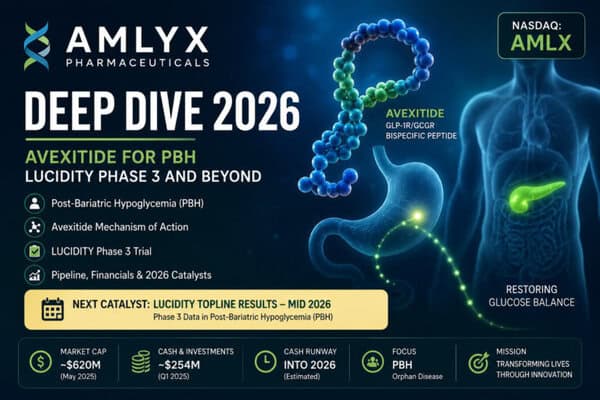
Amylyx Pharmaceuticals (Nasdaq: $AMLX) — Avexitide, Post-Bariatric Hypoglycemia and the LUCIDITY Phase 3 Trial

1 hour ago 45
UNCY SPRO CAPR
  • Reports Biotech

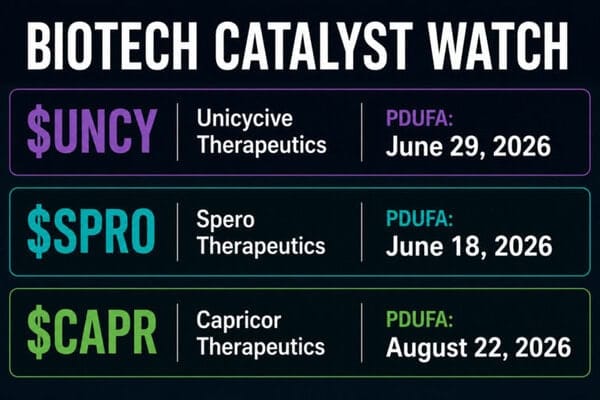
FDA Pressure Builds Into Summer: Unicycive, Spero and Capricor Move Toward High-Stakes Decisions

2 days ago 21
OTLK JUNE
  • Reports Biotech
  • OTLK

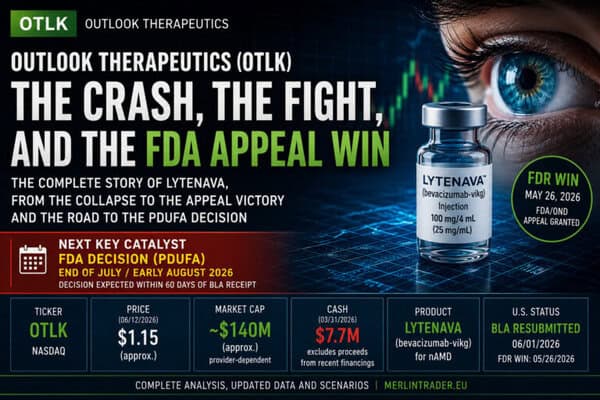
Outlook Therapeutics (OTLK) — The Crash, the Fight, and the FDA Appeal Win

3 days ago 6
Biotech Tape
  • Reports Biotech

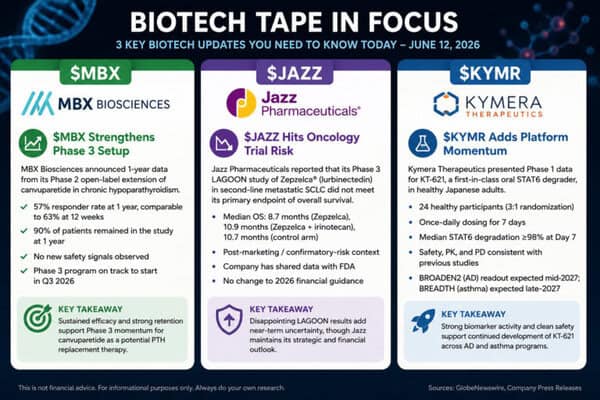
Biotech Tape in Focus: $MBX Strengthens Phase 3 Setup, $JAZZ Hits Oncology Trial Risk, $KYMR Adds Platform Momentum

3 days ago 0
COGT
  • Reports Biotech

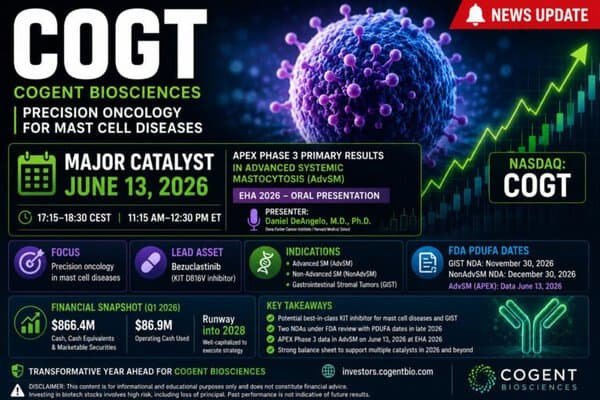
Cogent Biosciences (Nasdaq: $COGT) Deep Dive: Bezuclastinib, Three FDA Paths, and the EHA APEX Catalyst

3 days ago 7
iron
  • Reports Biotech

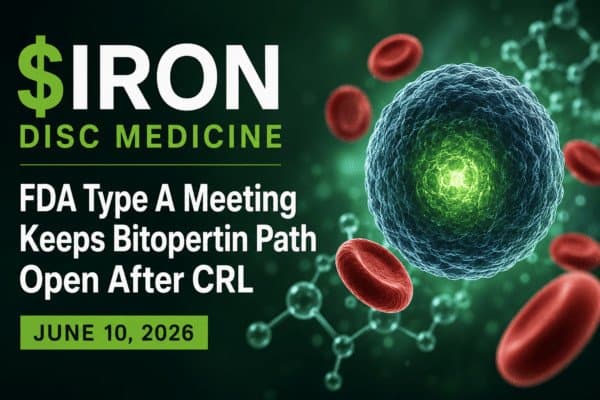
Disc Medicine (Nasdaq: $IRON): FDA Type A Meeting Keeps Bitopertin Alive After CRL

5 days ago 1

Trending Now

Amylyx Pharmaceuticals (Nasdaq: $AMLX) — Avexitide, Post-Bariatric Hypoglycemia and the LUCIDITY Phase 3 Trial AMLX 1
  • Reports Biotech

Amylyx Pharmaceuticals (Nasdaq: $AMLX) — Avexitide, Post-Bariatric Hypoglycemia and the LUCIDITY Phase 3 Trial

1 hour ago 45
The Week Ahead: Fed Pressure, Trump Risk, SpaceX Aftershock and Small-Cap Catalysts to Watch — $SPRO $RKLB $PL The week ahead jun 15 2
  • Editorial

The Week Ahead: Fed Pressure, Trump Risk, SpaceX Aftershock and Small-Cap Catalysts to Watch — $SPRO $RKLB $PL

4 hours ago 33
Short Squeeze Watch: three crowded short-interest stocks, but not the same setup Short 3
  • Uncategorized

Short Squeeze Watch: three crowded short-interest stocks, but not the same setup

2 days ago 11
FDA Pressure Builds Into Summer: Unicycive, Spero and Capricor Move Toward High-Stakes Decisions UNCY SPRO CAPR 4
  • Reports Biotech

FDA Pressure Builds Into Summer: Unicycive, Spero and Capricor Move Toward High-Stakes Decisions

2 days ago 21

Welcome to Merlintrader!
Here we share ideas, analysis and news from the biotech and small-cap world, with a special focus on the catalysts that really move the market.
If you like the content on this site, please help me by sharing it on social media and in other forums. Thank you!

✦ Disclaimer: The information provided is strictly for educational and informational purposes. This content represents independent, informational research and does not constitute regulated investment research or financial advice. I am not a licensed financial advisor or an authorized investment professional. Nothing here should be interpreted as a recommendation to buy, sell, or trade any security. If you need personalized financial advice, you should consult a qualified and authorized professional. Biotech and small-cap stocks carry significant risk, including the potential loss of all invested capital. Each user remains fully responsible for their own trading decisions. Full legal disclaimers.
✦ RunUP Biotech: Interested in understanding market dynamics around FDA catalysts and clinical trials? The RunUP Biotech strategy provides a framework for analyzing pre-event positioning, volume patterns, and risk-management approaches. Educational focus on probability and pattern structure — not predictions or guaranteed outcomes. Learn more →
✦ Support Merlintrader: This website is free and has no paywall. If you find the reports and tools useful, you can support the project via Buy Me a Coffee — it helps me cover costs and keep publishing independent analysis.
✦ Disclosure: I closed my DRTS position today, May 11, at $10.29 per share, after entering at $7.31 per share. I opened a small position in CING on May 12 at $4.90 per share. Read the full disclaimer.
```
Free research library

Explore the Merlintrader blog

Inside the site you will find hundreds of free reports, deep dives on biotech and small caps, FDA catalyst coverage, market analysis, and articles built to help readers understand what really moves these stocks.

  • Full reports on individual stocks
  • FDA, catalyst and clinical-trial analysis
  • Daily briefings, watchlists and market themes
  • A free archive updated on a regular basis
Explore the blog

Free content, readable structure, and regular updates.

Archivio gratuito

Esplora il blog Merlintrader

Nel sito trovi centinaia di report gratuiti, approfondimenti su biotech e small cap, catalyst FDA, analisi di mercato e articoli pensati per aiutare i lettori a capire meglio cosa muove davvero questi titoli.

  • Report completi su singoli titoli
  • Analisi di catalyst, FDA e trial clinici
  • Daily briefing, watchlist e temi di mercato
  • Un archivio gratuito aggiornato con regolarità
Vai al blog

Contenuti gratuiti, struttura leggibile e aggiornamenti costanti.

Merlintrader Newsletter

Stay ahead of the next catalyst

Get market notes, deep-dive updates and catalyst-focused research directly from Merlintrader.

Educational market content only. No spam. You can unsubscribe anytime.
Terms, privacy and disclaimer

You May Have Missed

AMLX
  • Reports Biotech

Amylyx Pharmaceuticals (Nasdaq: $AMLX) — Avexitide, Post-Bariatric Hypoglycemia and the LUCIDITY Phase 3 Trial

1 hour ago 45
The week ahead jun 15
  • Editorial

The Week Ahead: Fed Pressure, Trump Risk, SpaceX Aftershock and Small-Cap Catalysts to Watch — $SPRO $RKLB $PL

4 hours ago 33
Short
  • Uncategorized

Short Squeeze Watch: three crowded short-interest stocks, but not the same setup

2 days ago 11
UNCY SPRO CAPR
  • Reports Biotech

FDA Pressure Builds Into Summer: Unicycive, Spero and Capricor Move Toward High-Stakes Decisions

2 days ago 21

Scanner for active traders
ChartsWatcher logo

Try ChartsWatcher free, then unlock 10% OFF with SAVE10

ChartsWatcher is a real-time scanner for momentum traders: fast movers, unusual volume and rotations — so you can focus on the few tickers that matter right now, instead of watching hundreds of charts.

Start with the free version. When you upgrade, use SAVE10 for 10% OFF your first paid period.

Start free – then use SAVE10

No credit card required to start. Apply SAVE10 when upgrading.

ChartsWatcher platform screenshot
Recommended platform
Medved Trader logo

One platform. All your brokers.

Medved Trader connects multiple brokers in one workspace, with pro charts, hotkeys and fast execution — without changing your broker accounts.

A single cockpit for positions, Level II and multi-broker order routing, built for active day & swing traders.

Get 1 Month Free ➔

Multi-broker workflow + customizable layouts in one platform.

Medved Trader platform dashboard
Monica.im Monica.im – the AI assistant I use every day

If you find value in the work I publish on Merlintrader and want a practical AI assistant for research and writing, you can sign up using this referral link. Click here to try Monica.im and support the site

Find out how I use AI on Merlintrader: AI, retail and Merlintrader

Disclosure: some of the links in the promotional blocks above are affiliate or referral links. If you choose to subscribe or sign up through them, Merlintrader may receive a small commission or benefit at no extra cost to you.

Merlintrader author

Authors: Merlintrader, Jane and Gemini

Author's note

In every piece of content I share things as I personally interpret them, based on raw data from official company filings, regulatory documents, conference call transcripts and other primary sources where available. Some parts of the research and structure are supported by AI assistants (Jane and Gemini), which help me organise data, cross-check details and improve charts or visuals. However, any interpretation, opinion and final judgement remain entirely my own as a trader like you, not as a licensed financial advisor or registered analyst. Market sentiment can change quickly, while official documents and numbers remain what they are. It is also possible for me to make mistakes: collecting and cross-checking FDA timelines, clinical data, filings and corporate updates is complex, so inaccuracies may occur. If you spot something that looks off, feel free to let me know and I will correct it. Please do not treat this content as professional investment advice, but as one more piece of information to compare with your own research and the opinion of qualified professionals.

AI usage disclosure

Content on Merlintrader may be prepared using a human + AI workflow. Drafting, editing and data organisation may be supported by generative AI tools, for example large language models provided by third-party vendors, based on prompts and instructions defined by the author. All sources are publicly available, and the final selection of data, checks, opinions and conclusions is carried out by the author, who remains fully responsible for the content.

Legal disclaimer – please read carefully

Each piece of content is provided strictly for informational and educational purposes. It is not and must not be interpreted as investment advice, investment research in a regulatory sense, portfolio management, or a recommendation to buy or sell any security or financial instrument. The author is not a licensed investment advisor, not a registered broker, and not a FINRA/SEC-registered analyst or portfolio manager. Any reference to potential scenarios, price levels or catalysts is purely illustrative and reflects a personal, non-professional view based on publicly available information at the time of writing.

Nothing in any content published on Merlintrader should be considered a solicitation to the public to invest, nor an invitation to raise capital, nor a promise of profit or of capital protection. Biotech and healthcare stocks in particular can be highly volatile and speculative, especially around clinical and regulatory catalysts. Before making any investment or trading decision, always perform your own due diligence and consider consulting a qualified, regulated financial professional who can evaluate your personal situation, objectives and risk tolerance. Past performance and historical examples do not guarantee future results.

The author may hold, or may have held, long or short positions in some of the securities mentioned in Merlintrader content, and may open, close or modify such positions without notice. This potential alignment of interests may influence the tone or focus of the analysis. No position held by the author changes the fact that this content is not investment advice and should not be used as such.

The full texts of the disclaimers and terms of use, in both Italian and English, are available on the official Merlintrader legal pages listed below.

Donate via PayPal

If you find these reports useful and want to support the project, you can make a voluntary one-time donation via PayPal or Buy Me a Coffee. It helps cover data, tools and hosting costs so that the content can remain independent and freely accessible.

Buy Me a Coffee

Tools and research platforms used by Merlintrader

Below is a shortlist of tools and platforms that I personally use to follow prices, catalysts, fundamentals and sentiment. Links are provided for transparency and convenience only.

  • Finviz Elite – advanced stock screener and charting, used for heatmaps, relative performance and technical context.
  • ChartsWatcher – real-time, next-generation scanner for the US stock market. Used to monitor intraday momentum, volume spikes and colour-coded pattern alerts.
  • Stocktwits – social stream focused on tickers, used only as a sentiment and activity indicator, not as a source of investment recommendations.
  • Monica.im – AI assistant used for light reports, drafting and quick research; helps with structuring notes and first-pass analysis alongside the deep-dive work published on Merlintrader.
  • Medved Trader – professional trading and charting platform used for real-time execution, order-flow and detailed intraday analysis. No affiliate link; mentioned because it is part of the actual trading workflow.
  • Merlintrader trading Blog – the home for biotech-focused reports, dashboards and educational articles that expand on the ideas mentioned in this document.

Some of the links above are affiliate links. If you decide to subscribe or purchase through them, it may generate a small commission for Merlintrader at no extra cost to you. This helps keep the site online and the reports freely accessible. You are under no obligation to use these links; always choose the solution that best fits your needs and your own evaluation.

Full legal information, risk warnings and terms of use are available on the official Merlintrader legal pages:

Disclaimer and risk warnings | Terms of use and privacy information

The same pages also include the corresponding English text or an English equivalent of the main legal notices, so that international readers can access the core risk disclosures and terms of use.

Biotech Catalyst Calendar

For a broader, continuously updated view of upcoming biotech catalysts (PDUFA dates, major clinical readouts, regulatory events and key conferences), you can consult the dedicated calendar on Merlintrader.

Open the Biotech Catalyst Calendar

Terms and Conditions
Cookie Policy
Privacy Policy
Merlintrader is a personal blog curated by Horacio F. Greco. Contact: info@merlintrader.com. No professional financial advice.
Do Not Sell or Share My Personal Information
  • Policies, Terms and Conditions
  • Voce di menu
  • Voce di menu
  • Voce di menu
  • Voce di menu
  • Our Profile on PRLog
Copyright © 2026 All rights reserved. | ReviewNews by AF themes.