DISCLAIMER — Not financial advice. Educational content only, not an offer or solicitation to buy or sell any security. Biotech and small/mid-cap stocks are highly speculative and volatile and can result in a partial or total loss of capital. Do your own research and consult a licensed advisor where appropriate. / Contenuti a solo scopo informativo e didattico, non costituiscono consulenza finanziaria né offerta o sollecitazione al pubblico risparmio ai sensi delle normative CONSOB e SEC. Le azioni biotech e le small/mid cap sono strumenti altamente speculativi e volatili e possono comportare la perdita parziale o totale del capitale investito. Si raccomanda di effettuare sempre le proprie ricerche e, se necessario, di rivolgersi a un consulente abilitato.

Merlintrader Trading Pub
Biotech catalyst news and analysis. FDA PDUFA tracker
Merlintrader Trading Pub
Biotech catalyst news and analysis. FDA PDUFA tracker
English / Italiano

Palantir and the Pentagon raise the stakes: Maven is moving from “important software” to core military infrastructure
The Pentagon’s plan to formalize Maven as a program of record is not just another bullish headline for Palantir. It is a signal that AI-enabled battlefield analysis, targeting support, sensor fusion and decision workflows are being pushed deeper into the permanent operating structure of U.S. defense. That is why this story matters not only for PLTR, but also for a wider basket of ISR, defense AI, imagery and autonomy names that could see sympathy interest in the next session.
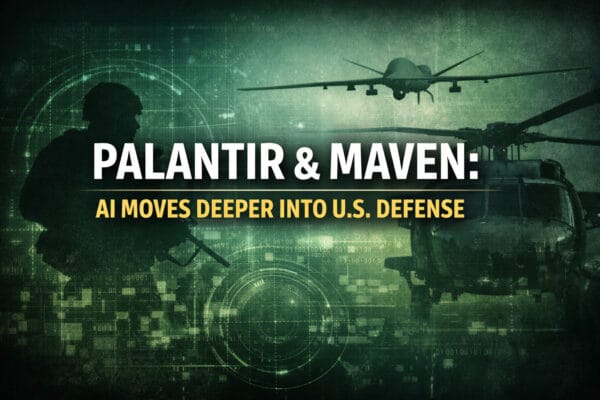
Next Catalyst
Immediate catalyst: the Pentagon wants Maven Smart System to become a formal program of record by the end of the current U.S. fiscal year. That does not automatically mean an immediate straight-line revenue jump, but it does imply stronger institutional sponsorship, a clearer budget path, broader military integration and a more permanent place for Palantir inside the U.S. defense AI stack.
Why this matters right now
- This is not just another “Palantir wins a defense headline” story. The key issue is formalization, not mere usage.
- A move toward program-of-record status generally means greater permanence, more structured ownership, more durable funding logic and less pilot-project ambiguity.
- Maven is not a back-office analytics layer. It sits much closer to the operational chain where imagery, sensors, ISR, target recognition and decision support converge.
- That is why the read-through can extend beyond PLTR into names tied to ISR, geospatial intelligence, edge autonomy and defense decision software.
Fast market frame
- Main name: PLTR
- Core theme: AI-enabled battlefield infrastructure
- Second-order trade: ISR + defense AI + satellite imagery + drones + autonomy
- Closest sympathy candidates: ONDS, BBAI, BKSY
- Second basket: PL, AVAV, KTOS
- Main caveat: stronger narrative does not remove valuation risk
1. This is a bigger story than a normal defense contract headline
Palantir gets a lot of headlines, and many of them end up being compressed by the market into the same simplified idea: government software, AI narrative, federal momentum, and another data point suggesting the company is deeply embedded in Washington. But this headline stands out because the language matters. The issue is not simply that Maven is being used. The issue is that the Pentagon wants Maven to become a formal program of record.
That distinction matters because usage alone can still be interpreted by some investors as proof of utility without full institutional permanence. A program of record is different. It points toward a system that is not just admired, tested or deployed in specific settings, but treated as part of the more formal military architecture. That is the kind of shift that can materially strengthen how investors think about Palantir’s staying power inside defense.
In simple terms, the market is being asked to reconsider Maven not as a very useful military software layer, but as a capability the Pentagon may want embedded in a more durable and normalized way across real-world operations. Once that happens, the conversation changes. It moves away from “another defense win” and closer to “another piece of critical digital infrastructure.”
The most important point in this story is not that Maven works. The market already knew that. The most important point is that the Pentagon appears to want Maven institutionalized.
This is exactly the kind of development that long-term Palantir bulls have been waiting for. Not because it instantly erases every question around monetization, but because it strengthens the durability argument. And in the case of PLTR, durability is everything. Much of the premium multiple has always rested on the belief that once Palantir becomes operationally central to a customer, especially a strategic government customer, the relationship becomes sticky, difficult to replace and potentially more valuable over time.
2. Maven matters because it is close to the operational core of modern warfare
One mistake investors can make with defense AI stories is to treat all software as interchangeable. It is not. There is a big difference between enterprise reporting software, logistics support software, data visualization software and systems that sit close to the point where battlefield information gets turned into action.
Reuters described Maven as a system that processes data from satellites, drones and sensors to help identify and counter threats. That description is important because it shows Maven is not some generic analytics dashboard. It is part of the architecture that compresses the path from raw data to operational decision. And that is precisely why the formalization story matters so much.
The closer a system sits to the real-time military decision chain, the more strategically significant it becomes. A platform that helps fuse data from multiple domains, identify patterns, prioritize signals, support target recognition and accelerate action is not just another software layer. It becomes part of the nervous system of the operation itself.
This is also why the headline should not be read only through the narrow lens of Palantir’s next contract. The deeper thematic read is that the Pentagon is continuing to push toward a battlefield model in which AI is not peripheral. It is becoming native to the way modern operations are run.
If Palantir is increasingly perceived as the software brain of a modern battlefield stack, the market will naturally start asking which companies represent the eyes, ears, sensors, platforms and autonomous layers around that brain.
That broader framing is what creates room for sympathy flows. Once traders decide a headline validates the entire architecture, not just one vendor, they begin rotating into adjacent tickers that can be fitted into the same map.
3. The thematic expansion: this is really an AI-defense infrastructure story
The smartest way to read this news is not as a one-company event. It is better understood as a fresh confirmation of a broader trend that has been building for months: the Pentagon wants AI integrated more deeply into real military systems, across classified networks, operational workflows and multi-domain decision environments.
Reuters has reported in recent weeks both on the Pentagon’s effort to expand AI company access into classified networks and on the internal tensions around replacing Anthropic’s Claude inside defense-related workflows. Taken together, those stories tell us something important. The U.S. military is no longer debating whether advanced AI belongs in the system. It is already inside the system. The debate is now about which vendors, which models, which governance structures and which operational dependencies will shape that future.
That gives the Maven story a much larger meaning. This is not merely a positive contract signal for Palantir. It is another sign that battlefield AI, ISR fusion, autonomous support layers and software-defined decision systems are becoming more deeply normalized within defense planning.
And once the market sees that normalization, it often starts to build a basket. The first move goes to the clear leader. The second move often spreads into connected names. That is where tomorrow’s sympathy-trade discussion becomes relevant.
The market does not need every adjacent company to be a direct Maven beneficiary. It only needs a believable thematic bridge: AI for defense, real-time ISR, geospatial intelligence, autonomy, edge analytics or mission-planning software.
4. Why this headline also revives the Merlintrader defense-AI framework
Merlintrader has already been building this broader map for months. The earlier Palantir deep dive framed PLTR as more than just a narrative stock, stressing the company’s role as an operating layer for government and defense data environments. The Ondas + Palantir article pushed the discussion further, arguing that the real strategic value lies not in one flashy announcement, but in the possibility that hardware, sensing, command software and intelligence workflows start to become one integrated defense-tech stack.
The January defense-space-AI briefing also leaned into the same core idea: the winners in this cycle may not simply be “AI companies” in a generic sense, but rather the firms most capable of fitting into new national-security architectures where software, space-based sensing, autonomy and command systems reinforce each other.
That is what makes the Palantir/Maven story larger than a price move in PLTR alone. It validates the architecture. And when a narrative validates the architecture, second-order flows can go to the adjacent names that investors think belong inside the same system.
5. Which other tickers could benefit from a sympathy play tomorrow?
This is the section traders will care about most. A sympathy move is not the same thing as a fundamental re-rating, and it is important not to confuse the two. The question here is not “which companies become direct winners from the Pentagon memo?” The question is “which tickers can the market quickly fit into the same AI-defense-ISR-autonomy narrative once PLTR gets renewed attention?”
There is no perfect answer, but there is a grounded one. Some names have a very tight narrative bridge to Palantir. Others belong to the broader architecture and can move simply because traders want a full basket rather than a single stock expression. Liquidity, retail familiarity, short-interest dynamics and recent headlines all matter in deciding which names catch flows first.
Tier 1: the closest and most believable sympathy names
ONDS is probably the cleanest second-order trade. The reason is straightforward: on March 12, Ondas announced a partnership with Palantir and World View to advance a next-generation multi-domain intelligence platform. The press release explicitly referred to integrated hardware and software architecture, operational field deployments and a unified intelligence framework that enables a multi-domain, interconnected intelligence ecosystem.
That is exactly the kind of language traders will revisit after the Maven story. ONDS gives the market something it loves: a smaller-cap, more volatile name that can be narratively framed as a downstream or adjacent expression of the same military-intelligence stack. It does not need to be a direct contractual winner tomorrow morning for the stock to attract fast attention. It only needs to be close enough to the architecture that traders can justify putting it in the same basket.
BBAI is another very credible sympathy candidate, but for a different reason. BigBear.ai is already mentally filed by many traders under “defense AI” and “decision intelligence.” Its official materials emphasize mission planning, logistics, force readiness, predictive outcomes and decision support for military leaders. That makes BBAI an easy inclusion in any market-created “AI for defense” basket, even if the direct linkage to Maven is looser than ONDS.
BKSY also belongs in this first tier. BlackSky’s identity revolves around real-time, AI-enabled tactical ISR and geospatial intelligence. If traders read the Palantir headline not just as a software story but as a validation of the broader battlefield-data chain, then BKSY becomes a natural candidate because it sits on the imagery and ISR side of that chain.
If traders decide tomorrow that this is not just a PLTR story but a battlefield-AI stack story, ONDS, BBAI and BKSY are the three most natural names to check first.
Tier 2: broader but still credible spillover names
PL, or Planet Labs, belongs in the second basket. Planet is less tightly tied to Palantir than ONDS, but it is deeply connected to the geospatial and commercial imagery side of the defense-intelligence complex. Reuters recently highlighted Planet’s role in the conflict-imagery chain and its decision to extend a delay on certain Middle East images to prevent use by U.S. adversaries. That does not make Planet a Maven beneficiary. It does make Planet part of the wider ISR and geospatial data ecosystem that feeds modern military awareness.
AVAV is not a software-brain story; it is more of a drone, autonomy and tactical systems story. But that can still matter a lot on a hot theme. AeroVironment’s expanding positioning in unmanned systems, precision strike and related defense tech can attract flows when the market is in “AI war tech” mode. Traders do not always buy the most precise exposure. They often buy the names that sit close enough to the emotional center of the theme.
KTOS is similar in that respect. Kratos sits closer to drones, autonomous systems, defense experimentation and modernization themes. It is not a direct Maven proxy, but it belongs inside the broader modernization basket that can catch flows when investors rotate into “future warfare” names.
Tier 3: larger defense-system names and integrators
Beyond the faster names, there is also the slower but credible large-cap or mid-cap defense basket. Here the names are things like LDOS, CACI, BAH, SAIC, RTX, NOC, LHX and LMT. These are not likely to behave like pure sympathy rockets, but they can still participate if the market broadens the read-through into AI-enabled defense modernization, systems integration, ISR, command-and-control software and data-centric operations.
Important distinction: a sympathy move does not mean these companies are direct Pentagon memo beneficiaries. It simply means the market can decide they belong to the same trade for a session, or for several sessions, based on thematic overlap.
Sources
- Ondas IR – Palantir, Ondas and World View partnership
- BigBear.ai – Defense solutions
- BigBear.ai – ORION decision support platform
- BlackSky – AI-enabled tactical ISR positioning
- Reuters – Planet Labs and Middle East imagery restrictions
- Reuters – AeroVironment expands defense technology footprint
- Reuters – Taiwan teams with Kratos to build attack drones
6. Why ONDS may be the first true sympathy name traders look at
ONDS deserves a dedicated section because the logic is unusually clean. Small-cap sympathy trades do not need perfect direct exposure. They need a credible and timely narrative bridge. Ondas has that bridge because the March 12 announcement with Palantir and World View is still fresh enough to be reactivated by the market.
What makes ONDS especially interesting is that its story is not “just software.” It sits closer to a hybrid architecture: autonomous systems, real-world hardware, persistent sensing and a software layer that can integrate and operationalize data. That makes it easier for traders to pitch it to themselves as a small-cap way to play the same defense-intelligence stack.
The March 12 release explicitly emphasized persistent ISR missions, next-generation intelligence infrastructure and field deployment testing. That reads extremely well next to a new headline saying the Pentagon wants Maven pushed deeper into its official defense framework. It does not prove near-term revenue acceleration for Ondas, but it absolutely provides the sort of conceptual overlap that fuels sympathy momentum.
If PLTR is the institutional flagship, ONDS can easily become the “smaller-cap torque” version of the same story in trader psychology.
That is why ONDS probably deserves to be at the top of any practical next-session sympathy watch list.
7. Why BBAI and BKSY fit the basket even without a direct Maven tie
Traders often build thematic baskets using a mix of direct names and adjacent names. That is where BBAI and BKSY make sense. They each sit on a different side of the same architecture.
In the case of BBAI, the angle is mission decision intelligence. BigBear.ai’s own materials talk about force management, mission readiness, contested logistics, predictive analytics and best-course-of-action tools for defense users. In market terms, that makes BBAI a very easy fit for anyone building a defense AI watch list after a strong PLTR headline.
In the case of BKSY, the angle is geospatial and tactical ISR. BlackSky’s value proposition is about providing timely imagery and analytics in real time. If the market interprets Maven as a validation of AI-driven battlefield awareness, then BKSY becomes a plausible second-order beneficiary simply because it helps feed the information side of that ecosystem.
The important thing here is not to force a false equivalence. BBAI is not Palantir. BKSY is not Palantir. But the market does not require exact equivalence to rotate into a basket. It only needs a plausible overlap in function, theme or perception.
BBAI can trade as the “another defense AI software” name. BKSY can trade as the “AI-enabled ISR and imagery feed” name. Those are different entry points into the same narrative.
8. The hidden strength in the Palantir story: operational stickiness
One of the most underappreciated points in recent Pentagon AI reporting is how hard it is to remove deeply embedded AI tools once they become part of operational workflows. Reuters’ reporting on the Pentagon’s attempt to phase out Claude highlighted the practical difficulty of replacing tools that have already become wired into real military systems. That matters for the Palantir story because it suggests something deeper than mere software adoption.
When a system becomes part of day-to-day workflows, retraining, validation, recertification, process redesign and the plain risk of operational disruption all become obstacles to replacement. This is not just a software-switching issue. It is an institutional friction issue.
That is one reason why a headline like the Maven formalization matters so much. It reinforces the idea that Palantir is not simply winning deals. It is becoming harder to remove. And in defense, where continuity, trust and operational performance matter enormously, that kind of stickiness can become a real moat.
This is also why PLTR remains such a polarizing stock. Bulls see a hardening moat. Bears see a business whose strengths are already being capitalized into a very demanding valuation. Both sides have a case. But on this specific headline, the moat argument clearly gained weight.
9. The risk side: this headline strengthens the company thesis, not necessarily the valuation setup
A good article has to stay honest here. This is an important headline for Palantir, but it does not solve the valuation debate. The business can become more strategically important while the stock still remains vulnerable to sharp repricing, especially if the market has already priced in years of excellence.
That distinction matters because many investors collapse company quality and stock attractiveness into one thing. They are not one thing. A stronger Pentagon role can absolutely improve the quality of Palantir’s strategic story. It does not automatically make the shares easy to own at any price.
In other words, this news can be genuinely significant for the durability of the PLTR thesis while still leaving the stock exposed to volatility, multiple compression or “sell the strength” reactions if sentiment gets too extended. Those possibilities can coexist.
The cleanest way to say it is this: the company story likely got stronger. Whether the stock is immediately easier to buy is a separate question.
10. Bottom line for tomorrow’s tape
For the next session, the practical reading is fairly straightforward. PLTR is the primary headline winner because the news reinforces its position as a central defense AI platform. But the second-order trade may matter almost as much. If traders decide this is a battlefield-AI-architecture story rather than just a Palantir story, they may rotate into adjacent names quickly.
The tightest sympathy-watch list is probably ONDS first, then BBAI and BKSY, followed by PL, AVAV and KTOS. Beyond that sits the broader integrator basket. The more the tape acts like a theme trade rather than a single-stock reaction, the more this wider group matters.
That does not guarantee anything. Sometimes the market stays disciplined and keeps flows concentrated in the flagship name. Sometimes it builds a whole cluster in hours. But if you are trying to map the most believable sympathy landscape for tomorrow, those are the names that deserve the closest watch.
Bottom line
This is an important Palantir headline because it strengthens the structural case, not just the daily momentum case. Maven moving toward program-of-record status suggests the Pentagon wants the platform treated as a more permanent part of its battlefield decision architecture.
The broader thematic implication is that AI-enabled military workflows, sensor fusion, ISR and software-defined command layers are becoming more deeply normalized. That is why the story can spill beyond PLTR.
The clearest sympathy-watch list for tomorrow is ONDS first, then BBAI and BKSY, followed by PL, AVAV and KTOS. That is a trading interpretation, not a claim of direct Pentagon benefit, but it is the most grounded way to map the field.
Next Catalyst
Catalyst immediato: il Pentagono vuole trasformare Maven Smart System in un vero program of record entro la fine dell’attuale anno fiscale USA. Questo non significa automaticamente un salto lineare dei ricavi nel brevissimo, ma implica sponsorship istituzionale più forte, percorso di budget più chiaro, integrazione militare più ampia e un posto più permanente per Palantir dentro la stack AI della difesa USA.
Perché conta adesso
- Non è la solita notizia del tipo “Palantir porta a casa un’altra headline nella difesa”. Il punto chiave è la formalizzazione, non il semplice utilizzo.
- Un passaggio verso lo status di program of record di solito significa più permanenza, ownership più strutturata, logica di funding più durevole e meno ambiguità da progetto pilota.
- Maven non è un tool qualunque da back office. Si trova molto più vicino alla catena operativa dove convergono imagery, sensori, ISR, riconoscimento target e decision support.
- Per questo il read-through può estendersi oltre PLTR anche a nomi legati a ISR, geospatial intelligence, edge autonomy e software decisionale per la difesa.
Quadro di mercato rapido
- Nome principale: PLTR
- Tema core: infrastruttura battlefield abilitata dall’AI
- Second-order trade: ISR + defense AI + satellite imagery + droni + autonomia
- Sympathy candidates più vicini: ONDS, BBAI, BKSY
- Secondo basket: PL, AVAV, KTOS
- Caveat principale: narrativa più forte non elimina il rischio di valutazione
1. Questa è una storia più grande di una normale headline da contratto defense
Su Palantir escono continuamente titoli, e molti finiscono per essere compressi dal mercato nella stessa idea semplificata: software governativo, narrativa AI, slancio federale, un altro segnale che l’azienda è profondamente radicata a Washington. Ma questa headline spicca perché qui il linguaggio conta davvero. Il punto non è semplicemente che Maven venga usato. Il punto è che il Pentagono vuole che Maven diventi un vero program of record.
Questa distinzione conta perché il semplice utilizzo può ancora essere interpretato da alcuni investitori come prova di utilità senza piena permanenza istituzionale. Un program of record è diverso. Indica una capacità che non è soltanto apprezzata, testata o deployata in contesti specifici, ma trattata come parte di un’architettura militare più formale. Ed è esattamente questo tipo di passaggio che può rafforzare in modo materiale il modo in cui il mercato pensa alla permanenza di Palantir nella difesa.
In termini semplici, il mercato è invitato a riconsiderare Maven non come “ottimo software militare”, ma come una capacità che il Pentagono potrebbe voler integrare in modo più durevole e più normalizzato nelle operazioni reali. Quando succede questo, cambia la conversazione. Ci si allontana dal concetto di “altra vittoria nella difesa” e ci si avvicina all’idea di “altro pezzo di infrastruttura digitale critica”.
Il punto più importante di questa storia non è che Maven funzioni. Questo il mercato già lo sapeva. Il punto più importante è che il Pentagono sembra voler istituzionalizzare Maven.
È esattamente il tipo di sviluppo che i bull di lungo periodo su Palantir aspettavano. Non perché cancelli all’istante ogni dubbio sulla monetizzazione, ma perché rafforza l’argomento della durabilità. E nel caso di PLTR la durabilità è tutto. Gran parte del multiplo premio si è sempre basata sull’idea che, una volta diventata operativamente centrale per un cliente strategico, soprattutto governativo, Palantir diventi sticky, difficile da sostituire e potenzialmente più preziosa col tempo.
2. Maven conta perché è vicino al cuore operativo della guerra moderna
Uno degli errori che si possono fare con le storie defense AI è trattare tutto il software come se fosse intercambiabile. Non lo è. C’è una grande differenza fra software di reporting enterprise, software logistico, software di visualizzazione dati e sistemi che si trovano vicini al punto in cui l’informazione da battlefield viene trasformata in azione.
Reuters ha descritto Maven come un sistema che elabora dati da satelliti, droni e sensori per aiutare a identificare e contrastare minacce. Questa definizione è importante perché mostra che Maven non è una dashboard generica. È parte dell’architettura che comprime il percorso dal dato grezzo alla decisione operativa. Ed è proprio per questo che la storia della formalizzazione conta così tanto.
Più un sistema è vicino alla catena decisionale militare in tempo reale, più diventa strategicamente rilevante. Una piattaforma che aiuta a fondere dati da più domini, identificare pattern, filtrare segnali, supportare il riconoscimento target e accelerare l’azione non è un semplice layer software. Diventa parte del sistema nervoso dell’operazione stessa.
Per questo la headline non va letta solo nel senso stretto del prossimo contratto di Palantir. La lettura tematica più profonda è che il Pentagono continua a spingere verso un modello di battlefield in cui l’AI non è periferica. Sta diventando nativa al modo in cui vengono gestite le operazioni moderne.
Se Palantir viene percepita sempre di più come il cervello software di una moderna stack battlefield, il mercato inizierà naturalmente a chiedersi quali aziende rappresentano occhi, orecchie, sensori, piattaforme e layer autonomi attorno a quel cervello.
Ed è proprio questa lettura più ampia che crea spazio per i sympathy flows. Quando i trader decidono che una news valida l’intera architettura, e non solo un vendor, iniziano a ruotare anche verso ticker adiacenti che possono essere inseriti nella stessa mappa.
3. L’allargamento tematico: questa è in realtà una storia di infrastruttura AI-defense
Il modo più intelligente di leggere questa notizia non è come un evento di una sola azienda. È più corretto vederla come una nuova conferma di una tendenza più ampia che si sta costruendo da mesi: il Pentagono vuole integrare l’AI più profondamente dentro sistemi militari reali, reti classificate, workflow operativi e ambienti decisionali multi-domain.
Reuters ha riportato nelle ultime settimane sia lo sforzo del Pentagono di estendere l’accesso delle aziende AI alle reti classificate, sia le tensioni interne attorno alla possibile sostituzione di Claude di Anthropic dentro workflow collegati alla difesa. Messaggi diversi, ma stessa direzione: l’AI avanzata non è più fuori dal sistema. È già nel sistema. Ora la discussione è su quali vendor, quali modelli, quali regole di governance e quali dipendenze operative definiranno il futuro.
Questo dà alla storia di Maven un significato molto più grande. Non è soltanto un segnale positivo per Palantir. È un altro indizio che battlefield AI, fusione ISR, layer autonomi e sistemi software-defined di decisione stanno diventando sempre più normali nella pianificazione della difesa.
E quando il mercato percepisce questa normalizzazione, spesso comincia a costruire un basket. Il primo movimento va al leader più ovvio. Il secondo spesso si allarga ai nomi collegati. È qui che il discorso sul sympathy trade di domani diventa rilevante.
Il mercato non ha bisogno che ogni azienda adiacente sia una beneficiaria diretta di Maven. Gli basta un ponte tematico credibile: AI per la difesa, real-time ISR, geospatial intelligence, autonomia, edge analytics o mission-planning software.
4. Perché questa headline riattiva anche la cornice difesa-AI che Merlintrader costruisce da mesi
Merlintrader sta già lavorando su questa mappa da tempo. Il precedente deep dive su Palantir aveva presentato PLTR come qualcosa di più di una semplice story stock, insistendo sul ruolo di layer operativo per ambienti dati governativi e militari. L’articolo su Ondas + Palantir spingeva il discorso ancora oltre, sostenendo che il vero valore strategico non stia nel singolo annuncio rumoroso, ma nella possibilità che hardware, sensing, command software e workflow intelligence inizino a diventare una sola defense-tech stack integrata.
Anche il briefing di gennaio su defense-space-AI si muoveva nella stessa direzione: i vincitori di questo ciclo potrebbero non essere genericamente “aziende AI”, ma le società più capaci di inserirsi in nuove architetture di sicurezza nazionale dove software, sensing spaziale, autonomia e sistemi di comando si rafforzano a vicenda.
È questo che rende la storia di Palantir/Maven più grande del semplice movimento di prezzo di PLTR. Valida l’architettura. E quando una narrativa valida l’architettura, i flussi di secondo livello possono andare anche verso nomi adiacenti che gli investitori ritengono parte dello stesso sistema.
5. Quali altri ticker possono beneficiare di un sympathy play domani?
Questa è la sezione che interessa di più ai trader. Un sympathy move non è la stessa cosa di un re-rating fondamentale, ed è importante non confondere le due cose. La domanda qui non è “quali aziende diventano vincitrici dirette del memo del Pentagono?” La domanda è “quali ticker il mercato può rapidamente inserire nella stessa narrativa AI-defense-ISR-autonomy una volta riaccesa l’attenzione su PLTR?”
Non esiste una risposta perfetta, ma esiste una risposta fondata. Alcuni nomi hanno un ponte narrativo molto stretto con Palantir. Altri fanno parte dell’architettura più ampia e possono muoversi semplicemente perché i trader vogliono un basket completo e non una singola espressione del tema. Liquidità, familiarità retail, dinamiche di short interest e headline recenti contano tutte nel decidere quali nomi attirano flussi per primi.
Tier 1: i sympathy names più vicini e più credibili
ONDS è probabilmente il trade di secondo livello più pulito. Il motivo è semplice: il 12 marzo Ondas ha annunciato una partnership con Palantir e World View per sviluppare una piattaforma intelligence multi-domain di nuova generazione. Il comunicato parlava esplicitamente di architettura hardware e software integrata, deployment operativi e unified intelligence framework capace di creare un ecosistema intelligence interconnesso.
È esattamente il tipo di linguaggio che i trader andranno a rileggere dopo la notizia su Maven. ONDS offre al mercato qualcosa che piace molto: un nome più piccolo, più volatile, che può essere raccontato come espressione downstream o adiacente della stessa military-intelligence stack. Non serve che domani diventi un vincitore contrattuale diretto. Basta che sia abbastanza vicino all’architettura da permettere ai trader di inserirlo nello stesso basket.
BBAI è un altro candidato molto credibile, ma per un motivo diverso. BigBear.ai è già mentalmente catalogata da molti trader come “defense AI” e “decision intelligence”. I materiali ufficiali parlano di mission planning, logistica, force readiness, predictive outcomes e decision support per leader militari. Questo rende BBAI un’aggiunta facilissima in qualsiasi watch list “AI for defense” costruita dopo una headline forte su PLTR.
BKSY appartiene a pieno titolo a questo primo tier. L’identità di BlackSky ruota attorno a tactical ISR in tempo reale e geospatial intelligence arricchita da AI. Se i trader leggono la news su Palantir non solo come storia software ma come validazione della più ampia catena del dato battlefield, allora BKSY diventa un candidato naturale perché si colloca sul lato imagery e ISR di quella catena.
Se domani i trader decidono che non è solo una storia PLTR ma una storia di battlefield-AI stack, ONDS, BBAI e BKSY sono i tre nomi più naturali da guardare per primi.
Tier 2: nomi più larghi ma ancora credibili come spillover
PL, cioè Planet Labs, appartiene al secondo basket. Planet è meno strettamente legata a Palantir rispetto a ONDS, ma è profondamente connessa al lato geospatial e commercial imagery del complesso difesa-intelligence. Reuters ha appena sottolineato il ruolo di Planet nella catena delle immagini di conflitto e la decisione della società di prolungare il ritardo su alcune immagini del Medio Oriente per impedirne l’uso da parte di avversari USA. Questo non la rende beneficiaria di Maven. Ma la rende assolutamente parte dell’ecosistema più ampio ISR e geospatial data che alimenta la consapevolezza militare moderna.
AVAV non è una storia da “software brain”; è più una storia di droni, autonomia e sistemi tattici. Ma proprio per questo può contare molto su un tema caldo. Il posizionamento crescente di AeroVironment su unmanned systems, precision strike e defense tech correlata può attrarre flussi quando il mercato entra in modalità “AI war tech”. I trader non comprano sempre l’esposizione più precisa. Spesso comprano i nomi che stanno abbastanza vicino al centro emotivo del tema.
KTOS è simile da questo punto di vista. Kratos è più vicina a droni, sistemi autonomi, sperimentazione defense e modernizzazione. Non è una proxy diretta di Maven, ma appartiene al basket più ampio della modernizzazione militare che può ricevere flussi quando gli investitori ruotano sui nomi da “future warfare”.
Tier 3: integratori e nomi difesa più grandi
Oltre ai nomi più veloci, c’è poi il basket large-cap o mid-cap più lento ma credibile. Qui i ticker sono LDOS, CACI, BAH, SAIC, RTX, NOC, LHX e LMT. Non è probabile che si comportino come sympathy rockets pure, ma possono comunque partecipare se il mercato allarga il read-through a modernizzazione militare abilitata dall’AI, system integration, ISR, command-and-control software e operazioni data-centriche.
Distinzione importante: un sympathy move non significa che queste aziende siano beneficiarie dirette del memo del Pentagono. Significa semplicemente che il mercato può decidere che appartengano allo stesso trade per una o più sessioni, sulla base della sovrapposizione tematica.
Sources
- Ondas IR – Palantir, Ondas and World View partnership
- BigBear.ai – Defense solutions
- BigBear.ai – ORION decision support platform
- BlackSky – AI-enabled tactical ISR positioning
- Reuters – Planet Labs and Middle East imagery restrictions
- Reuters – AeroVironment expands defense technology footprint
- Reuters – Taiwan teams with Kratos to build attack drones
6. Perché ONDS può essere il vero primo sympathy name che i trader guardano
ONDS merita una sezione dedicata perché la logica è insolitamente pulita. I sympathy trade small cap non hanno bisogno di esposizione diretta perfetta. Hanno bisogno di un ponte narrativo credibile e tempestivo. Ondas ha quel ponte perché l’annuncio del 12 marzo con Palantir e World View è ancora abbastanza fresco da poter essere riattivato dal mercato.
Ciò che rende ONDS particolarmente interessante è che la sua storia non è “solo software”. Si colloca più vicino a un’architettura ibrida: sistemi autonomi, hardware reale, persistent sensing e uno strato software capace di integrare e rendere operativo il dato. Questo rende più facile per i trader raccontarsela come una via small-cap per giocare la stessa defense-intelligence stack.
Il comunicato del 12 marzo insisteva esplicitamente su missioni ISR persistenti, infrastruttura intelligence di nuova generazione e testing per field deployment. Letto accanto a una headline che dice che il Pentagono vuole spingere più a fondo Maven dentro il framework ufficiale della difesa, suona benissimo. Non prova accelerazione di ricavi a breve per Ondas, ma fornisce assolutamente il tipo di sovrapposizione concettuale che alimenta il momentum per simpatia.
Se PLTR è il flagship istituzionale, ONDS può facilmente diventare nella psicologia dei trader la versione “small-cap con più torque” della stessa storia.
È per questo che ONDS probabilmente merita il primo posto in una watch list pratica per la prossima sessione.
7. Perché BBAI e BKSY entrano nel basket anche senza un legame diretto con Maven
I trader spesso costruiscono basket tematici mescolando nomi diretti e nomi adiacenti. È qui che BBAI e BKSY trovano perfettamente posto. Ognuna si colloca su un lato diverso della stessa architettura.
Nel caso di BBAI, l’angolo è quello della mission decision intelligence. I materiali ufficiali di BigBear.ai parlano di force management, mission readiness, contested logistics, predictive analytics e strumenti per identificare il miglior corso d’azione per utenti militari. In termini di mercato, questo rende BBAI una scelta facilissima per chi costruisce una defense AI watch list dopo una forte headline su PLTR.
Nel caso di BKSY, l’angolo è geospatial e tactical ISR. La proposta di valore di BlackSky si basa sul fornire imagery e analytics tempestive in tempo reale. Se il mercato interpreta Maven come una validazione della battlefield awareness guidata dall’AI, allora BKSY diventa una plausibile beneficiaria di secondo livello semplicemente perché aiuta ad alimentare il lato informativo di quell’ecosistema.
Il punto importante qui è non forzare equivalenze false. BBAI non è Palantir. BKSY non è Palantir. Ma il mercato non richiede equivalenza perfetta per ruotare su un basket. Gli basta una sovrapposizione plausibile in funzione, tema o percezione.
BBAI può muoversi come nome “altro software defense AI”. BKSY può muoversi come nome “ISR e imagery abilitati dall’AI”. Sono due porte diverse per entrare nella stessa narrativa.
8. La forza nascosta della storia Palantir: la stickiness operativa
Uno dei punti più sottovalutati emersi dai recenti articoli sul Pentagono e l’AI è quanto sia difficile rimuovere strumenti AI profondamente integrati una volta che entrano nei workflow operativi. Il reporting Reuters sulla possibile eliminazione di Claude dal perimetro Pentagono ha evidenziato la difficoltà pratica di sostituire tool ormai cablati dentro sistemi militari reali. Questo conta per Palantir perché suggerisce qualcosa di più profondo della semplice adozione software.
Quando un sistema diventa parte dei workflow quotidiani, retraining, validazione, ricertificazione, redesign dei processi e semplice rischio di disruption operativa diventano ostacoli al cambio. Non è solo una questione di switch software. È una questione di attrito istituzionale.
Ed è una delle ragioni per cui la formalizzazione di Maven conta così tanto. Rafforza l’idea che Palantir non stia semplicemente vincendo deal. Stia diventando più difficile da rimuovere. E nella difesa, dove continuità, fiducia e performance operativa contano enormemente, questa stickiness può diventare un moat vero.
È anche il motivo per cui PLTR resta un titolo così polarizzante. I bull vedono un moat che si indurisce. I bear vedono una società i cui punti di forza sono già incorporati in una valutazione molto esigente. Entrambe le letture hanno una base. Ma su questa headline specifica l’argomento del moat esce chiaramente rafforzato.
9. Il lato rischio: questa headline rafforza la tesi aziendale, non necessariamente il setup di valutazione
Un buon articolo deve restare onesto anche qui. Questa è una notizia importante per Palantir, ma non chiude il dibattito sulla valutazione. Il business può diventare più strategicamente rilevante mentre il titolo resta comunque esposto a repricing severi, soprattutto se il mercato ha già prezzato anni di eccellenza.
Questa distinzione conta perché molti investitori tendono a fondere qualità della società e attrattività del titolo in un’unica cosa. Non sono la stessa cosa. Un ruolo più forte nel Pentagono può migliorare la qualità della storia strategica di Palantir. Non rende automaticamente l’azione facile da comprare a qualsiasi prezzo.
In altre parole, la news può essere genuinamente rilevante per la durabilità della tesi PLTR lasciando comunque il titolo vulnerabile a volatilità, compressione dei multipli o reazioni del tipo “sell the strength” se il sentiment si allunga troppo. Le due possibilità possono convivere.
Il modo più pulito per dirlo è questo: la storia aziendale probabilmente è diventata più forte. Se il titolo sia immediatamente più facile da comprare, è una domanda separata.
10. Bottom line pratico per il tape di domani
Per la prossima sessione, la lettura pratica è abbastanza diretta. PLTR è la vincitrice primaria della headline perché la notizia rafforza il suo ruolo di piattaforma centrale nella defense AI. Ma il trade di secondo livello può contare quasi altrettanto. Se i trader decidono che questa è una storia di battlefield-AI-architecture e non solo una storia Palantir, possono ruotare rapidamente su nomi adiacenti.
La sympathy-watch list più stretta è probabilmente ONDS per prima, poi BBAI e BKSY, seguite da PL, AVAV e KTOS. Oltre a questo c’è il basket più ampio degli integratori. Più il tape si comporterà come theme trade e meno come semplice reazione single-stock, più questo gruppo allargato conterà.
Questo non garantisce nulla. A volte il mercato resta disciplinato e concentra i flussi sul flagship. Altre volte costruisce un intero cluster nel giro di poche ore. Ma se l’obiettivo è mappare il sympathy landscape più credibile per domani, questi sono i nomi da guardare più da vicino.
Bottom line
Questa è una news importante per Palantir perché rafforza la tesi strutturale, non solo il momentum di giornata. Il fatto che Maven stia andando verso lo status di program of record suggerisce che il Pentagono voglia trattare la piattaforma come parte più permanente della propria architettura decisionale da battlefield.
L’implicazione tematica più ampia è che workflow militari abilitati dall’AI, sensor fusion, ISR e layer software-defined di comando stanno diventando sempre più normali. È per questo che la storia può allargarsi oltre PLTR.
La sympathy-watch list più pulita per domani è ONDS per prima, poi BBAI e BKSY, seguite da PL, AVAV e KTOS. È una lettura da trading, non una pretesa di beneficio diretto dal Pentagono, ma è il modo più fondato di mappare il campo.
Disclaimer: this article is for informational and educational purposes only and does not constitute investment advice, solicitation, or a recommendation to buy or sell any security. Market, policy and defense developments can change quickly. When the text includes interpretation, scenario analysis or qualitative judgment, those passages should be read as editorial reasoning rather than confirmed fact. Readers should verify primary sources and official company statements before making financial decisions.
Legal pages:
Disclaimer |
Terms & Privacy
Biotech Catalyst Calendar
For a broader and continuously updated view of upcoming biotech catalysts, regulatory dates and major readouts, use the dedicated Merlintrader calendar.
Scanner for active traders

Try ChartsWatcher free, then unlock 10% OFF with SAVE10
ChartsWatcher is a real-time scanner for momentum traders: fast movers, unusual volume and rotations — so you can focus on the few tickers that matter right now, instead of watching hundreds of charts.
Start with the free version. When you upgrade, use SAVE10 for 10% OFF your first paid period.
Start free – then use SAVE10
No credit card required to start. Apply SAVE10 when upgrading.
Recommended platform

One platform. All your brokers.
Medved Trader connects multiple brokers in one workspace, with pro charts, hotkeys and fast execution — without changing your broker accounts.
A single cockpit for positions, Level II and multi-broker order routing, built for active day & swing traders.
Get 1 Month Free ➔
Multi-broker workflow + customizable layouts in one platform.
 Monica.im – the AI assistant I use every day
If you find value in the work I publish on Merlintrader and want a practical AI assistant for research and writing, you can sign up using this referral link. Click here to try Monica.im and support the site
Find out how I use AI on Merlintrader: AI, retail and Merlintrader
Disclosure: some of the links in the promotional blocks above are affiliate or referral links. If you choose to subscribe or sign up through them, Merlintrader may receive a small commission or benefit at no extra cost to you.