



Daily Briefing – June 19: Juneteenth Market Pause, U.S. Futures Slip as Iran Talks Hit a Snag, Oil Bounces but Holds Weekly Losses, SPRO Gets FDA Approval, Chips Digest the Intel–Apple Rally, and MRVL/FLEX Move Into the Final S&P 500 Rebalance Window
The June 19, 2026 briefing is unusual because the U.S. cash equity and bond markets are closed for Juneteenth, but the global tape is still moving. After Thursday’s tech-led rebound, the fresh overnight read is more cautious: global stocks turned lower, U.S. futures softened, the dollar strengthened and oil erased part of its earlier decline after U.S.–Iran follow-up talks hit an early snag. That does not fully cancel the inflation relief created by the reopening of the Strait of Hormuz, but it does remind traders that the peace/truce trade is still an implementation story, not a finished macro regime change. The two cleanest fresh equity angles are now very different: biotech has a confirmed regulatory win after the FDA approved GSK/Spero’s Utebzi, the first oral carbapenem antibiotic approved in the U.S. for adults with complicated urinary tract infections, while semiconductors must prove that Thursday’s Intel-led rally was more than a one-session reshoring headline. With regular U.S. trading closed today, the practical watch shifts to futures, oil, the dollar, credit proxies, Monday’s MRVL/FLEX S&P 500 inclusion, and the next catalyst cluster: PCE inflation on June 25, Micron and FedEx earnings, and the June 30 VRDN PDUFA date.
- SPRO / GSK— The biggest confirmed biotech update is no longer a pending PDUFA: the FDA approved Utebzi, or tebipenem pivoxil, for adults with complicated urinary tract infections including pyelonephritis. The approval matters because it makes Utebzi the first and only oral carbapenem antibiotic approved in the U.S., turning yesterday’s binary catalyst into a commercial-execution story for GSK and a milestone/royalty story for Spero.FDA Approval
- SPRO— For Spero, the trading question changes from “will the FDA approve?” to “how much value does the market assign to milestones, royalties and GSK-led commercialization?” The approval removes the immediate regulatory overhang, but the next debate is label quality, launch timing, adoption, stewardship limits and whether the stock can hold approval-day gains after the initial gap.Biotech Read
- GSK— For GSK, Utebzi strengthens the infectious-disease portfolio and adds a differentiated anti-infective asset aimed at cUTI patients who have historically required IV therapy. It is not a mega-cap pharma needle-mover on its own, but it is strategically clean: anti-microbial resistance, hospital step-down potential and a rare first-in-class U.S. oral carbapenem label.Anti-Infective
- INTC— Intel remains the key chip-policy name after Thursday’s sharp rally tied to the Apple-linked U.S. manufacturing headline. The stock helped lead the semiconductor rebound, but the next test is durability: after a holiday pause, investors will want evidence that the move reflects real commercial scope, not just a political reshoring headline.Chip Policy
- AAPL / INTC— Apple remains central because any credible move toward more U.S.-linked chip design or manufacturing would matter for supply-chain resilience, domestic industrial policy and the broader semiconductor reshoring narrative. Until formal details are clearer, the pair should still be treated as a headline-driven catalyst rather than a fully modeled revenue event.Apple / Chips
- MU / MRVL / NVDA / AVGO— The AI semiconductor basket is now in confirmation mode. Thursday’s rally was strong, but futures weakness and a stronger dollar can pressure high-multiple tech again. Micron, Marvell, Nvidia and Broadcom need breadth and volume to show that AI semi leadership can survive a hawkish Fed and unstable oil/geopolitical headlines.AI Semis
- MRVL / FLEX— Marvell and Flex are now in the final S&P 500 inclusion window before the June 22 open. The trade is about passive demand, benchmark rebalancing, ETF flows and liquidity, but the setup can still be affected by Monday morning’s macro tone after the Juneteenth closure.Index Flow
- MRVL— Marvell remains the cleaner narrative within the rebalance pair because it combines index inclusion with custom silicon, AI data-center networking and the broader AI infrastructure trade. If semis reopen firm on Monday, MRVL can still be one of the more visible AI/index-flow crossover names.AI / Index
- FLEX— Flex brings the manufacturing and electronics-supply-chain side of the rebalance. It is less flashy than Marvell, but it still sits in a useful lane for investors tracking AI hardware assembly, industrial technology, server infrastructure and benchmark-driven demand.Industrial Tech
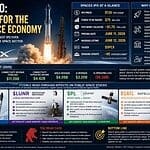
- SPCX— SpaceX remains the retail-risk thermometer, but with U.S. markets closed today the focus shifts to Monday’s reopening. The key question is whether the post-IPO digestion phase remains controlled or whether options positioning and crowded retail momentum create another fast air pocket.Space IPO
- RKLB / LUNR / PL / SATL— The public space basket still depends partly on SpaceX sentiment, but sympathy alone is not enough anymore. Watch whether Rocket Lab, Intuitive Machines, Planet Labs and Satellogic can show their own relative strength, volume and catalyst discipline when U.S. trading resumes.Space Basket
- JBL— Jabil remains one of the cleanest AI infrastructure checkpoints after its beat-and-raise report. The stock’s post-earnings behavior matters because it connects AI demand to real hardware, manufacturing, servers, components, margins and delivery cadence rather than only software-style narrative.AI Infra
- DELL / HPE / SMCI— AI server names remain demand-confirmation checks after Jabil. The market wants proof that AI capex is converting into orders, revenue, margins and cash flow. A shaky Monday reopen would make this group an important test of whether the AI infrastructure trade still has sponsorship.AI Servers
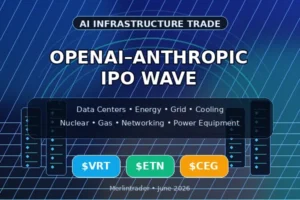
- VRT / ETN / GEV— Power, grid equipment and cooling remain one of the most concrete second-order AI themes. If investors keep treating data-center electricity demand as a multi-year constraint, this group stays relevant even when software and consulting names look weaker.Power / Cooling
- ACN— Accenture is the negative AI-services read. The stock sold off sharply after weaker bookings/guidance signals, raising the question of whether enterprise AI spending is helping infrastructure suppliers faster than classic consulting and services firms. That divergence is important for the “AI winners versus AI laggards” narrative.AI Services
- ORCL— Oracle remains an AI capex discipline watch. Investors still like cloud backlog and AI infrastructure demand, but the debate remains growth versus capex intensity, financing needs, debt, and free-cash-flow pressure if rates stay higher for longer.AI Capex
- AAL / DAL / UAL / CCL / RCL— Airlines and cruises still benefit if oil remains lower than the war-spike levels, but today’s oil bounce after the talks snag makes the trade less automatic. The group needs crude contained, shipping normalized and consumer-rate pressure manageable.Travel / Oil
- XOM / CVX / SLB— Energy equities are caught between lower weekly crude prices and renewed geopolitical uncertainty. If oil reclaims momentum on failed implementation, energy can stabilize; if Hormuz normalization holds and crude resumes lower, upstream and service sentiment can stay under pressure.Energy
- VRDN— Viridian remains one of the cleanest next biotech catalyst watches, with veligrotug under FDA Priority Review and a June 30, 2026 PDUFA target date in thyroid eye disease. After SPRO’s approval, traders may be more willing to monitor defined regulatory events with clean timing.PDUFA Watch
- COGT— Cogent remains a post-EHA follow-through story after detailed APEX data for bezuclastinib in advanced systemic mastocytosis. The key now is whether biotech risk appetite can broaden from single binary approvals into durable data-driven follow-through.EHA / Data
- Juneteenth pause— U.S. cash equities and bonds are closed today, June 19, for Juneteenth. That makes this a futures, global-market and headline-monitoring session rather than a normal cash-equity trading day. The real U.S. test comes at Monday’s reopen.Holiday
- Global risk turns softer— The fresh overnight read is weaker after Thursday’s U.S. rally: global stocks slipped, U.S. futures declined and the dollar strengthened as investors reassessed the durability of the U.S.–Iran framework and the hawkish Fed backdrop.Global Tape
- Iran talks snag— The oil-relief trade is no longer a straight line. Follow-up talks hit an early obstacle, oil bounced and the market started questioning how durable the peace framework really is. Implementation risk is now the most important geopolitical variable.Geopolitics
- Oil bounces, weekly relief remains— Brent moved back around the $80 area after the talks snag, but oil was still set for a large weekly decline after Hormuz traffic resumed. The market is no longer pricing full panic, but it is not ready to price full normalization either.Oil
- Hormuz remains the practical test— The real test is not only diplomacy; it is tanker traffic, insurance, safety guarantees, backlog clearance and physical crude flows. If shipping continues smoothly, inflation pressure eases. If logistics stall again, crude risk comes back fast.Shipping
- Fed hangover persists— The Fed held rates steady this week, but Warsh’s first meeting left the market with a more hawkish policy read. Fewer cuts, higher inflation concern and possible future hikes remain a cap on speculative growth, small caps and biotech breadth.Fed
- Dollar strength matters— A stronger dollar is a quiet tightening force. It can pressure commodities, precious metals, emerging markets and high-multiple growth if the market reads it as confirmation of higher-for-longer U.S. rates.Dollar
- PCE becomes the next macro gate— With the Fed now more inflation-sensitive, next week’s PCE inflation data becomes a major checkpoint. A soft number would help risk appetite; a hot number would reinforce the hawkish Warsh narrative and pressure long-duration assets.Inflation
- Tech rebound needs Monday proof— Thursday’s semiconductor rally was impressive, but holiday-thinned futures weakness makes Monday important. SOXX needs participation beyond Intel to prove that the AI/chip rebound has real breadth.Tech
- Small caps remain rate-sensitive— IWM can benefit from oil relief and better breadth, but a hawkish Fed and stronger dollar can still limit small-cap enthusiasm. Financing costs remain the core constraint for weaker balance sheets.Small Caps
- Biotech gets a sentiment boost— SPRO’s FDA approval is a real positive for the catalyst tape. It does not lift all biotech automatically, but it helps remind traders that defined regulatory events can still produce clear outcomes even in a difficult macro environment.Biotech
- Credit is the quiet confirmation— LQD and HYG matter into Monday because credit often confirms whether equity risk appetite is healthy or only headline-driven. A tech-led bounce without credit support deserves caution.Credit
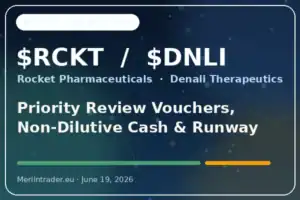
- Rocket Pharmaceuticals & Denali Therapeutics (Nasdaq: $RCKT / $DNLI): Priority Review Vouchers, Non-Dilutive Cash and Runway
- Corvus Pharmaceuticals ($CRVS)The ITK Inhibitor at the Center of Atopic Dermatitis and PTCL

- uniQure (Nasdaq: $QURE): FDA Reversal Puts AMT-130 Back On The Accelerated Approval Path
- Lockheed Martin, Northrop Grumman and RTX ($LMT $NOC $RTX): Why the U.S. Air Force CCA Awards Mark a New Phase in Defense AI
- AIRO Group (Nasdaq: $AIRO): Why the RQ-70 Drone Story Is Suddenly Back on the Radar

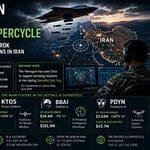
- Defence AI Watch #1: Grok, Iran and the Defence-AI Supercycle — PLTR, KTOS, BBAI and PDYN