
DISCLAIMER — Not financial advice. Educational content only, not an offer or solicitation to buy or sell any security. Biotech and small/mid-cap stocks are highly speculative and volatile and can result in a partial or total loss of capital. Do your own research and consult a licensed advisor where appropriate. / Contenuti a solo scopo informativo e didattico, non costituiscono consulenza finanziaria né offerta o sollecitazione al pubblico risparmio ai sensi delle normative CONSOB e SEC. Le azioni biotech e le small/mid cap sono strumenti altamente speculativi e volatili e possono comportare la perdita parziale o totale del capitale investito. Si raccomanda di effettuare sempre le proprie ricerche e, se necessario, di rivolgersi a un consulente abilitato.
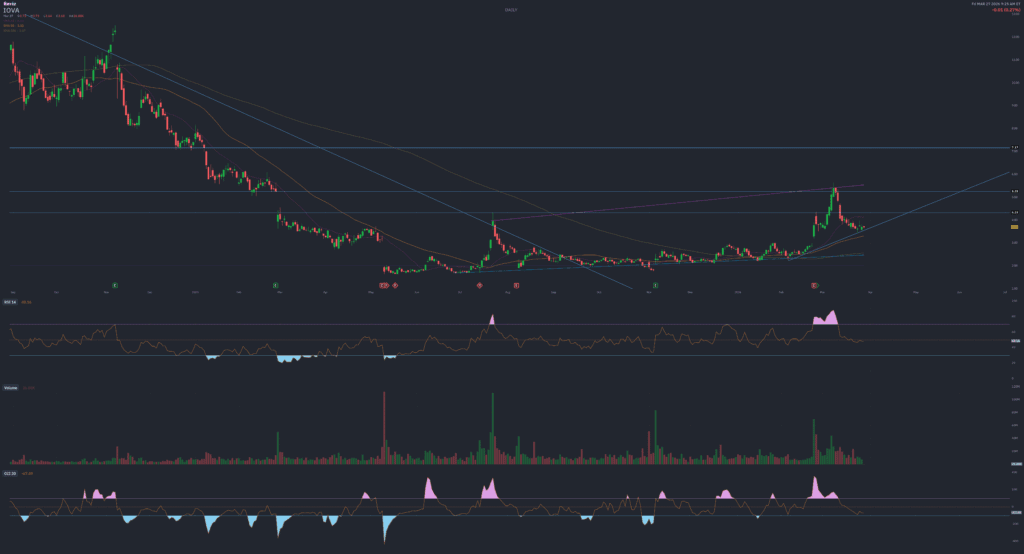

Technical context as of March 27, 2026: IOVA traded around $3.66 intraday, with a daily range of roughly $3.65 to $3.74. After a fast retreat from recent highs, the chart is again sitting in an area that many traders will read as a possible rising-trend support test rather than a clean breakdown. That does not prove a reversal, but it does create a valid study zone for readers watching whether price can stabilize while commercial and pipeline catalysts approach.
Share price
$3.66
Current price from market data on March 27, 2026 during the U.S. session.
Cash position
~$303M
Company-reported cash position as of December 31, 2025, with management saying runway extends into Q3 2027.
FY2025 revenue
~$264M
First full year of launch, with Q4 2025 product revenue around $87 million and Q4 gross margin around 50%.
Executive summary
Iovance enters the next stretch in a very different place than where the bull case used to live. The stock still has a powerful story behind it: AMTAGVI is already commercial, the TIL platform is no longer theoretical, and the company is trying to push that proof into larger and commercially more meaningful opportunities such as NSCLC. But this is also a company that the market punished hard when execution, European regulatory ambition and financing optics stopped matching the earlier narrative. That history matters because it explains why each new positive data point now has to pass a tougher test with investors.
The broad bull case remains straightforward. Revenue is real. Gross margin improved materially in the fourth quarter. The treatment-center network is broader than it was a year ago. Real-world response data in melanoma continue to support the product narrative. NSCLC still looks like the biggest strategic expansion lever. Soft tissue sarcoma, while earlier, helps keep alive the idea that the company may be building more than a one-indication business.
The bear case is just as clear. Iovance still burns cash. The capital structure has already grown meaningfully. The ATM remains an overhang even if management does not use it tomorrow. The chart can improve long before the business de-risks, and it can also fail again if investors decide the last rally ran too far ahead of what 2026 execution can realistically deliver.
Bottom line: the current setup can absolutely be studied as a possible opportunity, especially after the retracement and apparent respect of a rising technical support area, but the real validation still has to come from commercial momentum, margin improvement, cleaner cash-flow trajectory and visible progress toward the next registrational path.
Related Merlintrader Articles
This report does not start from zero. It fits into a Merlintrader editorial line already built around IOVA, following the regulatory path, the reset in expectations and the shift from a simple catalyst name into a more demanding commercial-execution case. Readers who want the full historical context can use the articles below as the foundation behind this update.
Previous Merlintrader coverage
Why they matter
Those articles show how the debate evolved: first the platform validation, then the pressure on execution, and now the question of whether the recent pullback is opening a fresh research window ahead of the next catalysts.
Upcoming catalysts: what really matters from here
The next catalysts for IOVA are not all equal. Some are headline catalysts. Others are “credibility catalysts,” which for this company may matter even more. In a stock with a large and vocal retail base, it is easy for traders to chase the visible event and miss the operational checkpoint that actually changes the long-term debate.
1) Ongoing AMTAGVI launch execution
The market wants continued proof that authorized treatment centers convert into real patient flow, that payer friction stays manageable, and that manufacturing plus logistics do not become a bottleneck. This is the biggest near-term credibility driver because it directly impacts revenue, gross margin and the cash runway debate.
2) NSCLC registrational path
The investor deck keeps positioning NSCLC as the major expansion opportunity, and the company highlighted Fast Track designation in second-line advanced NSCLC. Readers should watch for enrollment progress, cohort visibility, timing language and whether management sounds increasingly specific about the regulatory route.
3) Soft tissue sarcoma follow-up
The early sarcoma data do not yet carry the same weight as melanoma commercialization or NSCLC, but they matter because they keep alive the “platform not one-off” narrative. If updated data remain encouraging, the market could again reprice optionality.
4) Margin and cost discipline
This is the catalyst many traders underestimate. Moving from a 50% Q4 gross margin toward a more durable upward trend would matter a lot, because Iovance is still valued through the lens of future operating leverage. Better margins can do more for sentiment than another vague pipeline promise.
There is also a subtler catalyst sitting underneath all of these: language. With Iovance, management wording matters because the stock has already lived through the gap between aspiration and execution. When a company with that history starts speaking more precisely and missing less often, the market notices.
What would strengthen the story
Visible center conversion, sustained sequential product growth, further gross-margin expansion, clearer NSCLC timeline, and more evidence that sarcoma is not just a teaser.
What would hurt the story
Another quarter where commercialization grows but not fast enough to alter the cash debate, vague pipeline timing, or any signal that additional capital may be needed earlier than investors hoped.
Cash position, burn and runway: better than the panic case, still not fully comfortable
On paper, the headline is decent. Iovance reported about $303 million of cash as of December 31, 2025 and said that this was expected to fund operations into the third quarter of 2027. That runway is meaningfully better than what the market feared during the ugliest parts of the 2025 debate, and it matters because it gives management more time to let commercialization and margin improvement work.
But the important word here is “expected.” The company also disclosed that it used roughly $302.4 million of cash in operating activities during full-year 2025. That figure is crucial because it reminds readers that the business is still in a transitional phase. In other words, revenue progress is real, but self-funding is not here yet. The runway thesis therefore depends on product growth, cost optimization, gross-margin expansion and disciplined capital allocation actually happening, not just being discussed.
Seen in that light, the current cash story is neither disastrous nor fully de-risked. It sits in the middle. The company has avoided falling immediately back into an emergency financing posture, but it has not earned the luxury of being treated like a balance-sheet-safe commercial biotech either. For a stock like IOVA, that middle ground can still create large upside if execution keeps improving, because the market often rerates companies faster than their cash flow statements improve. But it also means that any operational stumble can quickly reawaken dilution fears.
Good read
Revenue reached about $264 million in 2025, Q4 product revenue rose to roughly $87 million, and Q4 gross margin improved to around 50%.
Neutral read
The company has time, but not infinite time. The runway is better than the market’s darkest narrative, yet still tied to execution assumptions.
Bad read
If commercialization underdelivers or the pipeline absorbs more capital than expected, the ATM overhang comes right back to center stage.
Capital structure and dilution risk: this is still one of the central pieces of the thesis
Iovance cannot be analyzed honestly without acknowledging how much the share count has expanded. The latest dated SEC capitalization disclosure that is easy to verify shows 385.46 million common shares outstanding as of September 30, 2025, versus 305.25 million at December 31, 2024. That is a very large increase over a relatively short period. The same filing also showed 1.93 million Series B preferred shares outstanding, convertible into the same number of common shares, plus 194 Series A preferred shares convertible into 97,000 common shares. The Q4 2025 results release reported weighted-average diluted shares of about 406.97 million for the quarter, which helps illustrate how the market is already looking through a bigger capital base.
The ATM is the other important piece. In the September 2025 10-Q, the company disclosed a new 2025 sale agreement with Jefferies allowing it to issue up to $350 million of common stock from time to time. It also disclosed that during the first nine months of 2025 it raised about $250.5 million in net proceeds through the sale of 76.15 million shares under the 2023 and 2025 sale agreements at an average price of $3.36. That tells you two things at once: first, management has shown it will use the equity window; second, the market already has a recent example of dilution arriving at low prices.
This does not automatically kill the bull case. Plenty of biotech turnarounds work after dilution. But it changes how the story must be framed. The correct question is not “can the stock go up despite dilution?” The correct question is “can the business improve fast enough that the next financing, if it comes, happens from a stronger position and at a less damaging valuation?” That is the key distinction sophisticated readers should keep in mind.
Dilution history matters
ATM remains an overhang
Runway buys time
Operational improvement can soften the damage
Ownership, institutions and insiders: serious holders are still here, but the message is mixed
The ownership table in the proxy is useful because it shows that Iovance is not just a retail playground. As of the company’s April 17, 2025 record date, Quogue Capital was listed with 30.0 million shares, or 8.9%, Vanguard with 22.81 million shares, or 6.8%, Perceptive Advisors with 22.11 million shares, or 6.6%, MHR Capital with 20.08 million shares, or 6.0%, and BlackRock with 19.07 million shares, or 5.7%. That matters because it tells readers the stock still sits inside serious biotech and institutional capital pools even after the operational controversies of 2025.
Insider alignment is more nuanced. The same proxy shows all directors, director nominees and current executive officers as a group owning 35.06 million shares, or 10.3% as of that record date, which is not trivial. Interim CEO and President Frederick Vogt was listed with 1.73 million shares, while other senior executives also held meaningful, though much smaller, positions. This is not the picture of a management team with zero skin in the game.
But readers should not confuse ownership with open-market conviction. Several recent Form 4 filings in March 2026 were compensation-related or involved tax withholding rather than clear discretionary buying. That does not make them bearish by itself, but it also means the insider tape has not yet delivered the cleanest possible confidence signal. In a stock where credibility matters, outright open-market insider buying would likely be read far more positively than routine equity grants.
Institutional support
- Quogue / Wayne Rothbaum: 30.0M shares, 8.9%
- Vanguard: 22.81M shares, 6.8%
- Perceptive Advisors: 22.11M shares, 6.6%
- MHR Capital: 20.08M shares, 6.0%
- BlackRock: 19.07M shares, 5.7%
Insider alignment
- All directors and current executive officers as a group: 35.06M shares, 10.3%
- Frederick G. Vogt: 1.73M shares
- Raj K. Puri: 602,039 shares
- Friedrich Graf Finckenstein: 578,419 shares
- Jean-Marc Bellemin: 476,553 shares
Analysts: the range is wide, and that says a lot by itself
Analyst sentiment on IOVA is not unanimous. That is actually important information, because when a stock has a very wide target range the disagreement often tells you more than the average target itself. The optimistic camp still sees a major rerating path if commercialization improves, margins keep climbing and NSCLC becomes more concrete. The cautious camp remains focused on execution risk, dilution history and the possibility that a commercial cell-therapy rollout takes longer to mature than the market would like.
The best way to read the analyst setup is not to anchor on a single number. It is to understand that the Street is still debating what kind of company Iovance becomes from here. Is it a damaged but recovering commercial oncology name that deserves a much higher multiple as execution normalizes? Or is it a structurally expensive business that still has too many moving parts to justify a large rerating? The current spread in targets reflects exactly that fight.
What can be verified
Recent third-party aggregations point to a broad analyst target range that runs from roughly $2 on the low end to the mid-teens on the high end, with an average or median near the high single digits. UBS was reported in early March as moving its target to $4 while keeping a neutral stance, which shows that even cautious analysts have had to acknowledge some improvement.
How to interpret it
A wide range like this usually means valuation is still dominated by scenario analysis, not by stable predictability. That fits IOVA perfectly at this stage.
What readers should watch
Watch for target changes after each commercial update, not just rating headlines. Revisions matter more than stale targets in names where the story is still being rebuilt.
Retail and community sentiment: still one of the strongest parts of the ticker’s behavior
Iovance has a real community around it, and that matters more than people sometimes admit. In names like this, retail does not just react to the chart. It helps shape the short-term pressure zones, the speed of squeezes and the resilience of the narrative after bad weeks. The message flow around IOVA in late February and March 2026 remained highly emotional and often strongly bullish, especially after the sharp rebound days that reopened the short-squeeze conversation.
On Reddit, some of the visible discussion centered on elevated short interest, the idea of a squeeze and the belief that the market had become too pessimistic relative to improving fundamentals. On Stocktwits, multiple updates around the late-February earnings reaction described sentiment as bullish to extremely bullish with high message volume. On X, the setup was similar: a mix of commercial optimism, catalyst speculation and aggressive price-target talk. None of that should be mistaken for hard evidence. But it is relevant because strong retail enthusiasm can support the stock during consolidation phases, especially when short interest or positioning is part of the story.
Important note: retail sentiment is not a fundamental source. It is a positioning and psychology source. In IOVA, that distinction matters a lot. Retail heat can amplify upside, but it can also disappear quickly if the next hard datapoint disappoints.
Visible discussion has leaned toward squeeze mechanics, rebound potential and the idea that the market may have overpunished the name.
Stocktwits
Retail sentiment was described in late February and March as bullish or extremely bullish, with elevated message volume around the earnings-driven move.
X / Twitter
Posts skewed toward catalyst-driven enthusiasm, high upside projections and momentum language rather than cautious fundamental framing.
Technical context: is the current area a real opportunity?
It is fair to say the chart gives readers a reason to study the name here. After several negative sessions and a retracement from recent highs, IOVA appears to be testing an area many traders will interpret as rising support rather than outright structural failure. In practical terms, that means the stock is sitting in a zone where the next reaction matters more than the last decline. If buyers defend the area and the company keeps feeding the market with commercially supportive data, the setup can become self-reinforcing. If price loses this area decisively, the recent rebound narrative weakens.
The key is not to overstate what the chart is saying. A trendline hold is not a fact in the same way revenue is a fact. It is a trading observation. But it is a valid one. In a stock with a large community, uneven analyst views, lingering short-interest discussion and multiple forward catalysts, technical context can matter more than usual because it shapes how quickly capital rotates back in.
My cleanest editorial read is this: yes, the chart creates a legitimate research-worthy opportunity zone, but only as a study setup, not as proof. For the setup to strengthen, readers should want to see price stabilization, improved volume quality on green days, and no immediate deterioration in the commercial/cash narrative. The market has become less willing to give Iovance the benefit of the doubt for free. That is exactly why a technical hold here could matter.
Bullish technical interpretation
The pullback may have reset sentiment after a fast move, and current price behavior can be read as a higher-low attempt within a broader recovery structure.
Bearish technical interpretation
The stock may simply be pausing after a failed extension, and support only matters if follow-through buying appears. Otherwise the chart can still roll over.
Bull case, bear case and what can change the narrative fastest
Bull case
Iovance is already past the hardest scientific hurdle because it has a commercial product and real-world evidence reinforcing the melanoma story. Revenue growth and margin improvement could keep surprising to the upside, while NSCLC offers a much larger strategic expansion lane. If the company turns 2026 into a year of steadier execution, today’s valuation may look like the market is still pricing too much past failure and not enough operational repair.
Bear case
The company may still be too early in the commercial scaling curve to earn a durable rerating. A business that uses this much cash and has already diluted heavily can remain trapped if growth is not strong enough to alter the financing debate. Any renewed disappointment around throughput, center activation, margin trajectory or pipeline timing could quickly push the stock back into “show me, don’t tell me” territory.
The narrative-changing variables are actually pretty simple. If commercialization and margins improve, the market will likely forgive a lot of the past. If they do not, every pipeline promise becomes harder to monetize in valuation terms. That is why this remains such a fascinating ticker: almost everyone can see the upside, but the market is still deciding how much of it deserves to be capitalized today.
Bottom line
IOVA is one of those names where the chart, the community and the fundamentals are all talking at once. That is why it attracts so much attention. The company has already achieved something very meaningful with the launch of AMTAGVI, and the next leg of the story is not about proving TIL matters in theory. It is about proving Iovance can build a business around it without rebreaking trust.
At current levels, after the retracement, there is a credible reason for readers to study the stock as a possible opportunity. The chart appears constructive enough to justify attention. The commercial story is real enough to justify more than a speculative glance. The pipeline is broad enough to keep the optionality argument alive. But this remains a name where the best opportunities come from combining technical timing with ruthless discipline about cash, dilution and execution.
That is the honest framing. There is enough here to be interested. There is not enough here to be careless.
Disclaimer
This material is for informational and educational purposes only and reflects an editorial analysis built from company filings, official company materials, market data and public commentary. It is not investment advice, not a recommendation to buy or sell any security, and not a personalized financial assessment. Biotech and small-mid cap equities can be extremely volatile, especially around regulatory, commercial, financing and catalyst events. Readers should verify all material facts directly from primary sources and assess their own risk tolerance before making any investment decision.
Where the report discusses scenarios, opportunities, chart structure or possible market reactions, those sections are editorial interpretations, not confirmed facts. Future financing choices, regulatory timing, commercial uptake and market behavior can differ materially from what investors currently expect.
Contesto tecnico al 27 marzo 2026: IOVA ha trattato intorno a 3,66 dollari intraday, con range giornaliero circa tra 3,65 e 3,74 dollari. Dopo un ritracciamento veloce dai massimi recenti, il grafico torna in un’area che molti trader leggeranno come test di una support zone coerente con la trendline rialzista, più che come breakdown pulito. Questo non dimostra da solo un’inversione, ma crea una zona di studio credibile per il lettore che vuole seguire il titolo in vista dei prossimi catalyst.
Prezzo
$3,66
Prezzo di mercato del 27 marzo 2026 durante la sessione USA.
Cassa
~$303M
Posizione di cassa comunicata dalla società al 31 dicembre 2025, con runway indicata fino al Q3 2027.
Ricavi FY2025
~$264M
Primo anno pieno di lancio, con product revenue Q4 2025 intorno a 87 milioni e gross margin Q4 intorno al 50%.
Executive summary
Iovance entra nella prossima fase in una posizione molto diversa da quella in cui viveva il vecchio bull case. Il titolo conserva ancora una storia forte alle spalle: AMTAGVI è già commerciale, la piattaforma TIL non è più teorica, e la società cerca ora di spingere quella validazione verso opportunità più grandi e più rilevanti dal punto di vista commerciale, come il NSCLC. Ma questa è anche una società che il mercato ha punito duramente quando execution, ambizione regolatoria europea e ottica finanziaria hanno smesso di coincidere con la narrativa precedente. Questa storia pesa, perché spiega perché ogni nuovo dato positivo oggi debba superare un test più severo con gli investitori.
Il bull case di fondo resta abbastanza lineare. I ricavi esistono davvero. Il gross margin è migliorato in modo netto nel quarto trimestre. La rete dei treatment center è più ampia rispetto a un anno fa. I dati real-world nel melanoma continuano a sostenere la narrativa sul prodotto. Il NSCLC resta la leva strategica di espansione più grande. Il sarcoma dei tessuti molli, pur essendo più precoce, aiuta a tenere in vita l’idea che la società possa costruire qualcosa di più di un business a indicazione singola.
Il bear case è altrettanto chiaro. Iovance continua a bruciare cassa. La struttura del capitale si è già allargata molto. L’ATM resta un overhang anche se il management non lo usa domani mattina. Il grafico può migliorare molto prima che il business si deriski davvero, ma può anche fallire di nuovo se gli investitori decidono che il rally recente è andato troppo avanti rispetto a quello che l’execution 2026 può realisticamente offrire.
In sintesi: il setup attuale può assolutamente essere studiato come una possibile opportunità, soprattutto dopo il ritracciamento e il possibile rispetto di un’area di supporto coerente con la trendline rialzista, ma la vera conferma dovrà arrivare da momentum commerciale, miglioramento dei margini, traiettoria di cassa più pulita e progressi visibili verso il prossimo percorso registrazionale.
Articoli correlati Merlintrader
Questo report non nasce da zero. Si inserisce in una linea editoriale Merlintrader già costruita su IOVA, dove sono stati seguiti il percorso regolatorio, il reset delle aspettative e il passaggio da semplice storia da catalyst a caso di execution commerciale. Chi vuole il contesto completo può usare gli articoli qui sotto come base storica di questo aggiornamento.
Articoli precedenti Merlintrader
Perché contano
Questi articoli fanno vedere come si è evoluto il dibattito: prima la validazione della piattaforma, poi la pressione sull’execution, e ora il tema se il pullback recente stia aprendo una nuova finestra di studio in vista dei prossimi catalyst.
Prossimi catalyst: cosa conta davvero da qui in avanti
I prossimi catalyst per IOVA non hanno tutti lo stesso peso. Alcuni sono catalyst da headline. Altri sono “credibility catalyst”, che per questa società potrebbero contare ancora di più. In un titolo con una base retail grande e rumorosa è facile inseguire l’evento visibile e perdere il checkpoint operativo che invece cambia davvero il dibattito di lungo periodo.
1) Execution continua sul lancio di AMTAGVI
Il mercato vuole la prova che i treatment center autorizzati si traducano in vero flusso pazienti, che la frizione con i payer resti gestibile e che produzione e logistica non diventino un collo di bottiglia. È il driver di credibilità più importante nel breve, perché impatta direttamente ricavi, gross margin e dibattito sulla runway.
2) Percorso registrazionale in NSCLC
Il deck investitori continua a posizionare il NSCLC come la maggiore opportunità di espansione, e la società ha evidenziato la Fast Track designation nel NSCLC avanzato di seconda linea. I lettori dovrebbero seguire avanzamento dell’enrollment, visibilità delle coorti, linguaggio sul timing e grado di precisione crescente del management sulla via regolatoria.
3) Follow-up sul sarcoma dei tessuti molli
I dati iniziali nel sarcoma non hanno ancora il peso della commercializzazione nel melanoma o del NSCLC, ma contano perché mantengono viva la narrativa “piattaforma e non one-off”. Se gli aggiornamenti resteranno incoraggianti, il mercato potrebbe riprezzare di nuovo l’optionalità.
4) Margini e disciplina sui costi
È il catalyst che molti trader sottovalutano. Passare da un gross margin del 50% nel Q4 a un trend più durevole verso l’alto sarebbe molto rilevante, perché Iovance è ancora valutata soprattutto in funzione della leva operativa futura. Margini migliori possono fare più per il sentiment di un’altra promessa vaga di pipeline.
Sotto tutto questo esiste poi un catalyst più sottile: il linguaggio. Con Iovance il wording del management conta, perché il titolo ha già vissuto il divario tra aspirazione ed execution. Quando una società con questa storia inizia a parlare in modo più preciso e a mancare meno spesso il bersaglio, il mercato lo nota.
Cosa rafforza la storia
Conversione visibile dei centri, crescita sequenziale sostenuta del prodotto, ulteriore espansione dei margini, timeline NSCLC più chiara e dati che suggeriscano che il sarcoma non sia solo un teaser.
Cosa indebolisce la storia
Un altro trimestre in cui la commercializzazione cresce ma non abbastanza da cambiare il dibattito sulla cassa, timing vago sulla pipeline o qualunque segnale che un nuovo capitale possa servire prima di quanto il mercato speri.
Cassa, burn e runway: meglio della narrativa da panico, ma non ancora comoda del tutto
Sulla carta, l’headline è discreta. Iovance ha comunicato circa 303 milioni di dollari di cassa al 31 dicembre 2025 e ha indicato che questa posizione dovrebbe finanziare le operazioni fino al terzo trimestre 2027. È una runway nettamente migliore rispetto a ciò che il mercato temeva nei momenti peggiori del dibattito 2025, e conta perché concede al management più tempo per far lavorare commercializzazione e miglioramento dei margini.
Ma la parola importante qui è “dovrebbe”. La società ha anche comunicato circa 302,4 milioni di dollari di cash used in operating activities nell’intero 2025. Questo dato è cruciale perché ricorda al lettore che il business è ancora in una fase di transizione. In altre parole, il progresso dei ricavi è reale, ma l’autofinanziamento non c’è ancora. La tesi della runway dipende quindi dal fatto che crescita del prodotto, ottimizzazione dei costi, espansione del gross margin e disciplina allocativa si realizzino davvero, non solo che vengano raccontati.
Vista così, la storia della cassa oggi non è né disastrosa né pienamente derisked. Sta nel mezzo. La società ha evitato di ricadere subito in una postura da finanziamento di emergenza, ma non ha ancora guadagnato il lusso di essere trattata come una biotech commerciale “safe” sul piano del bilancio. Per un titolo come IOVA questa terra di mezzo può comunque creare forte upside se l’execution continua a migliorare, perché il mercato spesso rivaluta le società più velocemente di quanto migliorino i loro cash flow statement. Ma significa anche che qualunque inciampo operativo può riaccendere molto in fretta il timore di nuova dilution.
Lettura positiva
I ricavi sono arrivati a circa 264 milioni nel 2025, il Q4 product revenue è salito a circa 87 milioni e il gross margin Q4 è migliorato attorno al 50%.
Lettura neutrale
La società ha tempo, ma non tempo infinito. La runway è migliore della narrativa più cupa del mercato, ma resta comunque legata ad assunzioni di execution.
Lettura negativa
Se la commercializzazione delude o la pipeline assorbe più capitale del previsto, l’overhang dell’ATM torna subito al centro del palco.
Struttura del capitale e rischio dilution: resta uno dei pezzi centrali della tesi
Iovance non può essere analizzata seriamente senza riconoscere quanto si sia già allargato il numero di azioni. L’ultima disclosure di capitalizzazione datata e facilmente verificabile mostra 385,46 milioni di common shares outstanding al 30 settembre 2025, contro 305,25 milioni a fine 2024. È un incremento molto forte in un arco relativamente breve. Lo stesso filing mostrava anche 1,93 milioni di azioni preferred Series B ancora outstanding, convertibili nello stesso numero di common shares, oltre a 194 preferred Series A convertibili in 97.000 azioni ordinarie. Il comunicato Q4 2025 ha riportato weighted-average diluted shares per circa 406,97 milioni nel trimestre, dato utile per capire come il mercato stia già guardando a una base azionaria più grande.
L’altro pezzo importante è l’ATM. Nel 10-Q di settembre 2025 la società ha comunicato un nuovo sale agreement 2025 con Jefferies che consente di emettere fino a 350 milioni di dollari di common stock nel tempo. Nello stesso filing ha spiegato che nei primi nove mesi del 2025 ha raccolto circa 250,5 milioni di dollari netti tramite la vendita di 76,15 milioni di azioni a un prezzo medio di 3,36 dollari sotto i sale agreement 2023 e 2025. Questo dice due cose insieme: primo, il management ha già mostrato di usare davvero la finestra equity; secondo, il mercato ha già un esempio recente di dilution arrivata a prezzi bassi.
Questo da solo non uccide il bull case. Molti turnaround biotech funzionano anche dopo la dilution. Però cambia il modo corretto di raccontare la storia. La domanda giusta non è “il titolo può salire nonostante la dilution?”. La domanda giusta è “il business migliorerà abbastanza in fretta da fare in modo che il prossimo eventuale finanziamento avvenga da una posizione più forte e a una valutazione meno distruttiva?”. È questa la distinzione chiave che un lettore evoluto dovrebbe tenere a mente.
La storia di dilution pesa
L’ATM resta un overhang
La runway compra tempo
Migliorare il business può ridurre il danno
Azionariato, istituzioni e insider: ci sono ancora holder importanti, ma il messaggio resta misto
La tabella dell’ownership nel proxy è utile perché mostra che Iovance non è soltanto un playground retail. Alla record date del 17 aprile 2025, Quogue Capital compariva con 30,0 milioni di azioni, pari all’8,9%, Vanguard con 22,81 milioni, pari al 6,8%, Perceptive Advisors con 22,11 milioni, pari al 6,6%, MHR Capital con 20,08 milioni, pari al 6,0%, e BlackRock con 19,07 milioni, pari al 5,7%. È un dato importante, perché dice al lettore che il titolo continua a vivere anche dentro capitali biotech e istituzionali seri, nonostante le controversie operative del 2025.
L’allineamento degli insider è più sfumato. Lo stesso proxy mostra che tutti i directors, director nominees e current executive officers come gruppo possedevano 35,06 milioni di azioni, pari al 10,3% alla record date, dato non banale. L’interim CEO e President Frederick Vogt figurava con 1,73 milioni di azioni, mentre altri executive avevano partecipazioni rilevanti, anche se più piccole. Non è quindi il quadro di un management senza skin in the game.
Ma il lettore non deve confondere l’ownership con convinzione da open market. Diversi Form 4 recenti di marzo 2026 erano legati a compensazione o a tax withholding, più che a veri acquisti discrezionali sul mercato. Questo non è di per sé bearish, ma significa anche che il tape insider non ha ancora offerto il segnale più pulito possibile di fiducia. In un titolo dove la credibilità conta tanto, acquisti insider in open market verrebbero probabilmente letti molto più positivamente di grant routinari.
Sostegno istituzionale
- Quogue / Wayne Rothbaum: 30,0M azioni, 8,9%
- Vanguard: 22,81M azioni, 6,8%
- Perceptive Advisors: 22,11M azioni, 6,6%
- MHR Capital: 20,08M azioni, 6,0%
- BlackRock: 19,07M azioni, 5,7%
Allineamento insider
- Tutti i directors e current executive officers come gruppo: 35,06M azioni, 10,3%
- Frederick G. Vogt: 1,73M azioni
- Raj K. Puri: 602.039 azioni
- Friedrich Graf Finckenstein: 578.419 azioni
- Jean-Marc Bellemin: 476.553 azioni
Analisti: il range è ampio, e questo da solo dice molto
Il sentiment degli analisti su IOVA non è uniforme. E questa, in realtà, è già un’informazione importante, perché quando un titolo ha un range di target molto ampio spesso il disaccordo dice più della media dei target stessi. Il campo ottimista continua a vedere un’importante possibilità di rerating se commercializzazione, margini e concretezza del NSCLC continueranno a migliorare. Il campo più prudente resta invece ancorato ai rischi di execution, alla storia di dilution e alla possibilità che il rollout commerciale di una cell therapy richieda più tempo di quanto il mercato vorrebbe.
Il modo migliore per leggere il setup degli analisti non è fissarsi su un singolo numero. È capire che Wall Street sta ancora discutendo che tipo di società diventerà Iovance da qui in avanti. Diventerà una commercial oncology story danneggiata ma in recupero, meritevole di multipli più alti se l’execution si normalizza? Oppure resterà un business strutturalmente costoso, con ancora troppi pezzi in movimento per giustificare un grande rerating? L’ampiezza dei target riflette esattamente questa battaglia.
Cosa si riesce a verificare
Alcune aggregazioni terze recenti indicano un range di target che va da circa 2 dollari nella parte bassa fino alla fascia dei mid-teens nella parte alta, con media o mediana nell’area high single digits. UBS è stata riportata a inizio marzo con target portato a 4 dollari e stance neutrale, segno che anche gli analisti più cauti hanno dovuto riconoscere qualche miglioramento.
Come interpretarlo
Un range così ampio di solito significa che la valutazione è ancora dominata dallo scenario analysis, non dalla prevedibilità stabile. Ed è esattamente il caso di IOVA in questa fase.
Cosa guardare
Conta di più seguire le revisioni dei target dopo ogni aggiornamento commerciale, non la headline del rating in sé. Nei titoli che stanno ricostruendo la propria storia, le revisioni contano più dei target stanchi.
Retail e community: restano una delle componenti più forti del comportamento del ticker
Iovance ha una community vera attorno al titolo, e conta più di quanto a volte si ammetta. In nomi come questo il retail non si limita a reagire al grafico. Aiuta a plasmare le zone di pressione di breve, la velocità degli squeeze e la resistenza della narrativa dopo le settimane negative. Il flusso di messaggi attorno a IOVA tra fine febbraio e marzo 2026 è rimasto molto emotivo e spesso fortemente bullish, specialmente dopo le giornate di forte rimbalzo che hanno riaperto il discorso short squeeze.
Su Reddit parte del dibattito visibile si è concentrato su short interest elevato, idea di squeeze e convinzione che il mercato fosse diventato troppo pessimista rispetto ai fondamentali in miglioramento. Su Stocktwits diversi aggiornamenti sulla reazione post-earnings di fine febbraio hanno descritto il sentiment come bullish o extremely bullish con message volume elevato. Su X lo schema è stato simile: un mix di ottimismo commerciale, speculazione sui catalyst e price target aggressivi. Nulla di tutto questo va scambiato per prova fondamentale. Ma resta rilevante, perché un retail forte può sostenere il titolo nelle fasi di consolidamento, specialmente quando short interest o positioning fanno parte della storia.
Nota importante: il sentiment retail non è una fonte fondamentale. È una fonte di positioning e psicologia. In IOVA questa distinzione pesa parecchio. Il calore retail può amplificare l’upside, ma può anche sparire in fretta se il prossimo dato duro delude.
Discussione visibile inclinata verso meccaniche di squeeze, potenziale di rimbalzo e idea che il mercato abbia punito troppo il titolo.
Stocktwits
Il sentiment retail è stato descritto a fine febbraio e a marzo come bullish o extremely bullish, con volume di messaggi elevato attorno al movimento post-earnings.
X / Twitter
Post orientati verso entusiasmo da catalyst, proiezioni di upside molto alte e linguaggio da momentum, più che a una prudente impostazione fondamentale.
Contesto tecnico: l’area attuale può essere davvero un’opportunità?
È corretto dire che il grafico offre al lettore un motivo reale per studiare il nome in quest’area. Dopo diverse sedute negative e un ritracciamento dai massimi recenti, IOVA sembra testare un’area che molti trader interpreteranno come supporto dinamico coerente con la trendline rialzista, più che come fallimento strutturale. In pratica significa che il titolo si trova in una zona in cui conta di più la prossima reazione che il calo appena visto. Se i compratori difendono l’area e la società continua ad alimentare il mercato con dati favorevoli sul piano commerciale, il setup può diventare auto-rinforzante. Se il prezzo perde quell’area in modo netto, la narrativa di recupero recente si indebolisce.
La cosa importante è non forzare troppo il messaggio del grafico. Il rispetto di una trendline non è un fatto nel senso in cui i ricavi sono un fatto. È un’osservazione di trading. Ma resta un’osservazione valida. In un titolo con community grande, views molto divise tra analisti, discussioni ancora vive sullo short interest e più catalyst davanti, il contesto tecnico può contare più del solito perché influenza la velocità con cui il capitale rientra sul nome.
La mia lettura editoriale più pulita è questa: sì, il grafico crea una zona credibile da studiare come opportunità, ma resta un setup di studio, non una prova. Per rafforzarsi, il setup dovrebbe mostrare stabilizzazione del prezzo, qualità migliore dei volumi nelle giornate verdi e assenza di peggioramento immediato nella narrativa commerciale e di cassa. Il mercato è diventato meno disposto a dare a Iovance il beneficio del dubbio gratis. Ed è proprio per questo che un tenuta tecnica in quest’area può contare molto.
Interpretazione tecnica bullish
Il pullback potrebbe aver resettato il sentiment dopo un movimento troppo veloce, e il comportamento del prezzo può essere letto come tentativo di higher low dentro una struttura di recupero più ampia.
Interpretazione tecnica bearish
Il titolo potrebbe semplicemente stare facendo una pausa dopo un’estensione fallita, e il supporto conta solo se compare vero follow-through dei compratori. Altrimenti il grafico può ancora girarsi di nuovo verso il basso.
Scenario bull, scenario bear e cosa può cambiare più velocemente la narrativa
Scenario bull
Iovance ha già superato l’ostacolo scientifico più difficile, perché possiede un prodotto commerciale e real-world evidence che rafforza la storia nel melanoma. Crescita dei ricavi e miglioramento dei margini potrebbero continuare a sorprendere positivamente, mentre il NSCLC offre una via di espansione strategica molto più grande. Se il 2026 diventasse davvero l’anno di un’execution più stabile, la valutazione attuale potrebbe apparire ancora troppo ancorata ai fallimenti passati e non abbastanza alla riparazione operativa in atto.
Scenario bear
La società potrebbe essere ancora troppo presto nella curva di scaling commerciale per meritare un rerating durevole. Un business che consuma ancora questa quantità di cassa e che ha già diluito in modo pesante può restare intrappolato se la crescita non è abbastanza forte da cambiare il dibattito sul finanziamento. Qualunque nuova delusione su throughput, attivazione dei centri, traiettoria dei margini o timing di pipeline potrebbe riportare il titolo in pieno territorio “show me, don’t tell me”.
Le variabili che cambiano la narrativa sono in realtà abbastanza semplici. Se commercializzazione e margini migliorano, il mercato probabilmente perdonerà molto del passato. Se non migliorano, ogni promessa di pipeline diventa più difficile da monetizzare in termini di valutazione. È questo che rende il ticker così interessante: quasi tutti riescono a vedere l’upside potenziale, ma il mercato sta ancora decidendo quanta parte di quell’upside meriti di essere capitalizzata già oggi.
Bottom line
IOVA è uno di quei titoli in cui grafico, community e fondamentali parlano tutti insieme. Ed è proprio per questo che attira così tanta attenzione. La società ha già realizzato qualcosa di importante con il lancio di AMTAGVI, e la prossima gamba della storia non riguarda più il dimostrare che la TIL conti in teoria. Riguarda il dimostrare che Iovance sappia costruire un business attorno a quella validazione senza rompere di nuovo la fiducia del mercato.
A questi livelli, dopo il ritracciamento, esiste una ragione credibile per il lettore di studiare il titolo come possibile opportunità. Il grafico è abbastanza costruttivo da giustificare attenzione. La storia commerciale è abbastanza reale da meritare più di uno sguardo speculativo. La pipeline è abbastanza ampia da mantenere viva la tesi dell’optionalità. Ma resta un nome in cui le opportunità migliori nascono dall’unione tra timing tecnico e disciplina feroce su cassa, dilution ed execution.
È questa la lettura onesta. C’è abbastanza per interessarsi. Non c’è abbastanza per essere superficiali.
Disclaimer
Questo materiale ha finalità esclusivamente informative ed educative e rappresenta un’analisi editoriale costruita su filing societari, materiali ufficiali della società, dati di mercato e commenti pubblici. Non è consulenza finanziaria, non è una raccomandazione di acquisto o vendita e non è una valutazione personalizzata. Le biotech e le small-mid cap possono essere estremamente volatili, specialmente intorno a eventi regolatori, commerciali, finanziari e catalyst. Il lettore dovrebbe verificare ogni fatto materiale direttamente dalle fonti primarie e valutare il proprio profilo di rischio prima di qualunque decisione.
Dove il report discute scenari, opportunità, struttura grafica o possibili reazioni di mercato, quelle parti vanno intese come interpretazioni editoriali, non come fatti confermati. Futuri finanziamenti, timing regolatori, uptake commerciale e comportamento del mercato possono differire in modo materiale da quanto oggi gli investitori si aspettano.


 Monica.im – the AI assistant I use every day