DISCLAIMER — Not financial advice. Educational content only, not an offer or solicitation to buy or sell any security. Biotech and small/mid-cap stocks are highly speculative and volatile and can result in a partial or total loss of capital. Do your own research and consult a licensed advisor where appropriate. / Contenuti a solo scopo informativo e didattico, non costituiscono consulenza finanziaria né offerta o sollecitazione al pubblico risparmio ai sensi delle normative CONSOB e SEC. Le azioni biotech e le small/mid cap sono strumenti altamente speculativi e volatili e possono comportare la perdita parziale o totale del capitale investito. Si raccomanda di effettuare sempre le proprie ricerche e, se necessario, di rivolgersi a un consulente abilitato.

Merlintrader Trading Pub
Biotech catalyst news and analysis. FDA PDUFA tracker
Merlintrader Trading Pub
Biotech catalyst news and analysis. FDA PDUFA tracker
Elon Musk: The Visionary Building an Ecosystem for Humanity’s Future
From South Africa to a sprawling system that connects electric vehicles, space, artificial intelligence, neural interfaces, global communication and next-generation infrastructure
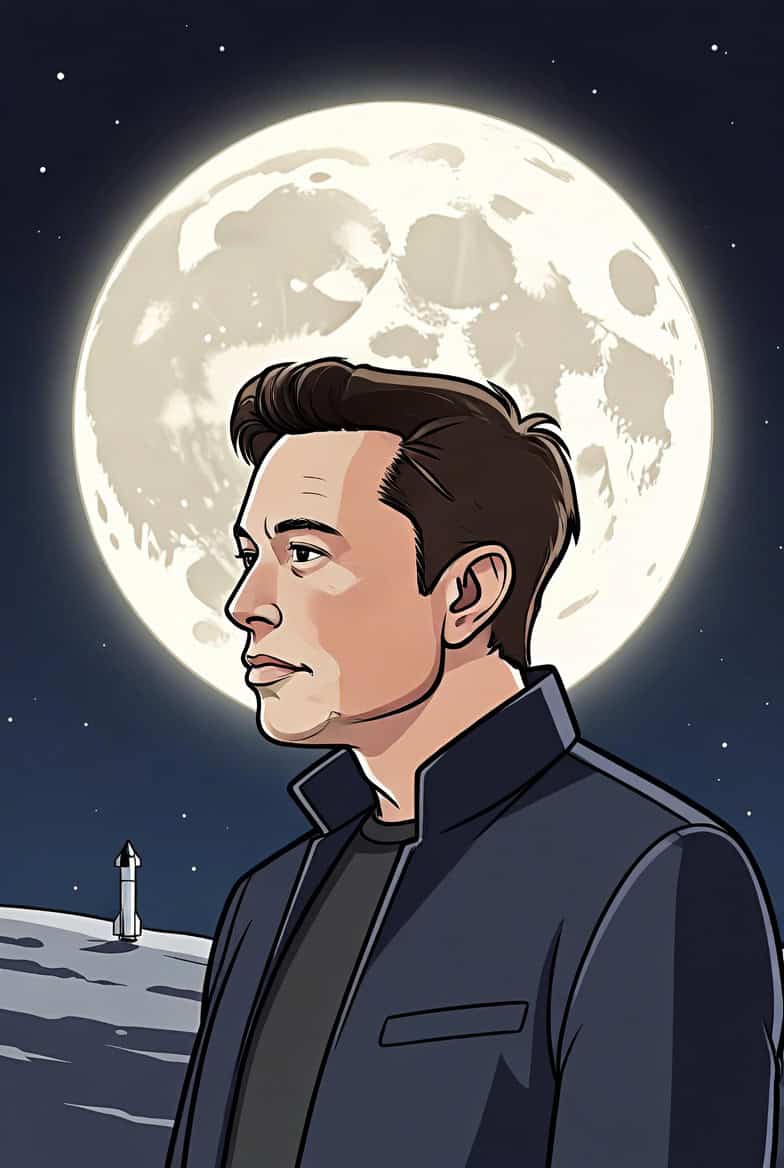
Elon Reeve Musk, born on June 28, 1971, in Pretoria, South Africa, has become one of the most influential and polarizing entrepreneurs of the modern era. Over the past three decades, he has played a central role in reshaping digital payments, electric vehicles, reusable rockets, satellite connectivity, artificial intelligence, neural interfaces and social platforms. More than a businessman in the traditional sense, Musk positions himself as an engineer-entrepreneur obsessed with long-term civilizational questions.
His stated framework has been consistent for years: work on the problems that matter most to the future of humanity. The internet, sustainable energy, space, artificial intelligence and, eventually, the connection between the human brain and machines are not random interests in his world. They are pieces of a larger strategy. What makes Musk different is not just that he built multiple major companies, but that he increasingly treats them as parts of one integrated operating system.
Childhood and Education: The Origins of a First-Principles Thinker
Musk grew up in a complicated family environment and has often spoken about a childhood marked by isolation, intensity and harsh experiences, including severe bullying. Those years mattered. They helped shape the stubbornness, emotional endurance and outsider mindset that would later define his public persona and management style.
Books became both refuge and training ground. He read science fiction, engineering material, encyclopedias and philosophy. Isaac Asimov and Douglas Adams left a clear mark on his thinking. From those formative years came his famous preference for first-principles reasoning: break a problem down to its most basic truths, then rebuild from there instead of accepting legacy assumptions.
At the age of twelve, Musk taught himself programming well enough to create and sell a video game called Blastar. In 1989, he left South Africa for Canada, partly to avoid military service and partly to move closer to the United States. He worked difficult jobs to support himself before eventually attending the University of Pennsylvania, where he earned degrees in physics and economics.
Key anecdote: As a teenager, Musk began asking himself which problems would matter most to the future of humanity. That question became the organizing principle behind nearly every major venture he pursued later.
The First Successes (1995-2002): Zip2 and PayPal as Fuel for the Bigger Vision
Zip2: A Pre-Google Maps Local Internet Play
In 1995, Musk and his brother Kimbal co-founded Zip2, a company that helped newspapers offer online city guides, directories and maps. In hindsight, the concept looked strikingly early. It anticipated pieces of what would later become normal across internet search, mapping and local business discovery.
Zip2 grew fast enough to attract a buyer, and in 1999 it was sold for roughly $307 million. For Musk, this was the first major financial proof point. It gave him credibility, capital and confidence, but more importantly, it gave him the ability to begin funding ventures that were far more ambitious and far more dangerous.
X.com and PayPal: Rewiring Money for the Internet
Shortly after Zip2, Musk founded X.com, an online financial services company built around the belief that money would inevitably move to the internet. X.com later merged with Confinity, creating the foundation of what became PayPal. The internal journey was turbulent, and Musk was removed as CEO during a period of conflict over direction and execution.
Even so, PayPal kept growing and was acquired by eBay in 2002 for $1.5 billion. Musk, as one of the largest shareholders, walked away with around $180 million. Rather than use that windfall to live comfortably, he recycled it into multiple moonshot-level ventures, especially one that most observers considered wildly unrealistic: a private space company.
“If something is important enough, you do it even if the odds are not in your favor.”
SpaceX (2002-2026): From Near Collapse to the Rewriting of Space Economics
The Mission: Make Humanity Multiplanetary
Musk founded SpaceX in 2002 with a mission that sounded absurd to many at the time: slash the cost of getting to space and ultimately make humanity a multiplanetary species. He believed the aerospace establishment had become too expensive, too slow and too complacent. Reusability, not legacy bureaucracy, would be the key to changing the economics of launch.
2006-2008: Three Failures and the Edge of Failure
2006 – Falcon 1 Test 1: SpaceX’s first privately built orbital rocket explodes after launch.
2007 – Falcon 1 Test 2: A second launch attempt also fails, increasing financial and internal pressure.
2008 – Falcon 1 Test 3: The third consecutive failure pushes the company close to financial collapse.
Critical moment: In 2008, both SpaceX and Tesla were under existential stress at the same time. Musk later described periods of sleeping in factories, living under relentless pressure and risking nearly everything he had left.
September 2008: Falcon 1 Test 4 Works
The fourth Falcon 1 launch finally succeeded, making SpaceX the first private company to send a liquid-fueled rocket into orbit. It was not just a technical milestone. It was a survival event. That success validated the idea that rapid iteration and aggressive engineering discipline could break into a domain previously dominated by governments and giant contractors.
2010-2020: From Proof of Concept to Industry Leadership
- 2010: Dragon becomes the first privately developed spacecraft to return from orbit.
- 2015: Falcon 9 lands vertically, redefining what launch reusability can mean.
- 2018: Falcon Heavy enters service as one of the world’s most powerful operational rockets.
- 2020: Crew Dragon carries NASA astronauts, marking a new era for private human spaceflight.
- 2020-2026: Starlink grows into a global satellite connectivity platform.
2023-2026: Starship and the Long Mars Arc
Starship is the most dramatic expression of Musk’s long-term space thesis. It is designed for heavy payloads, lunar missions, large-scale logistics and, in the far bigger narrative, Mars settlement. The test program has often been violent and messy, but it reflects the same philosophy that shaped early SpaceX: test in the real world, fail fast, learn hard and move again.
April 2026: Starship Super Heavy V3 records another major static fire milestone, reinforcing the broader effort to move from experimentation toward repeatable deep-space capability.
The Martian Vision
Musk does not describe Mars as a symbolic destination. He frames it as a civilizational insurance policy. In his telling, becoming multiplanetary is not a luxury goal. It is a resilience strategy for the species.
Tesla (2004-2026): The Electric Car Company That Became Something Bigger
Entry and Crisis: 2004-2008
Musk joined Tesla in 2004 as lead investor and chairman, later becoming CEO in 2008. Although he was not one of the company’s original founders, he quickly became its dominant strategic force. In the beginning, Tesla was an extremely fragile proposition: expensive battery technology, manufacturing uncertainty and widespread skepticism that a new company could challenge the global auto industry.
The Roadster proved that an electric car could be exciting, but it did not make Tesla safe. The 2008 financial crisis nearly broke the company, forcing Musk to pour in much of his own capital to keep it alive.
2008 anecdote: Musk has repeatedly described periods when he barely slept and effectively lived between conference rooms, factory floors and crisis calls.
2012-2019: Model S, Model 3 and Production Hell
Model S established Tesla as more than a curiosity. It showed that an electric vehicle could be aspirational, high-performance and category-defining. Model 3 raised the real challenge: scale. That scaling effort became infamous as Production Hell, a period of manufacturing chaos, delayed targets and enormous pressure.
But Tesla survived it, and in doing so crossed a threshold that many critics believed it would never reach. The company stopped looking like an improbable startup and started looking like a genuine industrial force.
2020-2026: Dominance, Autonomy and Robotics
- Global scale: Gigafactories in China, Germany and Texas expand Tesla’s manufacturing footprint.
- Model Y: becomes one of the best-selling vehicles globally.
- Cybertruck: enters production with a polarizing but unmistakable design language.
- FSD: autonomous driving software becomes central to Tesla’s identity and valuation narrative.
- Optimus: humanoid robotics moves from side project to serious strategic pillar.
- Energy: Powerwall, Megapack and solar products turn Tesla into more than an auto company.
Tesla-SpaceX-xAI synergy: Tesla is the terrestrial industrial base of Musk’s ecosystem, where hardware, data, battery systems, robotics and real-world AI all converge.
Neuralink: Brain-Computer Interfaces and the Human-AI Question
Neuralink is Musk’s attempt to build direct interfaces between the human brain and computers. In the near term, the strongest and most defensible case is medical: helping patients with severe neurological impairment or loss of autonomy. In the longer arc, the ambition becomes more radical and more controversial.
Clinical Milestones: 2024-2026
2024: The first human patient receives a Neuralink implant and demonstrates the ability to control a computer with thought.
2026: Neuralink remains one of the most closely watched brain-computer interface programs in the world.
The Strategic Idea
For Musk, the risk is not simply that AI becomes very powerful. It is that humanity becomes disconnected from the systems shaping the future. Neuralink, in this framing, is not just a med-tech company. It is part therapeutic platform, part philosophical defense of human relevance in an AI-heavy world.
The Boring Company and X: The “Side” Projects That Are Not Really Side Projects
The Boring Company
The Boring Company emerged from Musk’s frustration with urban congestion. Its premise is simple: cities cannot solve everything at street level, so movement and infrastructure should increasingly go underground. Compared with Tesla and SpaceX, it is smaller and less mature, but it still fits the logic of Musk’s broader worldview: remove bottlenecks, redesign infrastructure and challenge cost structures that incumbents treat as fixed.
X, formerly Twitter
In 2022, Musk acquired Twitter and turned it into X. Many saw the move as impulsive, but inside his system it has a strategic logic. X is not just a social platform. It is a distribution channel, a real-time attention engine and a direct communication interface between Musk and global audiences. In ecosystem terms, it is the narrative layer.
xAI (2023-2026): The Cognitive Layer of the Musk System
Foundation and Vision
With xAI, Musk entered the AI race directly. The public mission is to “understand the universe,” but the practical role of xAI is broader: build models and intelligence systems that can support communication, automation, robotics, vehicles, industrial systems and scientific analysis.
Grok is the emblematic product, but Musk clearly sees xAI as more than a chatbot business. It is the candidate brain of the wider ecosystem.
Why xAI Matters Strategically
In Musk’s longer-term architecture, xAI is not a standalone company with narrow scope. It is the cognitive layer that can connect Tesla, X, Neuralink, Starlink and, indirectly, SpaceX’s ambitions in orbital infrastructure and beyond. It is where compute, data, reasoning and automation start to merge.
The Companies in the Musk Universe: What Each One Does and Why It Matters
One of the biggest mistakes people make when analyzing Elon Musk is treating his companies like separate stories. They are not. The so-called Musk Universe makes more sense as an integrated system. Each company controls a different strategic layer of the future: terrestrial transport, space access, artificial intelligence, neural interfaces, public communication and urban infrastructure.
Viewed one by one, these businesses seem to belong to unrelated sectors. Viewed as a whole, the underlying design becomes clearer. Musk is trying to build a full-stack industrial and technological platform linking energy, mobility, data, automation, compute and infrastructure. That systemic logic is what makes his ecosystem different from a normal portfolio of successful companies.
A simple map of the Musk Universe
Tesla works on the physical world on Earth: vehicles, batteries, robots, manufacturing and real-world AI.
SpaceX works on the orbital and interplanetary layer: launches, satellites, space infrastructure and Mars access.
xAI is the cognitive core: models, reasoning, automation and data interpretation.
X is the information and attention layer: distribution, conversation and cultural reach.
Neuralink is focused on direct brain-machine interfaces.
The Boring Company focuses on tunnels, underground mobility and physical infrastructure redesign.
Tesla: Electric Vehicles, Energy, Robotics and Real-World AI
Tesla is no longer just a car company. It combines electric vehicles, battery manufacturing, energy storage, software, artificial intelligence and robotics inside one platform. Its original mission, accelerating the world’s transition to sustainable energy, has expanded into something larger: building a world powered by cleaner electricity, autonomous systems and physical automation.
In plain terms, Tesla does four things at once. It builds EVs. It develops software for autonomy. It produces energy storage systems for homes, businesses and utilities. And it is trying to become an embodied AI company, meaning a company that puts intelligence into machines operating in the real world.
Why Tesla matters inside the system: it generates large amounts of real-world data. Cars, factories, battery systems, logistics and robots all produce the raw material needed to train software, optimize processes and move AI from answering questions to acting in the physical world.
For Musk, Tesla is essential because it connects energy with autonomy. Without abundant electricity and storage, there is no sustainable transition. Without connected vehicles and robots, there is no real bridge between software and reality. Tesla is the terrestrial industrial engine of the ecosystem.
SpaceX: Rockets, Satellites, Starlink and the Multiplanetary Project
SpaceX is the original heart of Musk’s most radical ambition: making humanity multiplanetary. The company was built to lower launch costs dramatically, break the throwaway rocket model and make reusability the core strategic advantage of modern aerospace.
Today SpaceX operates on at least three levels. First, there are orbital launches: Falcon 9 and Falcon Heavy made the company dominant in commercial access to orbit. Second, there is Starlink, the broadband satellite constellation that turned SpaceX from a launch provider into a global connectivity platform. Third, there is Starship, the heavy vehicle designed for lunar missions, massive payloads and, eventually, Mars settlement.
Inside the Musk Universe, SpaceX is much more than a rocket company. It is the provider of access to space, the logistical backbone that makes satellites, telecommunications, orbital infrastructure and future deep-space operations possible. If Tesla is the engine on Earth, SpaceX is the system’s vertical extension into orbit and beyond.
Important point: Starlink is not just satellite internet. In Musk’s wider framework, it is also a resilience network, a geopolitical asset and a bridge linking space, data, communication and global operational presence.
Starlink: The Distributed Nervous System
Even though it formally sits inside SpaceX, Starlink deserves its own description because it has become one of the group’s most strategically important assets. Its immediate purpose is broadband connectivity in remote or underserved regions. But its real importance goes far beyond consumer internet access.
Starlink is a global, distributed, redundant communications network that reduces dependence on traditional terrestrial infrastructure. That makes it relevant for governments, defense, emergency response, shipping, aviation and operations in difficult environments.
Within the Musk Universe, Starlink functions like a distributed nervous system. It connects users, places, devices, vehicles and potentially future orbital assets. It is also the clearest bridge between space ambition and recurring revenue.
xAI: The Brain of the Ecosystem
xAI is Musk’s vehicle for competing in advanced AI. Its public mission is to understand the universe, but practically it builds models, products and infrastructure that can be used both by the public and by the rest of Musk’s ecosystem.
Grok is the flagship product, but reducing xAI to a chatbot company misses the point. In strategic terms, xAI is the cognitive layer that can be applied across assistance, generation, planning, analysis, industrial automation, robotics, vehicle software and scientific workflows.
Why xAI is so important: if Tesla provides hardware and data, and SpaceX provides orbital access and connectivity, xAI provides the intelligence that can coordinate and amplify everything else.
Its relevance becomes even greater when seen alongside Tesla data, X distribution, industrial use cases and the broader Musk belief that AI should be more openly aligned with truth-seeking rather than narrow narrative control.
X: The Public Square, Distribution Layer and Attention Weapon
X, formerly Twitter, is often treated as the odd asset in Musk’s portfolio. Strategically, it fits almost perfectly. Where Tesla builds machines and SpaceX launches infrastructure, X controls the distribution of information, public conversation and the management of attention.
X is where Musk speaks directly to markets, customers, governments, fans, critics, engineers and journalists. But it is more than a megaphone. It is also a platform that aggregates real-time signals, trends, sentiment, breaking narratives, brand energy and public attention.
In a modern ecosystem, controlling conversation means controlling a meaningful part of value distribution. That is why X can be understood as the media layer of the Musk Universe: a public square, but also a narrative and reputational infrastructure that amplifies every other part of the system.
If Tesla is the machine, SpaceX the rocket and xAI the brain, X is the global megaphone that makes the entire ecosystem instantly visible and distributable.
Neuralink: The Bridge Between Human Minds and Machines
Neuralink is perhaps the most futuristic and divisive company in the group. Its explicit goal is to build brain-computer interfaces that can, first of all, restore autonomy to people with severe unmet medical needs. But in the broader Musk vision, it is also part of a future where the relationship between humans and intelligent machines becomes far tighter.
In the short term, Neuralink should be understood primarily as an advanced med-tech company: implantable devices, neuroengineering, robotic surgery, neural signal interpretation and clinical development. In the longer term, Musk frames it as a bridge technology between biological consciousness and extremely capable digital systems.
That dual identity is what makes the company so central to his worldview. On one side, there is a direct human benefit case. On the other, there is a transhumanist ambition: building a form of human-machine symbiosis that prevents people from being completely outpaced by artificial intelligence.
The Boring Company: Underground Mobility and Urban Infrastructure
The Boring Company is often underestimated because it looks less spectacular than SpaceX and less economically massive than Tesla. Yet it also fits the Musk pattern. The basic idea is simple: surface cities are congested, slow and spatially constrained, so future transport and utility systems should move increasingly underground through cheaper, faster and more scalable tunneling.
The company works on tunnels for passengers, goods and utility infrastructure, with the aim of reducing both tunneling cost and deployment time. In the longer view, it is not just about traffic. It is about redesigning cities into layered, more fluid systems.
Inside the Musk ecosystem, The Boring Company is the urban physical infrastructure play. While SpaceX expands upward and outward, TBC digs downward. While Tesla makes transport electric and intelligent, TBC tries to make movement less congested and more structurally efficient.
How the Companies Reinforce One Another
The key is not to describe each company in isolation, but to understand why the whole is stronger than the parts. Tesla produces hardware, batteries, robots and real-world data. SpaceX provides launch capability and satellite networks. Starlink connects the globe. xAI interprets, coordinates and automates. X distributes narrative, products and attention. Neuralink pushes toward the ultimate interface between mind and machine. The Boring Company works on the physical structure of future cities.
This creates a rare form of advantage: vertical integration across atoms, bits, energy and distribution. It is not just a holding company of famous brands. It is a serious attempt to control critical layers of the future technological stack: energy, transportation, communication, AI, physical infrastructure and even the relationship between consciousness and machines.
In short: what the Musk Universe really represents
Tesla builds the vehicle, the robot and the energy system.
SpaceX builds the launch vehicle and orbital access.
Starlink builds global connectivity.
xAI builds the intelligence layer meant to coordinate the system.
X builds public distribution, attention and conversation.
Neuralink tries to build the bridge between brain and machine.
The Boring Company tries to rethink urban mobility and underground infrastructure.
Seen this way, Musk’s trajectory looks less chaotic than it first appears. It is not a series of random bets. It is a coherent attempt to control the most important nodes of the future technological landscape.
The Integrated Ecosystem: How It All Connects
The Flywheel
Musk does not think in isolated companies. He thinks in a system where each layer reinforces the others:
- Tesla provides physical-world data, industrial capacity, batteries, energy systems and robotics.
- SpaceX provides launch capability, orbital infrastructure and global connectivity through Starlink.
- xAI/Grok provides reasoning, planning, automation and intelligence.
- Neuralink opens the frontier of direct interfaces between human cognition and machines.
- X distributes messaging, narrative and attention at global scale.
- The Boring Company addresses the physical bottlenecks of future urban movement.
The crucial point is that none of these businesses is imagined as an island. The deeper strategic value emerges from the overlaps.
“We want to expand the scope and scale of consciousness.”
World-Changing Successes and the Lessons of Failure
Major Successes
- SpaceX: rewrote the economics of launch.
- Tesla: forced the global car industry to take EVs seriously.
- Starlink: made satellite connectivity a strategic infrastructure layer.
- xAI: gave Musk a direct vehicle in the AI race.
- Neuralink: pushed brain-computer interfaces into mainstream public discussion.
Lessons from Failure
- 2008: SpaceX and Tesla both came close to collapse.
- Falcon 1: three failures before the breakthrough launch.
- Production Hell: Tesla’s manufacturing scale-up was vastly harder than promised.
- Starship tests: explosive outcomes became part of the learning loop.
- X: integration and repositioning came with intense controversy and operational upheaval.
The most consistent pattern in Musk’s career is that failure, for him, is not the end of the process. It is a source of data.
Philosophy, Ambition and the 2026-2030 Outlook
The Foundational Question
As a young man, Musk asked which problems would matter most to the future of humanity. Over time, that question turned into an operating roadmap. The internet, sustainable energy, space, AI and human-machine interfaces are not isolated themes in his story. They are chapters of the same thesis.
Humanity at a Crossroads
Musk often describes the present moment as a historic transition. In that framing, the next decade helps determine whether humanity becomes more resilient, more sustainable and more technologically distributed, perhaps one day across multiple worlds.
2026-2030 Goals
- Starship and the Moon: push deeper toward operational lunar capability.
- Mars: keep building the logistics and engineering path toward eventual human missions.
- Robotaxi scale: turn Tesla into a true autonomous mobility platform.
- Optimus: expand robotics into industrial and eventually domestic applications.
- Advanced AI: strengthen xAI’s place inside the broader system.
- Neuralink: continue widening the clinical and technological frontier.
Controversies, Personality and Personal Life
Musk is a deeply divisive public figure. Alongside his industrial achievements, he has repeatedly been at the center of controversy over impulsive communication, relationships with regulators, extreme workplace expectations, aggressive management and increasingly visible political and cultural positioning.
- Impulsive communication: his public statements have moved markets and intensified scrutiny.
- Workaholism: the myth of relentless labor is central both to his appeal and to criticism of his leadership.
- Highly exposed personal life: relationships, children and personal statements keep him permanently in the spotlight.
- Politics and ideology: his public role has become more polarizing over time.
That mixture of vision, execution, conflict and spectacle is part of what makes Musk one of the defining technology figures of the age.
Current Position: April 2026
The state of the Musk system
As of April 2026, Elon Musk remains at the center of an ecosystem spanning electric vehicles, space access, satellite connectivity, artificial intelligence, public communication and neurotechnology.
- Tesla remains the terrestrial industrial base of the system.
- SpaceX remains the operational leader in launches and the architect of the multiplanetary narrative.
- Starlink is now a structural part of Musk’s global influence.
- xAI strengthens the cognitive layer of the ecosystem.
- Neuralink remains one of the most futuristic and heavily watched projects in the world.
- X remains the narrative and conversational platform through which Musk exerts direct influence.
Taken together, the Musk Universe looks more and more like a machine attempting to combine physical infrastructure, software, communication and civilizational ambition into one strategic design.
Conclusion: A Visionary Trying to Build the Future
Elon Musk is not a traditional businessman. He is a figure who has tried to convert philosophical questions about the future of civilization into operating companies, physical products and real infrastructure. His long-term historical importance will not be measured only by wealth or market value, but by how much his ecosystem actually alters the direction of technological modernity.
His story is not linear. It includes near-failures, brutal execution problems, astonishing intuition, major errors and a rare ability to push entire industries into new territory. From electric mobility to space, from AI to neurotechnology, Musk has built both a narrative and a machine unlike almost anything else in the modern corporate world.
If SpaceX keeps lowering the cost of space access, if Tesla pushes autonomy and robotics into reality, if xAI secures a structural role, if Neuralink broadens its use cases and if X remains the central distribution layer of his worldview, then the coherence of his system will look even clearer in hindsight. If parts of it prove too ambitious or too unstable, Musk will still remain one of the people who most expanded the limits of what technology entrepreneurship dared to imagine.
“Failure is an option here. If things are not failing, you are not innovating enough.”
Elon Reeve Musk, nato il 28 giugno 1971 a Pretoria, in Sudafrica, è diventato una delle figure imprenditoriali più influenti e polarizzanti dell’epoca moderna. Negli ultimi tre decenni ha avuto un ruolo centrale nel ridefinire i pagamenti digitali, le auto elettriche, i razzi riutilizzabili, la connettività satellitare, l’intelligenza artificiale, le interfacce neurali e le piattaforme sociali. Più che un uomo d’affari nel senso classico, Musk si presenta come un imprenditore-ingegnere ossessionato dalle grandi domande di lungo periodo sul destino della civiltà.
Il suo schema dichiarato è coerente da anni: lavorare sui problemi che contano di più per il futuro dell’umanità. Internet, energia sostenibile, spazio, intelligenza artificiale e, in prospettiva, il collegamento tra cervello umano e macchina non sono interessi casuali nel suo mondo. Sono tasselli di una strategia più ampia. Quello che rende Musk diverso non è solo il fatto di aver costruito più aziende importanti, ma il fatto che le tratti sempre di più come componenti di un unico sistema operativo integrato.
Infanzia e Formazione: Le Origini di un Pensiero da Primi Principi
Musk è cresciuto in un contesto familiare complesso e ha spesso parlato di un’infanzia segnata da isolamento, intensità ed esperienze dure, compreso un bullismo severo. Quegli anni contano. Hanno contribuito a formare la testardaggine, la resistenza emotiva e la mentalità da outsider che avrebbero poi definito la sua immagine pubblica e il suo stile manageriale.
I libri divennero insieme rifugio e palestra mentale. Lesse fantascienza, materiale tecnico, enciclopedie e filosofia. Isaac Asimov e Douglas Adams lasciarono un segno chiaro sul suo modo di pensare. Da quegli anni nasce anche la sua nota preferenza per il ragionamento per primi principi: scomporre un problema nelle sue verità fondamentali e ricostruirlo da zero, senza accettare i vincoli storici del settore come inevitabili.
A dodici anni Musk imparò a programmare abbastanza bene da creare e vendere un videogioco chiamato Blastar. Nel 1989 lasciò il Sudafrica per il Canada, in parte per evitare il servizio militare e in parte per avvicinarsi agli Stati Uniti. Svolse lavori faticosi per mantenersi prima di arrivare all’Università della Pennsylvania, dove conseguì lauree in fisica ed economia.
Aneddoto chiave: Da adolescente, Musk iniziò a chiedersi quali problemi avrebbero contato di più per il futuro dell’umanità. Quella domanda è diventata il principio organizzatore di quasi tutte le grandi iniziative che avrebbe intrapreso in seguito.
I Primi Successi (1995-2002): Zip2 e PayPal come Carburante per la Visione Più Grande
Zip2: Una Scommessa su Internet Locale Prima di Google Maps
Nel 1995, Musk e suo fratello Kimbal fondarono Zip2, una società che aiutava i giornali a offrire guide cittadine, directory e mappe online. A guardarla oggi, l’idea appare sorprendentemente anticipatrice. Conteneva già elementi di ciò che in seguito sarebbe diventato normale nel mondo della ricerca su internet, delle mappe digitali e della scoperta di attività locali.
Zip2 crebbe abbastanza rapidamente da attirare un compratore, e nel 1999 fu venduta per circa 307 milioni di dollari. Per Musk fu il primo vero punto di svolta finanziario. Gli diede credibilità, capitale e fiducia, ma soprattutto la possibilità di iniziare a finanziare progetti molto più ambiziosi e molto più rischiosi.
X.com e PayPal: Riscrivere il Denaro per l’Era di Internet
Poco dopo Zip2, Musk fondò X.com, una società di servizi finanziari online costruita sull’idea che il denaro si sarebbe inevitabilmente spostato su internet. X.com si fuse poi con Confinity, creando la base di ciò che sarebbe diventato PayPal. Il percorso interno fu turbolento, e Musk venne rimosso dal ruolo di CEO durante una fase di conflitto su direzione ed esecuzione.
Nonostante questo, PayPal continuò a crescere e fu acquisita da eBay nel 2002 per 1,5 miliardi di dollari. Musk, come uno dei maggiori azionisti, ne uscì con circa 180 milioni di dollari. Invece di usare quella ricchezza per una vita tranquilla, la reinvestì in più scommesse di livello quasi impossibile, soprattutto una che molti osservatori ritenevano del tutto irrealistica: una società spaziale privata.
«Se qualcosa è abbastanza importante, lo fai anche se le probabilità non sono a tuo favore.»
SpaceX (2002-2026): Dal Quasi Collasso alla Riscrittura dell’Economia dello Spazio
La Missione: Rendere l’Umanità Multiplanetaria
Musk fondò SpaceX nel 2002 con una missione che all’epoca sembrava assurda a molti: abbattere il costo di accesso allo spazio e rendere, alla lunga, l’umanità una specie multiplanetaria. Riteneva che il mondo aerospaziale fosse diventato troppo costoso, troppo lento e troppo compiaciuto. La riutilizzabilità, e non la burocrazia dei grandi incumbent, sarebbe stata la chiave per cambiare davvero l’economia del lancio.
2006-2008: Tre Fallimenti e il Bordo del Fallimento
2006 – Falcon 1 Test 1: Il primo razzo orbitale privato di SpaceX esplode dopo il lancio.
2007 – Falcon 1 Test 2: Anche il secondo tentativo fallisce, aumentando la pressione finanziaria e interna.
2008 – Falcon 1 Test 3: Il terzo fallimento consecutivo porta la società molto vicino al collasso finanziario.
Momento critico: Nel 2008, sia SpaceX sia Tesla erano contemporaneamente sotto stress esistenziale. Musk ha raccontato in seguito di aver dormito in fabbrica, vivendo sotto una pressione costante e rischiando quasi tutto ciò che gli restava.
Settembre 2008: Falcon 1 Test 4 Funziona
Il quarto lancio di Falcon 1 riuscì, rendendo SpaceX la prima azienda privata a mandare in orbita un razzo a propellente liquido. Non fu solo un traguardo tecnico. Fu un evento di sopravvivenza. Quel successo validò l’idea che iterazione rapida e disciplina ingegneristica aggressiva potessero entrare in un dominio fino ad allora dominato da governi e grandi contractor.
2010-2020: Dalla Prova di Fattibilità alla Leadership Industriale
- 2010: Dragon diventa il primo veicolo spaziale privato a rientrare dall’orbita.
- 2015: Falcon 9 atterra verticalmente, ridefinendo il significato economico della riutilizzabilità.
- 2018: Falcon Heavy entra in servizio come uno dei razzi più potenti del mondo.
- 2020: Crew Dragon porta astronauti NASA, aprendo una nuova era per il volo umano privato.
- 2020-2026: Starlink cresce fino a diventare una piattaforma globale di connettività satellitare.
2023-2026: Starship e l’Arco di Lungo Termine verso Marte
Starship è l’espressione più drammatica della tesi spaziale di lungo periodo di Musk. È progettata per grandi carichi, missioni lunari, logistica su larga scala e, nella narrazione più ampia, insediamento su Marte. Il programma di test è stato spesso violento e caotico, ma riflette la stessa filosofia che ha plasmato la prima SpaceX: testare nel mondo reale, fallire in fretta, imparare duramente e ripartire.
Aprile 2026: Starship Super Heavy V3 registra un altro passaggio importante nei test statici, rafforzando il percorso che dovrebbe portare dalla sperimentazione a una vera capacità deep-space ripetibile.
La Visione Marziana
Musk non descrive Marte come una destinazione simbolica. Lo presenta come una polizza assicurativa per la civiltà. Nella sua lettura, diventare multiplanetari non è un lusso: è una strategia di resilienza per la specie.
Tesla (2004-2026): L’Azienda di Auto Elettriche che è Diventata Qualcosa di Più Grande
Ingresso e Crisi: 2004-2008
Musk entrò in Tesla nel 2004 come lead investor e presidente, diventandone poi CEO nel 2008. Pur non essendo uno dei fondatori originari, ne divenne rapidamente la forza strategica dominante. All’inizio Tesla era una proposta estremamente fragile: tecnologia delle batterie costosa, produzione incerta e diffuso scetticismo sull’idea che una nuova società potesse sfidare l’industria auto globale.
La Roadster dimostrò che un’auto elettrica poteva essere desiderabile, ma non rese Tesla al sicuro. La crisi finanziaria del 2008 quasi la spezzò, costringendo Musk a riversare molto del proprio capitale personale per mantenerla in vita.
Aneddoto del 2008: Musk ha descritto più volte periodi in cui dormiva pochissimo e viveva di fatto tra sale riunioni, linee di produzione e call di emergenza.
2012-2019: Model S, Model 3 e il Production Hell
Model S trasformò Tesla da curiosità a riferimento. Dimostrò che un’auto elettrica poteva essere aspirazionale, performante e capace di ridefinire una categoria. Model 3 alzò la vera sfida: la scala. Quello sforzo divenne famoso come Production Hell, un periodo di caos produttivo, target mancati ed enorme pressione.
Tesla però lo superò, e così attraversò la soglia che molti critici ritenevano irraggiungibile. La società smise di sembrare una startup improbabile e iniziò a sembrare una vera forza industriale.
2020-2026: Dominio, Autonomia e Robotica
- Scala globale: Gigafactory in Cina, Germania e Texas ampliano la capacità produttiva.
- Model Y: diventa uno dei veicoli più venduti al mondo.
- Cybertruck: entra in produzione con un linguaggio di design divisivo ma inconfondibile.
- FSD: il software di guida autonoma diventa centrale nell’identità e nella narrativa valutativa di Tesla.
- Optimus: la robotica umanoide passa da progetto laterale a pilastro strategico serio.
- Energia: Powerwall, Megapack e solare trasformano Tesla in qualcosa di più di una semplice casa auto.
Sinergia Tesla-SpaceX-xAI: Tesla è la base industriale terrestre dell’ecosistema Musk, dove convergono hardware, dati, batterie, robotica e AI nel mondo reale.
Neuralink: Interfacce Cervello-Computer e la Questione Uomo-IA
Neuralink è il tentativo di Musk di costruire interfacce dirette tra cervello umano e computer. Nel breve termine, il caso più forte e più difendibile è medico: aiutare pazienti con gravi compromissioni neurologiche o perdita di autonomia. Nel lungo periodo, l’ambizione diventa più radicale e più controversa.
Milestone Cliniche: 2024-2026
2024: Il primo paziente umano riceve un impianto Neuralink e dimostra la capacità di controllare un computer con il pensiero.
2026: Neuralink resta uno dei programmi di brain-computer interface più osservati al mondo.
L’Idea Strategica
Per Musk, il rischio non è solo che l’IA diventi molto potente. È che l’umanità resti scollegata dai sistemi che modelleranno il futuro. In questa lettura, Neuralink non è soltanto una società med-tech. È insieme piattaforma terapeutica e tentativo filosofico di difendere la rilevanza umana in un mondo sempre più dominato dall’AI.
The Boring Company e X: I Progetti “Laterali” che Poi Tanto Laterali Non Sono
The Boring Company
The Boring Company nasce dalla frustrazione di Musk per la congestione urbana. La premessa è semplice: le città non possono risolvere tutto a livello stradale, quindi mobilità e infrastrutture dovranno scendere sempre di più nel sottosuolo attraverso tunnel più economici, più veloci e più scalabili. Rispetto a Tesla e SpaceX è più piccola e meno matura, ma resta coerente con la sua visione generale: rimuovere colli di bottiglia, ripensare l’infrastruttura e sfidare strutture di costo che gli incumbent considerano inevitabili.
X, ex Twitter
Nel 2022, Musk acquisì Twitter e lo trasformò in X. Molti lessero la mossa come impulsiva, ma nel suo sistema ha una logica strategica precisa. X non è soltanto una piattaforma sociale. È un canale di distribuzione, un motore di attenzione in tempo reale e un’interfaccia diretta tra Musk e un’audience globale. In termini di ecosistema, è il layer narrativo.
xAI (2023-2026): Il Livello Cognitivo del Sistema Musk
Fondazione e Visione
Con xAI, Musk è entrato direttamente nella corsa all’intelligenza artificiale. La missione pubblica è “capire l’universo”, ma il ruolo pratico di xAI è più ampio: costruire modelli e sistemi intelligenti utili per comunicazione, automazione, robotica, veicoli, sistemi industriali e analisi scientifica.
Grok è il prodotto simbolo, ma Musk vede chiaramente xAI come qualcosa di più di un business di chatbot. È il candidato cervello del suo ecosistema allargato.
Perché xAI Conta Strategicamente
Nell’architettura di lungo periodo di Musk, xAI non è una società autonoma a perimetro ristretto. È il livello cognitivo che può connettere Tesla, X, Neuralink, Starlink e, indirettamente, anche le ambizioni di SpaceX in materia di infrastruttura orbitale e oltre. È il punto in cui calcolo, dati, ragionamento e automazione iniziano a fondersi.
Le Aziende dell’Universo Musk: Cosa Fa Ognuna e Perché Conta
Uno degli errori più comuni quando si analizza Elon Musk è trattare le sue aziende come storie separate. Non lo sono. Il cosiddetto Musk Universe ha molto più senso se letto come un sistema integrato. Ogni azienda controlla un livello strategico diverso del futuro: trasporto terrestre, accesso allo spazio, intelligenza artificiale, interfacce neurali, comunicazione pubblica e infrastruttura urbana.
Osservate una per una, queste imprese sembrano appartenere a settori slegati. Osservate nell’insieme, il disegno diventa più chiaro. Musk sta cercando di costruire una piattaforma industriale e tecnologica full stack che colleghi energia, mobilità, dati, automazione, calcolo e infrastruttura. Questa logica sistemica è ciò che rende il suo ecosistema diverso da un normale portafoglio di aziende di successo.
Una mappa semplice del Musk Universe
Tesla lavora sul mondo fisico terrestre: veicoli, batterie, robot, produzione e AI nel mondo reale.
SpaceX lavora sul livello orbitale e interplanetario: lanci, satelliti, infrastruttura spaziale e accesso a Marte.
xAI è il nucleo cognitivo: modelli, reasoning, automazione e interpretazione dei dati.
X è il livello dell’informazione e dell’attenzione: distribuzione, conversazione e portata culturale.
Neuralink si concentra sulle interfacce dirette cervello-macchina.
The Boring Company si concentra su tunnel, mobilità sotterranea e ripensamento dell’infrastruttura fisica.
Tesla: Veicoli Elettrici, Energia, Robotica e AI nel Mondo Reale
Tesla non è più soltanto una casa automobilistica. Riunisce veicoli elettrici, produzione di batterie, accumulo energetico, software, intelligenza artificiale e robotica dentro una sola piattaforma. La missione originaria, accelerare la transizione del mondo verso l’energia sostenibile, si è allargata fino a diventare qualcosa di più grande: costruire un mondo alimentato da elettricità più pulita, sistemi autonomi e automazione fisica.
In termini semplici, Tesla fa quattro cose insieme. Costruisce auto elettriche. Sviluppa software per l’autonomia. Produce sistemi di accumulo per case, aziende e utility. E cerca di diventare una società di AI embodied, cioè una società che inserisce intelligenza in macchine capaci di agire nel mondo reale.
Perché Tesla conta dentro il sistema: genera grandi quantità di dati reali. Auto, fabbriche, batterie, logistica e robot producono la materia prima necessaria per addestrare software, ottimizzare processi e spostare l’AI dal rispondere a domande all’agire fisicamente nel mondo.
Per Musk, Tesla è essenziale perché collega energia e autonomia. Senza elettricità abbondante e storage, non esiste transizione sostenibile. Senza veicoli e robot connessi, non esiste un vero ponte tra software e realtà. Tesla è il motore industriale terrestre dell’ecosistema.
SpaceX: Razzi, Satelliti, Starlink e il Progetto Multiplanetario
SpaceX è il cuore originario dell’ambizione più radicale di Musk: rendere l’umanità multiplanetaria. La società è stata costruita per abbattere drasticamente i costi di lancio, superare il modello dei razzi usa e getta e trasformare la riutilizzabilità nel vantaggio strategico centrale dell’aerospazio moderno.
Oggi SpaceX opera su almeno tre livelli. Primo, i lanci orbitali: Falcon 9 e Falcon Heavy hanno reso la società dominante nell’accesso commerciale all’orbita. Secondo, Starlink, la costellazione broadband che ha trasformato SpaceX da semplice launch provider a piattaforma globale di connettività. Terzo, Starship, il veicolo pesante pensato per missioni lunari, grandi carichi e, alla fine, insediamento su Marte.
Dentro il Musk Universe, SpaceX è molto più di una rocket company. È il fornitore di accesso allo spazio, la spina dorsale logistica che rende possibili satelliti, telecomunicazioni, infrastruttura orbitale e future operazioni deep-space. Se Tesla è il motore sulla Terra, SpaceX è l’estensione verticale del sistema verso l’orbita e oltre.
Punto importante: Starlink non è solo internet satellitare. Nel quadro più ampio di Musk è anche una rete di resilienza, un asset geopolitico e un ponte che collega spazio, dati, comunicazione e presenza operativa globale.
Starlink: Il Sistema Nervoso Distribuito
Anche se formalmente è dentro SpaceX, Starlink merita una descrizione autonoma perché è diventato uno degli asset più strategicamente importanti del gruppo. Il suo scopo immediato è la connettività broadband in aree remote o poco servite. Ma la sua importanza reale va ben oltre l’accesso internet per il consumatore.
Starlink è una rete di comunicazione globale, distribuita e ridondante, che riduce la dipendenza dalle infrastrutture terrestri tradizionali. Questo la rende rilevante per governi, difesa, emergenze, shipping, aviazione e operazioni in ambienti difficili.
Nel Musk Universe, Starlink funziona come un sistema nervoso distribuito. Collega utenti, territori, dispositivi, veicoli e potenzialmente futuri asset orbitali. È anche il ponte più chiaro tra ambizione spaziale e ricavi ricorrenti.
xAI: Il Cervello dell’Ecosistema
xAI è il veicolo con cui Musk compete nell’AI avanzata. La missione pubblica è capire l’universo, ma sul piano pratico costruisce modelli, prodotti e infrastrutture utilizzabili sia dal grande pubblico sia dal resto dell’ecosistema Musk.
Grok è il prodotto di punta, ma ridurre xAI a una società di chatbot significa non coglierne il senso. Sul piano strategico, xAI è il livello cognitivo applicabile ad assistenza, generazione, pianificazione, analisi, automazione industriale, robotica, software per veicoli e workflow scientifici.
Perché xAI è così importante: se Tesla fornisce hardware e dati, e SpaceX fornisce accesso orbitale e connettività, xAI fornisce l’intelligenza che può coordinare e moltiplicare tutto il resto.
La sua rilevanza cresce ancora di più se la si osserva accanto ai dati Tesla, alla distribuzione di X, ai casi d’uso industriali e alla convinzione di Musk che l’AI debba essere più apertamente orientata alla ricerca della verità.
X: La Piazza Pubblica, il Layer di Distribuzione e l’Arma dell’Attenzione
X, l’ex Twitter, viene spesso trattata come l’asset strano del portafoglio di Musk. Strategicamente, invece, si inserisce quasi perfettamente. Dove Tesla costruisce macchine e SpaceX lancia infrastrutture, X controlla la distribuzione dell’informazione, la conversazione pubblica e la gestione dell’attenzione.
X è il luogo in cui Musk parla direttamente a mercati, clienti, governi, fan, critici, ingegneri e giornalisti. Ma non è solo un megafono. È anche una piattaforma che aggrega segnali in tempo reale, trend, sentiment, narrazioni, energia di brand e attenzione pubblica.
In un ecosistema moderno, controllare la conversazione significa controllare una parte importante della distribuzione del valore. Per questo X può essere letta come il layer media del Musk Universe: una piazza pubblica, ma anche un’infrastruttura narrativa e reputazionale che amplifica tutti gli altri pezzi del sistema.
Se Tesla è la macchina, SpaceX il razzo e xAI il cervello, X è il megafono globale che rende l’intero ecosistema immediatamente visibile e distribuibile.
Neuralink: Il Ponte tra Mente Umana e Macchina
Neuralink è forse l’azienda più futuristica e divisiva del gruppo. Il suo obiettivo esplicito è costruire interfacce cervello-computer capaci, innanzitutto, di restituire autonomia a persone con gravi bisogni medici non soddisfatti. Ma nella visione più ampia di Musk, è anche parte di un futuro in cui il rapporto tra esseri umani e macchine intelligenti diventa molto più stretto.
Nel breve termine, Neuralink va letta soprattutto come una società med-tech avanzata: dispositivi impiantabili, neuroingegneria, chirurgia robotica, interpretazione dei segnali neurali e sviluppo clinico. Nel lungo termine, Musk la presenta come una tecnologia ponte tra coscienza biologica e sistemi digitali estremamente capaci.
Questa doppia identità è ciò che la rende così centrale nella sua visione. Da un lato, c’è un caso d’uso umano diretto. Dall’altro, c’è un’ambizione transumanista: costruire una forma di simbiosi uomo-macchina che impedisca alle persone di essere completamente superate dall’intelligenza artificiale.
The Boring Company: Mobilità Sotterranea e Infrastruttura Urbana
The Boring Company viene spesso sottovalutata perché appare meno spettacolare di SpaceX e meno enorme di Tesla. Eppure si inserisce anch’essa nello schema Musk. L’idea di base è semplice: le città di superficie sono congestionate, lente e spazialmente limitate, quindi i sistemi di trasporto e utility del futuro dovranno spostarsi sempre di più nel sottosuolo attraverso tunneling più economico, più rapido e più scalabile.
La società lavora su tunnel per passeggeri, merci e infrastrutture di servizio, con l’obiettivo di ridurre sia i costi sia i tempi di deployment. Nella visione più lunga, non si tratta solo di traffico. Si tratta di riprogettare la città come sistema multilivello e più fluido.
Dentro l’ecosistema Musk, The Boring Company è la scommessa sull’infrastruttura fisica urbana. Mentre SpaceX espande verso l’alto e verso l’esterno, TBC scava verso il basso. Mentre Tesla rende il trasporto elettrico e intelligente, TBC prova a renderlo meno congestionato e più efficiente sul piano strutturale.
Come le Aziende si Rafforzano tra Loro
Il punto chiave non è descrivere ogni azienda in isolamento, ma capire perché l’insieme sia più forte delle singole parti. Tesla produce hardware, batterie, robot e dati reali. SpaceX fornisce capacità di lancio e reti satellitari. Starlink connette il globo. xAI interpreta, coordina e automatizza. X distribuisce narrazione, prodotti e attenzione. Neuralink spinge verso l’interfaccia definitiva tra mente e macchina. The Boring Company lavora sulla struttura fisica delle città future.
Questo crea una forma rara di vantaggio: integrazione verticale tra atomi, bit, energia e distribuzione. Non è solo una holding di marchi famosi. È un tentativo serio di controllare livelli critici dello stack tecnologico del futuro: energia, trasporto, comunicazione, AI, infrastruttura fisica e persino il rapporto tra coscienza e macchina.
In sintesi: cosa rappresenta davvero il Musk Universe
Tesla costruisce il veicolo, il robot e il sistema energetico.
SpaceX costruisce il vettore di lancio e l’accesso all’orbita.
Starlink costruisce la connettività globale.
xAI costruisce il livello di intelligenza pensato per coordinare il sistema.
X costruisce distribuzione pubblica, attenzione e conversazione.
Neuralink prova a costruire il ponte tra cervello e macchina.
The Boring Company prova a ripensare mobilità urbana e infrastruttura sotterranea.
Vista così, la traiettoria di Musk appare meno caotica di quanto sembri all’inizio. Non è una sequenza di scommesse casuali. È un tentativo coerente di presidiare i nodi più importanti del paesaggio tecnologico del futuro.
L’Ecosistema Integrato: Come Tutto si Connette
Il Flywheel
Musk non ragiona in aziende isolate. Ragiona in un sistema dove ogni livello rafforza gli altri:
- Tesla fornisce dati dal mondo fisico, capacità industriale, batterie, energia e robotica.
- SpaceX fornisce capacità di lancio, infrastruttura orbitale e connettività globale tramite Starlink.
- xAI/Grok fornisce ragionamento, pianificazione, automazione e intelligenza.
- Neuralink apre la frontiera delle interfacce dirette tra cognizione umana e macchina.
- X distribuisce messaggi, narrativa e attenzione su scala globale.
- The Boring Company affronta i colli di bottiglia fisici della mobilità urbana futura.
Il punto decisivo è che nessuna di queste imprese è pensata come un’isola. Il valore strategico più profondo emerge dalle sovrapposizioni.
«Vogliamo espandere la portata e la scala della coscienza.»
Successi che Hanno Cambiato il Mondo e le Lezioni del Fallimento
Grandi Successi
- SpaceX: ha riscritto l’economia del lancio spaziale.
- Tesla: ha costretto l’industria auto globale a prendere sul serio gli EV.
- Starlink: ha reso la connettività satellitare un livello infrastrutturale strategico.
- xAI: ha dato a Musk un veicolo diretto nella corsa all’AI.
- Neuralink: ha portato le brain-computer interfaces nel dibattito mainstream.
Lezioni dal Fallimento
- 2008: SpaceX e Tesla arrivarono entrambe vicinissime al collasso.
- Falcon 1: tre fallimenti prima del lancio che cambiò tutto.
- Production Hell: la salita di scala manifatturiera di Tesla fu immensamente più dura del previsto.
- Test Starship: gli esiti esplosivi divennero parte del ciclo di apprendimento.
- X: integrazione e riposizionamento arrivarono con forti polemiche e sconvolgimenti operativi.
Il pattern più coerente nella carriera di Musk è che il fallimento, per lui, non è la fine del processo. È una fonte di dati.
Filosofia, Ambizione e lo Scenario 2026-2030
La Domanda Fondativa
Da giovane, Musk si chiese quali problemi avrebbero contato di più per il futuro dell’umanità. Con il tempo, quella domanda è diventata una roadmap operativa. Internet, energia sostenibile, spazio, AI e interfacce uomo-macchina non sono temi separati nella sua storia. Sono capitoli della stessa tesi.
L’Umanità a un Bivio
Musk descrive spesso il presente come una transizione storica. In questa cornice, il prossimo decennio contribuirà a determinare se l’umanità diventerà più resiliente, più sostenibile e più distribuita tecnologicamente, forse un giorno anche su più mondi.
Obiettivi 2026-2030
- Starship e la Luna: avanzare verso una capacità lunare più operativa.
- Marte: continuare a costruire il percorso logistico e ingegneristico verso future missioni umane.
- Scala robotaxi: trasformare Tesla in una vera piattaforma di mobilità autonoma.
- Optimus: estendere la robotica ad applicazioni industriali e poi domestiche.
- AI avanzata: rafforzare il posto di xAI dentro il sistema più ampio.
- Neuralink: continuare ad allargare la frontiera clinica e tecnologica.
Controversie, Personalità e Vita Privata
Musk è una figura pubblica profondamente divisiva. Accanto ai successi industriali, è stato più volte al centro di controversie legate a comunicazione impulsiva, rapporti con i regolatori, aspettative di lavoro estreme, gestione aggressiva e posizionamento politico e culturale sempre più visibile.
- Comunicazione impulsiva: le sue dichiarazioni pubbliche hanno mosso mercati e intensificato il livello di scrutinio.
- Workaholism: il mito del lavoro incessante è centrale sia nel suo fascino sia nelle critiche alla sua leadership.
- Vita privata molto esposta: relazioni, figli e dichiarazioni personali lo tengono costantemente sotto i riflettori.
- Politica e ideologia: il suo ruolo pubblico è diventato sempre più polarizzante.
Questa miscela di visione, esecuzione, conflitto e spettacolo è parte di ciò che rende Musk una delle figure tecnologiche più rappresentative del nostro tempo.
Posizione Attuale: Aprile 2026
Lo stato del sistema Musk
Ad aprile 2026, Elon Musk resta al centro di un ecosistema che attraversa veicoli elettrici, accesso allo spazio, connettività satellitare, intelligenza artificiale, comunicazione pubblica e neurotecnologia.
- Tesla resta la base industriale terrestre del sistema.
- SpaceX resta il leader operativo nei lanci e l’architetto della narrativa multiplanetaria.
- Starlink è ormai una componente strutturale dell’influenza globale di Musk.
- xAI rafforza il livello cognitivo dell’ecosistema.
- Neuralink resta uno dei progetti più futuristici e osservati al mondo.
- X resta la piattaforma narrativa e conversazionale da cui Musk esercita influenza diretta.
Nel complesso, il Musk Universe assomiglia sempre di più a una macchina che tenta di combinare infrastruttura fisica, software, comunicazione e ambizione civilizzazionale in un unico disegno strategico.
Conclusione: Un Visionario che Prova a Costruire il Futuro
Elon Musk non è un imprenditore tradizionale. È una figura che ha cercato di trasformare grandi domande filosofiche sul futuro della civiltà in aziende operative, prodotti fisici e infrastrutture reali. La sua importanza storica di lungo periodo non verrà misurata solo da ricchezza o capitalizzazione, ma da quanto il suo ecosistema riuscirà davvero a cambiare la direzione della modernità tecnologica.
La sua storia non è lineare. Include quasi fallimenti, problemi di esecuzione brutali, intuizioni straordinarie, errori importanti e una rara capacità di spingere interi settori in territori nuovi. Dalla mobilità elettrica allo spazio, dall’AI alla neurotecnologia, Musk ha costruito sia una narrativa sia una macchina che hanno pochi equivalenti nel mondo corporate contemporaneo.
Se SpaceX continuerà a ridurre il costo di accesso allo spazio, se Tesla porterà davvero autonomia e robotica nel mondo reale, se xAI troverà un ruolo strutturale, se Neuralink allargherà i propri casi d’uso e se X resterà il layer centrale di distribuzione della sua visione, allora la coerenza del suo sistema apparirà ancora più evidente col senno di poi. Se invece alcune di queste scommesse si riveleranno troppo ambiziose o troppo instabili, Musk resterà comunque uno degli individui che più hanno allargato i limiti di ciò che l’imprenditoria tecnologica ha osato immaginare.
«Fallire è un’opzione. Se le cose non stanno fallendo, non stai innovando abbastanza.»
Scanner for active traders

Try ChartsWatcher free, then unlock 10% OFF with SAVE10
ChartsWatcher is a real-time scanner for momentum traders: fast movers, unusual volume and rotations — so you can focus on the few tickers that matter right now, instead of watching hundreds of charts.
Start with the free version. When you upgrade, use SAVE10 for 10% OFF your first paid period.
Start free – then use SAVE10
No credit card required to start. Apply SAVE10 when upgrading.
Recommended platform

One platform. All your brokers.
Medved Trader connects multiple brokers in one workspace, with pro charts, hotkeys and fast execution — without changing your broker accounts.
A single cockpit for positions, Level II and multi-broker order routing, built for active day & swing traders.
Get 1 Month Free ➔
Multi-broker workflow + customizable layouts in one platform.
 Monica.im – the AI assistant I use every day
If you find value in the work I publish on Merlintrader and want a practical AI assistant for research and writing, you can sign up using this referral link. Click here to try Monica.im and support the site
Find out how I use AI on Merlintrader: AI, retail and Merlintrader
Disclosure: some of the links in the promotional blocks above are affiliate or referral links. If you choose to subscribe or sign up through them, Merlintrader may receive a small commission or benefit at no extra cost to you.