DISCLAIMER — Not financial advice. Educational content only, not an offer or solicitation to buy or sell any security. Biotech and small/mid-cap stocks are highly speculative and volatile and can result in a partial or total loss of capital. Do your own research and consult a licensed advisor where appropriate. / Contenuti a solo scopo informativo e didattico, non costituiscono consulenza finanziaria né offerta o sollecitazione al pubblico risparmio ai sensi delle normative CONSOB e SEC. Le azioni biotech e le small/mid cap sono strumenti altamente speculativi e volatili e possono comportare la perdita parziale o totale del capitale investito. Si raccomanda di effettuare sempre le proprie ricerche e, se necessario, di rivolgersi a un consulente abilitato.

Merlintrader Trading Pub
Biotech catalyst news and analysis. FDA PDUFA tracker
Merlintrader Trading Pub
Biotech catalyst news and analysis. FDA PDUFA tracker
$DRTS: Alpha Tau Medical, Japan Approval, Pancreatic DDW 2026, GBM Optionality and a Technical Setup That Finally Looks Awake
Alpha Tau Medical is no longer just a quirky radiotherapy story that biotech tourists glance at and move on from. It now has a first non-Israeli approval in Japan, five U.S. trials running in parallel, a live pancreatic catalyst at DDW 2026, a GBM program that can materially alter the narrative, a modular PMA path in recurrent cSCC, insider-heavy ownership, and a chart that appears to be compressing directly beneath a multi-year decision zone.

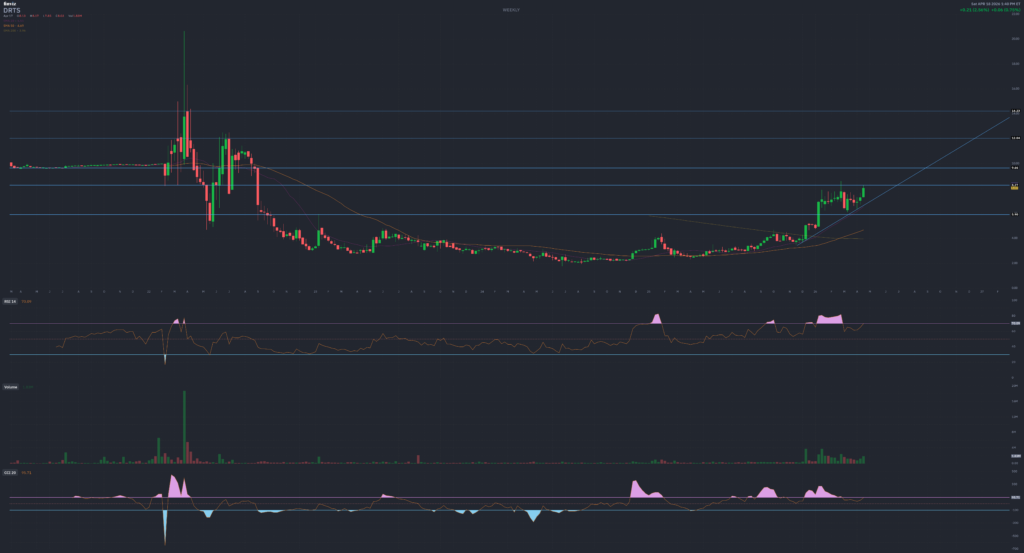
Static Finviz chart on top by design. Referral is applied only on click, not on image load.
Next Catalyst
Digestive Disease Week (DDW) 2026, Chicago, May 2–5, 2026. Alpha Tau announced that pancreatic cancer data will be delivered in its first oral DDW presentation, with the company pointing to a May 2, 2026 slot. This matters because pancreas is one of the most important “proof-of-seriousness” indications in the entire DRTS story: if Alpha DaRT can show that it belongs in difficult internal tumors and not just superficial lesions, the valuation framework can widen meaningfully.
Market Price
$8.03
Cash / Deposits
$76.9M
2025 Shares Out
88.0M
U.S. Trials
5 active approvals
Executive Summary
There are healthcare names that trade on a single narrow event, and then there are platform stories that spend years trying to convince the market they deserve to be treated as more than one-note experiments. Alpha Tau sits in the second camp. The company’s value proposition is built around Alpha DaRT, an intratumoral alpha-radiation approach designed to deliver highly potent radiation over a very short path length, with the ambition of preserving surrounding healthy tissue while still generating meaningful local tumor destruction. In plain English, this is a company trying to turn a hard physics advantage into a commercially usable oncology platform.
The bull case is not hard to understand. Alpha Tau already has one marketing approval in Japan for unresectable locally advanced or locally recurrent head and neck cancer. It has moved far enough in recurrent cutaneous squamous cell carcinoma to begin modular PMA submission in the United States. It has become more ambitious in internal tumors, especially pancreatic cancer and recurrent glioblastoma, where the unmet need is high and the upside to perception is much bigger than in a narrower dermatologic lane. It has also reached a point where the company is no longer talking only about research elegance; it is now talking about manufacturing, launch sequencing, surveillance obligations in Japan, and the practical question of where Alpha DaRT should go first once the platform starts to open up.
The bear case is equally real. This is still a clinical-stage and pre-commercial company in practical terms. Human datasets remain small in several key programs. Internal organ use cases are exciting precisely because they are difficult, not because they are easy. A device-like regulatory path can accelerate some things, but it does not abolish execution risk. The company has enough capital to move through meaningful 2026 milestones, yet not enough to make future dilution disappear from the conversation if development broadens, commercialization accelerates, or timelines slip. This is not a “risk-free hidden gem.” It is a high-beta medtech-oncology platform sitting near an inflection point.
What makes DRTS particularly interesting right now is that the clinical calendar, operational story, and technical chart have started to rhyme with one another. The business has more visible milestones than it had a year ago. The stock is no longer buried in total obscurity. And the chart appears to be compressing beneath a resistance area that, if cleared decisively, could force a fresh wave of market attention.
Why the story matters now
Timing matters in speculative healthcare, and DRTS has moved from “interesting concept” to “live catalyst stack.” The March 2026 corporate update was unusually dense. Alpha Tau flagged Japanese marketing approval, a fifth parallel U.S. trial approval, January pancreatic data presented at ASCO GI, first patient treatment in recurrent GBM, modular PMA progress in recurrent cSCC, and specific expected milestone targets for the next several quarters. That is a lot of surface area for a company of this size.
Three things stand out. First, the story is becoming broader, not narrower. The platform is now being framed across skin, head and neck, pancreas, glioblastoma, immunocompromised cSCC, and prostate. Second, the company is moving from a purely scientific narrative toward an execution narrative, especially with manufacturing in New Hampshire and the practical aftermath of Japan approval. Third, the market has started to treat pancreas and GBM not as speculative side quests, but as potential valuation-defining proof points.
The best way to understand DRTS in 2026 is to think of it as a platform that is trying to prove two separate things at once. On one track, it wants to show it can get an approvable, commercially usable product through the regulatory process in a more straightforward indication like recurrent cSCC. On the second track, it wants to prove that Alpha DaRT can matter in some of oncology’s most difficult internal solid tumors, which is where the larger prestige and multiple-expansion opportunity sits. The first track can help de-risk the business model. The second can re-rate the equity.
Alpha DaRT explained without the fluff
Alpha DaRT, or Diffusing Alpha-emitters Radiation Therapy, is designed around intratumoral delivery of radium-224 impregnated sources. As the radium decays, short-lived daughter atoms spread over short distances while emitting alpha particles. The strategic appeal is obvious: alpha radiation is extremely potent, but the short travel distance creates the possibility of highly localized tumor damage instead of wide collateral exposure. That conceptual balance is what makes the platform attractive on paper across multiple solid tumors.
That does not automatically make the company a winner, but it does explain why Alpha Tau keeps attracting attention from clinicians and investors who are looking for a differentiated radiotherapeutic approach. This is not a copy-paste immuno-oncology story, not another me-too antibody, and not a marginal reformulation. It sits in a part of the treatment landscape where novelty still matters, especially if it can prove operational practicality and reproducible safety.
Strategic logic of the platform
The platform case rests on four pillars. The first is local tumor control. The second is applicability across different solid tumors. The third is the possibility that intratumoral destruction can coexist well with other modalities, including chemotherapy and immunotherapy. The fourth is workflow feasibility. A platform can look beautiful in preclinical slides and still fail commercially if it is too complex to deploy. That is why procedural feasibility matters almost as much as anti-tumor effect in several of Alpha Tau’s early studies.
Management has also repeatedly pointed toward combinations and systemic relevance. The company’s own shareholder letter highlighted pre-clinical work with institutions including Mayo Clinic, McGill, Emory and MD Anderson. The head and neck program combined with pembrolizumab is particularly important narratively because it feeds the idea that Alpha DaRT might someday be viewed not only as a local kill technology but also as a potential enhancer of broader anti-tumor response. That is still a hypothesis-heavy area, but it is strategically important because it increases the platform’s optionality.
Current pipeline snapshot
| Program | Status / Path | Why it matters | What to watch |
|---|---|---|---|
| Recurrent cSCC (ReSTART) | Pivotal U.S. study; modular PMA already initiated | Most direct U.S. regulatory path and first practical commercialization lane | Recruitment completion, top-line timing, PMA progression |
| Japan H&N cancer | Marketing approval received February 2026; PMS study required | First approval outside Israel; proof the platform can cross a meaningful regulatory line | 66-patient post-market surveillance execution at five centers |
| Pancreatic cancer (IMPACT + legacy studies) | U.S. pilot enrolling; DDW 2026 oral presentation from prior human studies | High-unmet-need internal organ validation; major narrative driver | DDW reaction, pilot recruitment completion, eventual U.S. data read-through |
| Recurrent GBM | Feasibility/safety pilot; first patient treated Dec. 2025 | Potentially transformative if technical feasibility translates into compelling signal | First three-patient safety readout, then enrollment completion |
| Immunocompromised cSCC | Active U.S. trial | Could show platform utility in a difficult, clinically distinct subgroup | Enrollment cadence and future data disclosures |
| Locally recurrent prostate cancer | FDA IDE approved December 2025 | Adds depth to platform thesis and broadens addressable use cases | First patient treatment, procedural feasibility, future signal quality |
| HNSCC + pembrolizumab | Combination study / strategic option | Feeds long-term combination and immunologic narrative | Any new clinical update or partnership relevance |
ReSTART in recurrent cSCC: the boring program that may be commercially essential
If pancreas and GBM are the glamorous programs that excite retail traders, recurrent cutaneous squamous cell carcinoma is the one that may end up carrying the most practical strategic weight. Alpha Tau’s ReSTART study is a multicenter pivotal trial in recurrent cSCC, and management said in March that recruitment was expected to complete at the end of Q1 2026. That matters because the company also announced submission of the first PMA module to the FDA in January after the agency allowed a more flexible modular approach.
This matters for two reasons. One, it implies regulatory engagement is real and structured rather than superficial. Two, it provides a plausible first U.S. commercial beachhead. Sometimes the market gets too excited about the moonshot indications and forgets that smaller, more legible indications are often what actually get companies through the door. ReSTART is not the sexiest part of the story, but if it progresses cleanly, it can become the commercial spine of the company.
Japan approval: more important than the market may be crediting
In February 2026, Alpha Tau announced Japanese marketing approval for Alpha DaRT in unresectable locally advanced or locally recurrent head and neck cancer. On its face, some traders might dismiss this because it is not the pancreas or GBM headline they are waiting for. That would be a mistake. A first approval outside Israel changes the discussion. It means the platform is no longer only a developmental concept. It now has a live regulatory precedent in a major market.
The catch is that this is not equivalent to instant broad commercialization. Alpha Tau disclosed that the approval carries a post-market surveillance study requiring 66 patients across five selected leading clinical centers in Japan. So the right interpretation is not “problem solved.” The right interpretation is “regulatory beachhead established, now execution begins.” That is still substantial progress, and it gives the company a much stronger credibility base when discussing future expansion.
Pancreatic cancer: the program that can change how the market values DRTS
The pancreatic franchise is where the story becomes much more ambitious. Alpha Tau’s first-in-human work in Montreal produced final results that the company highlighted in January 2026: among 32 patients with stage II, III or IV pancreatic ductal adenocarcinoma, the study showed a 22% objective response rate and 81% disease control rate overall, or 23% ORR and 87% DCR when excluding the first two low-dose feasibility patients. The company also emphasized immune-system preservation and anti-inflammatory markers that compare favorably with what investors usually expect from conventional radiation.
Investors should be careful not to over-read this too early. Legacy studies can be hypothesis-generating rather than definitive. But the DDW 2026 oral presentation matters precisely because it represents external visibility for pancreatic clinical work. This is not just another self-hosted corporate deck slide. It is a major scientific meeting, and the company itself underscored the importance of receiving an oral slot there.
The real power of pancreas for DRTS is symbolic as much as numeric. If Alpha DaRT can earn credibility in a hard internal solid tumor where treatment burden is high and outcomes remain poor, then the market has to stop thinking about the platform as a niche surface-tumor tool. That is why pancreas carries valuation leverage beyond the dataset itself.
GBM: the highest-octane optionality in the story
Recurrent glioblastoma is one of the most brutal diseases in oncology, and it is also one of the most difficult places to prove that a new local treatment can be both feasible and relevant. That is exactly why DRTS bulls care so much about it. In December 2025, Alpha Tau announced the first patient had been treated in its U.S. recurrent GBM trial at The Ohio State University’s James Cancer Hospital. The company has described GBM as one of its highest unmet-need strategic fronts, and the pilot is designed to enroll up to ten patients.
The bull thesis here is straightforward: if Alpha DaRT can be delivered in the brain with strong procedural feasibility and without creating unacceptable safety problems, the market will pay attention even before mature efficacy is fully visible. Brain cancer has a way of concentrating attention because the technical challenge itself is part of the value proposition. This is a tiny study, and people should not pretend otherwise, but tiny studies in desperate indications can still move perception when the technology is this differentiated.
Management’s March 2026 update guided to an initial safety readout from the first three GBM patients in Q2 2026 and completion of recruitment in the second half of 2026. For a company of this size, that is not a casual side note. It is one of the defining event tracks for the entire year.
Prostate and the “platform breadth” argument
Alpha Tau received FDA IDE approval in December 2025 to initiate a pilot trial in patients with locally recurrent prostate cancer. This is not the centerpiece of the 2026 trading narrative, but it matters strategically. One of the risks with any supposedly broad platform is that it never quite proves it can move from one tumor type to another without becoming messy. Prostate adds another real-world data generation path and helps reinforce that Alpha Tau is not placing all of its future on one cancer type.
Financial position, burn and dilution risk
The March 2026 full-year update put cash, cash equivalents, short-term deposits and restricted deposits at $76.9 million as of December 31, 2025, up from $62.9 million at the end of 2024. Full-year 2025 R&D expense was $32.1 million, compared with $27.0 million in 2024. G&A rose to $8.4 million, and net loss for 2025 reached $42.6 million. Outstanding ordinary shares at year-end 2025 were 88,009,737, versus 70,380,570 at year-end 2024.
That immediately tells us two things. First, Alpha Tau has enough money to pursue meaningful 2026 milestones without looking like an emergency financing story next week. Second, the share count has already moved up materially, which means nobody should write the dilution risk out of the script. This is still a development-stage company with a growing clinical footprint, expanding manufacturing, and pre-commercial ambitions. That combination eats capital.
The March update did not read like a balance-sheet crisis. On the contrary, the company sounded confident that it had the resources to advance clinically and operationally. But the proper framing is “adequate for current objectives,” not “capital needs are over forever.” If pancreas, GBM and cSCC all progress, capital demand could rise precisely because the story is working. That is the paradox with successful small-cap healthcare names: better data often creates bigger financing requirements, not smaller ones.
2025 net loss
$42.6M
Reflects a company still investing heavily in clinical and operational buildout.
2025 R&D expense
$32.1M
The core spending line remains research, trials and platform advancement.
Share count
88.0M
Up from 70.4M a year earlier, a reminder that dilution is not theoretical.
Capital structure details worth noticing
Alpha Tau still has public warrants and company-specific warrant complexity in the structure, and it also entered into strategic arrangements with Oramed in 2025. Oramed disclosed in its own 2025 quarterly filings that its subsidiary acquired approximately 16.65% of Alpha Tau in April 2025 for $36.9 million, while also entering into an investor relations and public relations services arrangement that included warrants. That is not passive wallpaper. It is a strategic holder with economic and promotional relevance.
For traders, this creates a mixed picture. On one hand, having a strategic holder can be read as validation. On the other, any structure involving additional warrants and a company that may need future capital means the cap table deserves attention. DRTS is not the kind of small-cap where one should fall asleep on the share structure.
Insiders, institutions and retail: who is actually in this story?
Insider alignment is real
One of the strongest aspects of the DRTS setup is insider alignment. The most recent detailed ownership table in the company’s annual report, dated as of March 1, 2025, showed Uzi Sofer with beneficial ownership of 13.37 million shares, or 18.6% at that time. Directors and executive officers as a group held 26.09 million shares, or 33.7%. That is meaningful. Even allowing for later share count changes that reduce the percentage mathematically, the absolute insider exposure remains substantial.
This matters because DRTS is not a trivial “hired-manager” story where executives can promote a platform while having little real economic skin in the game. It is a company in which leadership has a visible ownership stake. That does not guarantee success, but it does improve alignment and makes the bullish messaging easier to take seriously.
| Holder | Ownership detail | Observation |
|---|---|---|
| Uzi Sofer | 13.37M shares / 18.6% as of March 1, 2025 | Very large founder/CEO alignment signal. |
| Directors + executive officers as group | 26.09M shares / 33.7% as of March 1, 2025 | Insider base is heavy, which can both support and constrain float dynamics. |
| Michael Avruch | 1.83M shares / 2.6% | Meaningful board-level stake. |
| Raphi Levy | 1.30M shares / 1.8% | CFO ownership is non-trivial for a company of this scale. |
| Robert Den, Amnon Gat, Ronen Segal, Peter Melnyk | Visible option/RSU-linked exposure | Management compensation is meaningfully equity-linked. |
Institutional picture: strategic sponsorship exists, broad coverage still looks limited
The cleanest institution-like anchor in the public record is Oramed. Its 2025 filings described an approximately 17% voting interest in Alpha Tau after the April 2025 investment. That is a real strategic block, not tourist capital. Beyond that, DRTS does not yet read like a stock swarmed by large conventional institutions. That may sound like a weakness, but in these setups it can also be part of the opportunity. A company often gets its most dramatic valuation reset before the broad institutional comfort arrives, not after.
At the same time, the lack of deep conventional sponsorship should not be romanticized. Thin or uneven institutional sponsorship can make the stock more volatile and more susceptible to narrative swings. This is especially true when the float is influenced by large insiders, strategic blocks and retail enthusiasm rotating around catalysts.
Retail sentiment: engaged, bullish, but increasingly sophisticated
The DRTS retail discussion is no longer just “radiation story, maybe moon.” Recent forum discussion shows a community that is starting to frame the stock around specific technical structure rather than generic hype alone. The comments centered on pancreatic data, GBM as a potentially larger surprise, the role of U.S. trader attention, and technical ideas such as Fibonacci support, an AMD-style accumulation phase and a bull-flag/continuation structure. That is a more mature retail conversation than one usually sees in fringe healthcare names.
This type of retail sentiment matters only when it stays anchored to real catalysts. DRTS tends to hold attention better when discussion is tied to actual dates, trial status, regulatory steps and observable technical levels. It becomes less reliable when narrative replaces milestones. At this stage the retail backdrop appears energized but still relatively grounded in tangible events.
Management, governance and execution credibility
Management quality matters more in platform medtech than many traders admit, because execution spans clinical work, regulatory interaction, manufacturing, physician adoption and commercial judgment. Uzi Sofer is not a random promotional CEO. Before Alpha Tau, he co-founded and led BrainsWay, a Nasdaq-listed Israeli medical device company, and also served as acting CFO there in its early phase. That background matters because Alpha Tau needs exactly that blend of medtech operational and public-company discipline.
Raphi Levy, the CFO, previously spent years at Goldman Sachs, most recently as an Executive Director covering healthcare banking in Israel. That profile tends to matter most when companies reach the awkward zone between pure development and capital-markets strategy. It does not remove dilution risk, but it increases the odds that financing and communication are handled with more sophistication than the average small-cap.
The broader leadership team also fits the platform. Robert Den, the CMO, brings radiation oncology credentials. Yona Keisari, as scientific co-inventor and Chief Scientific Officer, ties the company directly back to the platform’s academic roots. Operationally, the team is not built around one celebrity scientist; it is built around trying to move a therapeutic modality into repeated clinical use across multiple indications.
Technical Analysis: the chart is finally telling the same story as the pipeline
This is where the DRTS setup becomes especially interesting. The technical picture deserves to be treated not as decoration, but as a real interpretive layer. The stock appears to be emerging from a long base that can reasonably be described as a multi-quarter, arguably multi-year, rounding-bottom or accumulation structure. The central idea is that prolonged selling pressure has been absorbed, ownership has migrated toward stronger hands, and the stock is now pressing into a zone where supply has repeatedly capped advances.
1) The long base / rounding bottom matters
On many small-cap healthcare charts, rebounds are just dead-cat snaps inside larger decay. DRTS looks different because the structure is more patient and more symmetrical. Instead of one frantic V-shaped rescue, the stock appears to have spent a long time transitioning from abandonment to stabilization and then from stabilization to increasingly constructive higher lows. That kind of pattern matters because it often signals a change in ownership quality. Weak holders leave; patient holders accumulate; the tape gradually stops behaving like a falling knife.
That does not mean a rounding bottom guarantees a breakout. What it does mean is that the stock has built enough structural memory to make a breakout meaningful if it comes. The more time a base spends absorbing supply, the more consequential the release can be once the market accepts a higher valuation range.
2) The decision zone around $8.20 to $8.50
The most important price area on the chart remains the roughly $8.20–$8.50 band. This is not just a random line. It functions as both horizontal resistance and psychological neckline. Price has repeatedly approached this area, pulled back, and then returned with renewed demand. In technical work, repeated tests from below often matter because resistance can weaken through use. Sellers who wanted out get absorbed; the market learns the level; breakout traders begin watching the same threshold.
As of the latest available market data, DRTS was trading around $8.03, which means the stock is still close enough to the ceiling for the setup to remain alive but not yet confirmed. This is exactly the kind of position where anticipation and discipline have to coexist. The market can feel “obviously bullish” while still not technically earning a new leg higher until it clears the cap.
3) Rising support and price compression
The second key feature is the rising support line formed by higher lows. This “line in the sand” dynamic is worth emphasizing. Each retracement has been met by buyers stepping in at higher levels, which creates a tightening wedge-like compression between the ascending support and the horizontal resistance. This coiling behavior is often a precursor to volatility expansion. In other words, the market is storing energy.
For DRTS specifically, that compression is more compelling because it is happening into a live catalyst window rather than in a vacuum. The chart is not coiling in the middle of dead calendar time. It is coiling while the company heads into DDW, cSCC PMA progress, GBM early safety milestones and broader 2026 milestone awareness.
4) Volume behavior and what it may be saying
Improving volume on the right side of the structure remains one of the more encouraging elements. In small-cap healthcare, volume is often the difference between a real accumulation phase and a misleading pattern drawn over illiquid noise. Rising or at least responsive volume near a major decision level can indicate that better-informed or more conviction-driven buyers are willing to engage ahead of catalysts.
It would be too aggressive to declare with certainty that this is institutional accumulation. But the pattern is at least consistent with more serious positioning than a random retail burst. A stock does not usually spend this much time pressing a ceiling with higher lows unless somebody wants stock.
5) Fibonacci, AMD and flag logic
Another relevant technical observation is that support appears consistent with Fibonacci retracement logic, while the broader structure can also be read through an accumulation-distribution lens reminiscent of an AMD pattern. Whether one uses that exact framework or not, the point remains the same: the chart is not only showing one bullish clue; it is showing several overlapping clues that all point in the same general direction—absorption, support, compression and continuation potential.
On shorter timeframes, the recent action can also be interpreted as a bull-flag or continuation structure inside the larger accumulation pattern. That nested setup is often what precedes a cleaner breakout attempt: a long base creates the macro case, and a tighter flag creates the tactical trigger.
6) What confirms the bullish setup?
The clean bullish trigger is straightforward: a decisive close above the resistance band, ideally above $8.50, supported by volume that clearly exceeds ordinary background trading. A weak intraday poke is not enough. Small-caps love to fake out eager traders. Confirmation should come from a breakout that survives the close and preferably holds on retest.
If the breakout confirms, the next obvious psychological area is $10.00. Above that, the chart begins to open toward the zone you highlighted around $12.00–$12.50. That does not mean price must go there mechanically. It means the air becomes thinner once the stock exits the long ceiling and traders begin hunting the next visible pocket of historical supply.
7) What invalidates the setup?
A bullish thesis without invalidation is just a slogan. As long as DRTS remains below the breakout zone, continued consolidation is still the base case. A more serious technical warning would come from a break below the ascending trend support that has defined the higher-low sequence. If the stock starts failing at progressively lower highs while losing that support, the coiled-spring narrative weakens materially and the market would be telling us it needs more time or less optimism.
There is also the catalyst-risk invalidation. Biotech and medtech charts often look best right before they are forced to digest nuance. Even a good meeting presentation can fail to ignite a stock if expectations quietly ran too high into the event. That is why traders should distinguish between “good setup” and “guaranteed breakout.”
Technical Read-Through
Best interpretation: DRTS appears to be a long-base breakout candidate, with the chart compressing beneath a multi-test neckline while catalysts crowd the calendar. The bullish case strengthens materially on a confirmed move through $8.50 with volume. The cautious case remains valid until that happens.
Bull case, bear case and red flags
Bull case
The bull case starts with platform differentiation. Alpha DaRT is distinct enough to matter if the data continue to cooperate. Add the Japan approval, the modular PMA path in cSCC, a live pancreatic catalyst, a meaningful GBM optionality path, and strong insider alignment, and you get a story that still does not look fully priced like a mature platform. If 2026 delivers a sequence of decent-to-strong readouts rather than disappointment, DRTS can keep moving from “interesting small cap” to “recognized specialized oncology platform.”
The chart reinforces that possibility. A breakout through the long ceiling would likely draw in momentum money, and because the stock is still relatively underowned by large conventional institutions, the repricing could be faster than fundamentals alone would suggest. In names like this, perception moves in steps, not inches.
Bear case
The bear case is that DRTS remains a beautifully told story that still needs larger, cleaner, more reproducible human datasets. Pancreatic data can generate buzz yet still fail to provide the kind of proof the market wants. GBM can remain procedurally exciting without becoming commercially meaningful. ReSTART can progress more slowly than bulls hope. The post-market Japanese obligation can take time. Manufacturing can be more tedious and expensive than the market currently discounts. And if the stock runs too hard into catalysts, even respectable updates can disappoint traders who wanted something spectacular.
Red flags
- Small and heterogeneous datasets in several high-excitement indications.
- Execution complexity across device regulation, manufacturing, procedure adoption and post-market requirements.
- Future dilution risk remains part of the story despite a decent current balance sheet.
- The stock can become technically crowded near catalyst dates.
- The platform thesis is broad, but the company is still proving practical repeatability, not merely scientific possibility.
Bottom Line
Alpha Tau Medical is one of those rare small-cap healthcare names where the platform, the calendar and the chart all now deserve attention at the same time. It has a credible first regulatory win in Japan, a serious U.S. cSCC path, a pancreatic setup that is reaching a much bigger audience through DDW 2026, and a GBM program that could become the story’s most dramatic upside lever if early signals support the ambition. This does not remove the company’s risk. It simply means DRTS has graduated from “interesting science” into “legitimate catalyst stock with platform optionality.”
The cleanest way to think about DRTS is not as a sure thing, but as a company trying to cross from possibility into proof. If 2026 goes reasonably well, the market may start valuing Alpha Tau less like a niche single-shot small cap and more like a differentiated oncology platform still early in its public re-rating. If 2026 disappoints, the stock can remind everyone very quickly why developmental medtech remains a dangerous place to get lazy.
For now, the setup is simple: watch the data, watch the execution, and watch the chart. DRTS has finally reached the point where all three matter together.
Primary sources used in this report
1. Alpha Tau Medical full-year 2025 results and corporate update (March 9, 2026): https://www.sec.gov/Archives/edgar/data/1871321/000121390026025176/ea028036001ex99-1.htm
2. Alpha Tau Japan approval 6-K (February 24, 2026): https://www.sec.gov/Archives/edgar/data/1871321/000121390026019635/ea0278144-6k_alpha.htm
3. Alpha Tau DDW 2026 oral-presentation 6-K (March 31, 2026): https://www.sec.gov/Archives/edgar/data/1871321/000121390026036954/ea0284322-6k_alpha.htm
4. Alpha Tau annual report on Form 20-F for FY2024, ownership and management sections (filed March 12, 2025): https://www.sec.gov/Archives/edgar/data/1871321/000121390025023187/ea0232557-20f_alpha.htm
5. Alpha Tau shareholder letter, five concurrent U.S. trials (January 29, 2026): https://www.alphatau.com/single-post/alpha-tau-issues-letter-to-shareholders-five-concurrent-trials-in-the-u-s-with-multiple-significan
6. Alpha Tau pancreatic ASCO GI 2026 update (January 6, 2026): https://www.alphatau.com/single-post/alpha-tau-reports-new-positive-results-in-two-upcoming-presentations-at-asco-gi-2026-symposium-showc
7. ClinicalTrials.gov ReSTART cSCC: https://clinicaltrials.gov/study/NCT05323253
8. ClinicalTrials.gov pancreatic IMPACT: https://clinicaltrials.gov/study/NCT06698458
9. ClinicalTrials.gov recurrent GBM: https://clinicaltrials.gov/study/NCT06910306
10. ClinicalTrials.gov recurrent prostate cancer: https://clinicaltrials.gov/study/NCT07290998
11. DDW 2026 official conference page: https://ddw.org/
12. Oramed 2025 quarterly disclosure on Alpha Tau investment: https://www.sec.gov/Archives/edgar/data/1176309/000121390025076668/ea0252270-10q_oramed.htm
1. Alpha Tau Medical full-year 2025 results and corporate update (March 9, 2026): https://www.sec.gov/Archives/edgar/data/1871321/000121390026025176/ea028036001ex99-1.htm
2. Alpha Tau Japan approval 6-K (February 24, 2026): https://www.sec.gov/Archives/edgar/data/1871321/000121390026019635/ea0278144-6k_alpha.htm
3. Alpha Tau DDW 2026 oral-presentation 6-K (March 31, 2026): https://www.sec.gov/Archives/edgar/data/1871321/000121390026036954/ea0284322-6k_alpha.htm
4. Alpha Tau annual report on Form 20-F for FY2024, ownership and management sections (filed March 12, 2025): https://www.sec.gov/Archives/edgar/data/1871321/000121390025023187/ea0232557-20f_alpha.htm
5. Alpha Tau shareholder letter, five concurrent U.S. trials (January 29, 2026): https://www.alphatau.com/single-post/alpha-tau-issues-letter-to-shareholders-five-concurrent-trials-in-the-u-s-with-multiple-significan
6. Alpha Tau pancreatic ASCO GI 2026 update (January 6, 2026): https://www.alphatau.com/single-post/alpha-tau-reports-new-positive-results-in-two-upcoming-presentations-at-asco-gi-2026-symposium-showc
7. ClinicalTrials.gov ReSTART cSCC: https://clinicaltrials.gov/study/NCT05323253
8. ClinicalTrials.gov pancreatic IMPACT: https://clinicaltrials.gov/study/NCT06698458
9. ClinicalTrials.gov recurrent GBM: https://clinicaltrials.gov/study/NCT06910306
10. ClinicalTrials.gov recurrent prostate cancer: https://clinicaltrials.gov/study/NCT07290998
11. DDW 2026 official conference page: https://ddw.org/
12. Oramed 2025 quarterly disclosure on Alpha Tau investment: https://www.sec.gov/Archives/edgar/data/1176309/000121390025076668/ea0252270-10q_oramed.htm
Disclosure and Disclaimer. The author holds a small long position in Alpha Tau Medical Ltd. ($DRTS) at the time of publication and maintains a bullish outlook on the company. This position may be adjusted, increased, reduced or closed at any time without notice. This article is provided strictly for informational and educational purposes only and does not constitute investment advice, a recommendation or an offer to buy or sell any security. All views expressed here are based on publicly available information and personal interpretation, and may change as new data emerges. Small-cap healthcare and biotech/medtech securities involve substantial risk, including the risk of permanent capital loss. Readers should conduct their own due diligence and, where appropriate, consult a qualified financial advisor before making any investment decision.

Grafico statico Finviz in alto per scelta editoriale. Il referral si applica solo al click, non al caricamento dell’immagine.
Prossimo Catalyst
Digestive Disease Week (DDW) 2026, Chicago, 2–5 maggio 2026. Alpha Tau ha annunciato che i dati sul pancreas saranno presentati nel suo primo oral presentation al DDW, con indicazione di uno slot il 2 maggio 2026. Questo conta molto perché il pancreas è una delle indicazioni più importanti dell’intera storia DRTS: se Alpha DaRT riesce a dimostrare di avere spazio nei tumori interni difficili, e non solo in lesioni più superficiali, il framework valutativo del titolo può allargarsi in modo serio.
Prezzo
$8,03
Cassa / Depositi
$76,9M
Azioni a fine 2025
88,0M
Trial USA
5 approvazioni attive
Executive Summary
Esistono titoli healthcare che vivono di un singolo evento, e poi esistono storie-platform che passano anni a cercare di convincere il mercato di meritare una valutazione più ampia di quella di un esperimento isolato. Alpha Tau appartiene chiaramente al secondo gruppo. La tesi della società ruota intorno ad Alpha DaRT, un approccio di alpha-radiation intratumorale progettato per concentrare una radiazione estremamente potente in uno spazio molto corto, con l’obiettivo di preservare il tessuto sano circostante pur mantenendo un effetto importante sul tumore. In pratica, la società sta cercando di trasformare un vantaggio fisico reale in una piattaforma oncologica utilizzabile e commercializzabile.
Il bull case è intuitivo. Alpha Tau ha già ottenuto una prima approvazione non israeliana in Giappone. Ha portato abbastanza avanti il programma in recurrent cutaneous squamous cell carcinoma da iniziare una modular PMA submission negli Stati Uniti. Sta diventando più aggressiva nelle indicazioni interne, soprattutto pancreas e recurrent glioblastoma, cioè aree dove l’unmet need è molto alto e dove l’impatto sulla percezione del mercato è potenzialmente più grande rispetto a una semplice traiettoria dermatologica. Inoltre, è arrivata a un punto in cui non parla più soltanto di eleganza scientifica: ora discute di manufacturing, launch sequencing, obblighi post-approval in Giappone e priorità commerciali reali.
Il bear case, però, non sparisce affatto. Questa rimane, nella sostanza, una società clinical-stage e pre-commercial. I dataset umani sono ancora piccoli in diversi programmi chiave. Le indicazioni negli organi interni sono affascinanti proprio perché sono difficili, non perché siano facili. Un percorso regolatorio da device può accelerare alcuni passaggi, ma non elimina il rischio di execution. La società ha capitali sufficienti per attraversare milestone rilevanti nel 2026, ma non abbastanza da cancellare il tema dilution se lo sviluppo si amplia, se la commercializzazione accelera o se i tempi si allungano. Non è una gemma magica senza rischio. È una high-beta medtech-oncology platform vicino a un potenziale punto di svolta.
Ciò che rende DRTS particolarmente interessante adesso è il fatto che calendario clinico, sviluppo operativo e grafico tecnico stanno iniziando a parlare la stessa lingua. Il business ha più milestone visibili rispetto a un anno fa. Il titolo non è più totalmente sconosciuto. E il grafico sembra comprimersi sotto una zona di decisione pluriennale che, se rotta con convinzione, potrebbe forzare nuova attenzione sul nome.
Perché la storia conta adesso
Nel mondo healthcare-speculativo il timing conta moltissimo, e DRTS è passata da “concetto interessante” a “stack di catalyst vivo”. L’update di marzo 2026 è stato molto denso: approvazione commerciale in Giappone, quinta approvazione parallela di trial negli Stati Uniti, dati pancreatici presentati ad ASCO GI a gennaio, primo paziente trattato nel trial GBM, progressi modular PMA nel recurrent cSCC e milestone target abbastanza specifici per i prossimi trimestri. Per una società di questa taglia è tanta roba.
Tre cose emergono subito. Primo: la storia si sta allargando, non restringendo. La piattaforma ora viene raccontata lungo skin, head and neck, pancreas, glioblastoma, immunocompromised cSCC e prostate. Secondo: la narrativa si sta spostando da un piano puramente scientifico a un piano di execution, soprattutto grazie al manufacturing in New Hampshire e alle implicazioni pratiche dell’approvazione giapponese. Terzo: il mercato sta iniziando a trattare pancreas e GBM non come side quest speculative, ma come possibili proof point capaci di cambiare il modo in cui viene valutata la società.
Il modo migliore per leggere DRTS nel 2026 è considerarla una platform che deve dimostrare due cose insieme. Da una parte, vuole far vedere di poter portare a casa un percorso approvativo e commercializzabile in un’indicazione relativamente più lineare come il recurrent cSCC. Dall’altra, vuole dimostrare che Alpha DaRT può avere senso anche in alcuni dei tumori solidi interni più difficili e ad alto unmet need, che è poi dove si trova la vera opportunità di rerating multiplo. Il primo binario può de-riskare il modello di business. Il secondo può riallineare verso l’alto la valutazione dell’equity.
Alpha DaRT spiegata in modo semplice ma serio
Alpha DaRT, cioè Diffusing Alpha-emitters Radiation Therapy, è costruita attorno alla somministrazione intratumorale di sorgenti impregnate di radium-224. Quando il radio decade, atomi figli a vita molto breve si diffondono per una distanza minima emettendo particelle alfa. Il fascino strategico è evidente: la radiazione alfa è estremamente potente, ma la sua distanza di viaggio è brevissima. Questo crea la possibilità di colpire molto il tumore mantenendo relativamente contenuto l’impatto sul tessuto sano vicino.
Naturalmente questo non rende automaticamente la società un successo. Però spiega perché Alpha Tau continui ad attirare interesse tra clinici e investitori alla ricerca di un approccio radioterapico davvero differenziato. Non è l’ennesima immuno-oncology story copiata, non è un me-too antibody e non è una lieve riformulazione. È qualcosa che si colloca in un tratto del landscape terapeutico dove la novità può ancora contare davvero, soprattutto se dimostra fattibilità pratica, sicurezza e ripetibilità.
La logica strategica della piattaforma
La tesi platform si regge su quattro pilastri. Il primo è il local tumor control. Il secondo è l’applicabilità trasversale a diversi tumori solidi. Il terzo è la possibilità che la distruzione intratumorale possa convivere bene con altre modalità, incluse chemioterapia e immunoterapia. Il quarto è la fattibilità procedurale. Una piattaforma può apparire bellissima nei poster preclinici e fallire sul mercato se è troppo complicata da usare. Per questo la fattibilità tecnica del trattamento conta quasi quanto l’attività anti-tumorale in diversi studi iniziali di Alpha Tau.
Il management ha anche spinto molto sul tema combinazioni e possibile rilevanza sistemica. Nella shareholder letter ha richiamato lavori preclinici con istituzioni come Mayo Clinic, McGill, Emory e MD Anderson. Il programma head and neck in combinazione con pembrolizumab è particolarmente importante a livello narrativo perché alimenta l’idea che Alpha DaRT possa diventare non solo un local kill technology, ma anche un potenziale enhancer di una risposta anti-tumorale più ampia. È ancora un’area ricca di ipotesi e non di certezze, ma strategicamente pesa perché aumenta l’optionalità della piattaforma.
Snapshot della pipeline
| Programma | Status / percorso | Perché conta | Cosa guardare |
|---|---|---|---|
| Recurrent cSCC (ReSTART) | Studio pivotal USA; modular PMA già avviata | Percorso regolatorio USA più diretto e prima reale corsia commerciale | Completamento recruitment, timing top-line, avanzamento PMA |
| Head and neck in Giappone | Approvazione ricevuta a febbraio 2026; PMS richiesta | Prima approval fuori da Israele; prova che la piattaforma può superare una soglia regolatoria vera | Esecuzione della sorveglianza post-market da 66 pazienti in 5 centri |
| Pancreatic cancer | Pilot USA in corso; oral al DDW 2026 con dati umani precedenti | Validazione in tumore interno ad alto unmet need; grande driver narrativo | Reazione al DDW, completion enrollment, lettura verso i dati USA futuri |
| Recurrent GBM | Pilot fattibilità/sicurezza; primo paziente trattato a dicembre 2025 | Potenziale trasformativo se la fattibilità tecnica si traduce in segnale interessante | Readout sicurezza primi tre pazienti, poi completamento enrollment |
| Immunocompromised cSCC | Trial USA attivo | Potrebbe mostrare utilità in un sottogruppo difficile e clinicamente distinto | Cadenza enrollment e futuri aggiornamenti dati |
| Locally recurrent prostate cancer | IDE FDA approvata dicembre 2025 | Aggiunge profondità alla tesi platform e amplia gli use case | Primo paziente, fattibilità procedurale, qualità del segnale |
| HNSCC + pembrolizumab | Combination study / opzione strategica | Alimenta la narrativa di lungo periodo su combinazioni e immunologia | Eventuali nuovi update clinici o rilevanza per partnership |
ReSTART nel recurrent cSCC: il programma meno glamour ma forse più importante
Se pancreas e GBM sono i programmi che fanno brillare gli occhi al retail, il recurrent cutaneous squamous cell carcinoma potrebbe essere quello che sostiene davvero la strategia pratica della società. Il trial ReSTART è uno studio pivotal multicentrico nel recurrent cSCC, e il management ha indicato a marzo il completamento del recruitment entro la fine del Q1 2026. Questo è molto rilevante perché, parallelamente, la società ha annunciato a gennaio la submission del primo modulo della PMA dopo che la FDA aveva consentito l’approccio modulare.
Perché conta? Per due motivi. Primo: dimostra che il dialogo regolatorio con la FDA non è cosmetico ma strutturato. Secondo: offre una plausibile prima beachhead commerciale negli Stati Uniti. Il mercato spesso si innamora delle indicazioni più “sexy” e dimentica che, spesso, sono quelle più lineari a far entrare davvero una società nel mondo commerciale. ReSTART non è la parte più eccitante della storia, ma se procede bene può diventare la colonna vertebrale del business.
Approvazione in Giappone: più importante di quanto sembri
A febbraio 2026 Alpha Tau ha annunciato l’approvazione commerciale in Giappone di Alpha DaRT per unresectable locally advanced o locally recurrent head and neck cancer. Alcuni trader potrebbero sottovalutarla perché non è la headline che sognano sul pancreas o sul GBM. Sarebbe un errore. Una first approval fuori da Israele cambia il livello della discussione. Significa che la piattaforma non è più solo un concetto in sviluppo. Ha adesso un precedente regolatorio in un mercato importante.
Detto questo, non va letta come se fosse sinonimo di commercializzazione immediata e diffusa. La società ha chiarito che l’approvazione comporta una post-market surveillance study da 66 pazienti in cinque centri selezionati in Giappone. Quindi la lettura corretta non è “problema risolto”, ma “spiaggia regolatoria conquistata, ora bisogna eseguire bene”. E comunque è un progresso rilevante che rende il discorso societario molto più credibile quando si parla di espansione futura.
Pancreatic cancer: il programma che può cambiare il modo in cui il mercato guarda DRTS
La franchise sul pancreas è il punto in cui la storia diventa davvero ambiziosa. Il first-in-human di Montreal ha prodotto risultati finali evidenziati da Alpha Tau a gennaio 2026: su 32 pazienti con pancreatic ductal adenocarcinoma di stadio II, III o IV, il lavoro ha mostrato 22% di objective response rate e 81% di disease control rate complessivo, oppure 23% di ORR e 87% di DCR escludendo i primi due pazienti a basso dosaggio usati soprattutto per fattibilità e safety. La società ha anche sottolineato marker di preservazione immunitaria e indici infiammatori che appaiono favorevoli rispetto a ciò che si vede tipicamente con altre forme di radioterapia.
Qui bisogna evitare letture eccessive. Studi legacy e dataset iniziali possono essere hypothesis-generating più che definitivi. Ma il DDW 2026 conta proprio perché porta il lavoro sul pancreas dentro una vetrina scientifica molto più importante. Non si tratta solo della slide in un company deck. È un grande congresso, e la stessa società ha rimarcato il significato di aver ottenuto un oral slot.
Il vero peso del pancreas per DRTS è simbolico oltre che numerico. Se Alpha DaRT conquista credibilità in un tumore interno difficile, dove il burden terapeutico è altissimo e gli outcome restano spesso deludenti, il mercato deve smettere di pensare alla piattaforma come a uno strumento limitato a lesioni più superficiali. Per questo il pancreas ha una leva valutativa molto superiore al semplice dataset.
GBM: la parte più esplosiva in termini di optionality
Il recurrent glioblastoma è una delle indicazioni più spietate dell’oncologia, ma anche una delle più difficili in cui dimostrare che un nuovo local treatment possa essere allo stesso tempo fattibile e rilevante. È esattamente per questo che i bulls guardano il programma con tanta attenzione. A dicembre 2025 Alpha Tau ha annunciato il trattamento del primo paziente nel trial USA GBM presso il James Cancer Hospital dell’Ohio State. La società ha più volte indicato il GBM come una delle sue aree a maggiore unmet need, e il pilot dovrebbe arruolare fino a dieci pazienti.
La tesi rialzista è chiara: se Alpha DaRT riesce a essere posizionata nel cervello con buona fattibilità procedurale e senza creare problemi di sicurezza inaccettabili, il mercato inizierà a guardare il nome con occhi diversi ancora prima di avere dati di efficacia maturi. Il cancro cerebrale concentra attenzione anche per la difficoltà tecnica stessa. Lo studio è piccolo, e bisogna dirlo con onestà, ma nei contesti clinici più disperati anche studi piccoli possono muovere molto la percezione se la tecnologia è davvero differenziata.
Nell’update di marzo 2026 il management ha indicato un initial safety readout sui primi tre pazienti GBM nel Q2 2026 e il completamento del recruitment nella seconda metà del 2026. Per una società di questa dimensione non è un dettaglio secondario. È uno dei binari più importanti dell’intero anno.
Prostata e ampiezza della platform
A dicembre 2025 Alpha Tau ha ricevuto l’approvazione IDE della FDA per avviare uno studio pilota in locally recurrent prostate cancer. Non è il centro della narrativa di trading 2026, ma ha un peso strategico. Uno dei rischi di ogni presunta broad platform è che, alla prova dei fatti, non riesca davvero a passare da un tumore all’altro senza perdere coerenza. La prostata aggiunge un altro percorso reale di data generation e rafforza l’idea che Alpha Tau non stia puntando tutto su una singola indicazione.
Finanziaria, burn e rischio dilution
L’update di marzo 2026 ha indicato cash, cash equivalents, short-term deposits e restricted deposits per $76,9 milioni al 31 dicembre 2025, in crescita rispetto ai $62,9 milioni di fine 2024. Le spese di R&D 2025 sono state $32,1 milioni contro $27,0 milioni nel 2024. Le spese G&A sono salite a $8,4 milioni, mentre la net loss del 2025 è stata pari a $42,6 milioni. Le ordinary shares outstanding a fine 2025 erano 88.009.737, rispetto a 70.380.570 a fine 2024.
Questo ci dice subito due cose. La prima è che Alpha Tau ha abbastanza risorse per attraversare milestone importanti nel 2026 senza apparire come una storia di emergenza finanziaria immediata. La seconda è che il numero di azioni è già aumentato in modo sostanziale, per cui nessuno dovrebbe cancellare il rischio dilution dal quadro. Questa è ancora una development-stage company con una footprint clinica crescente, un manufacturing da espandere e ambizioni pre-commerciali. Tutto questo consuma capitale.
L’update di marzo non trasmetteva il tono di una balance-sheet crisis. Anzi, la società è sembrata abbastanza sicura di avere le risorse per avanzare sia sul piano clinico sia su quello operativo. Però la lettura corretta è “capitale adeguato per gli obiettivi attuali”, non “nessun futuro bisogno di capitale”. Se pancreas, GBM e cSCC dovessero andare bene, il fabbisogno potrebbe persino crescere proprio perché la storia funzionerebbe. È il paradosso delle small-cap healthcare di successo: migliori dati spesso generano esigenze finanziarie maggiori, non minori.
Net loss 2025
$42,6M
Una società ancora fortemente in fase di investimento clinico e operativo.
R&D 2025
$32,1M
La linea di spesa principale resta ricerca, trial e avanzamento della piattaforma.
Share count
88,0M
In aumento dai 70,4M dell’anno prima: dilution da non sottovalutare.
Dettagli di capital structure da non ignorare
Alpha Tau mantiene una struttura con warrant pubblici e una certa complessità legata ai warrant, e nel 2025 ha anche stretto accordi strategici con Oramed. Oramed ha dichiarato nei propri filing trimestrali 2025 che una sua controllata ha acquisito circa il 16,65% di Alpha Tau nell’aprile 2025 per $36,9 milioni, entrando al tempo stesso in un accordo di investor relations e public relations che includeva warrant. Non è rumore di fondo. È un holder strategico con rilevanza economica e narrativa.
Per i trader, questo crea una situazione mista. Da una parte, la presenza di un investitore strategico può essere letta come validazione. Dall’altra, ogni struttura che include ulteriori warrant e una società potenzialmente bisognosa di futuri capitali impone attenzione alla cap table. DRTS non è una small cap su cui ci si possa permettere di dormire riguardo alla struttura azionaria.
Insiders, istituzionali e retail
L’allineamento insiders è reale
Uno dei punti forti del setup DRTS è l’allineamento degli insider. La tabella più recente e dettagliata presente nell’annual report, datata al 1° marzo 2025, mostrava Uzi Sofer con beneficial ownership di 13,37 milioni di azioni, pari al 18,6% in quel momento. Directors ed executive officers come gruppo detenevano 26,09 milioni di azioni, pari al 33,7%. È tanto. Anche considerando che il successivo aumento delle azioni outstanding riduce le percentuali matematiche, l’esposizione assoluta resta molto significativa.
Questo conta perché DRTS non è una semplice hired-manager story in cui il management può raccontare una bella narrativa senza avere vero skin in the game. Qui la leadership ha una quota economica visibile e importante. Non garantisce il successo, ma migliora l’allineamento e rende più credibile il messaggio rialzista della società.
| Soggetto | Dettaglio partecipazione | Osservazione |
|---|---|---|
| Uzi Sofer | 13,37M azioni / 18,6% al 1° marzo 2025 | Segnale molto forte di allineamento founder/CEO. |
| Directors + executive officers come gruppo | 26,09M azioni / 33,7% al 1° marzo 2025 | Base insider molto pesante, utile al supporto ma anche rilevante per la dinamica del float. |
| Michael Avruch | 1,83M azioni / 2,6% | Stake board-level significativo. |
| Raphi Levy | 1,30M azioni / 1,8% | Ownership del CFO non banale per una società di questa taglia. |
| Robert Den, Amnon Gat, Ronen Segal, Peter Melnyk | Esposizione visibile tramite opzioni/RSU | Il management è retribuito in modo sensibile anche con equity. |
Quadro istituzionale: sponsor strategico sì, copertura ampia ancora limitata
L’ancora più chiara nella documentazione pubblica è Oramed. I suoi filing 2025 descrivono una voting interest vicina al 17% in Alpha Tau dopo l’investimento di aprile 2025. È uno strategic block vero, non denaro di passaggio. Per il resto, DRTS non appare ancora come un titolo già colonizzato da grandi istituzionali tradizionali. Questo può sembrare una debolezza, ma in certi setup può essere parte dell’opportunità. Spesso il rerating più violento arriva prima del comfort diffuso degli istituzionali, non dopo.
Allo stesso tempo non bisogna romanticizzare l’assenza di grandi sponsor classici. Una sponsorship istituzionale ancora limitata può aumentare la volatilità e rendere il titolo più sensibile agli sbalzi di narrativa. Questo vale soprattutto quando il float è influenzato da insider pesanti, blocchi strategici e retail che ruota attorno ai catalyst.
Retail sentiment: acceso, bullish, ma non più superficiale
Il discorso retail su DRTS non è più solo “radiation story, magari esplode”. Le discussioni recenti sui forum mostrano una community che inizia a ragionare sul titolo attraverso struttura tecnica e calendario eventi, non solo hype generico. I commenti hanno toccato pancreas, GBM come possibile sorpresa ancora più grande, il ruolo dell’attenzione della crowd USA e concetti tecnici come supporti Fibonacci, pattern AMD e bull flag/continuation structure. È un livello di discussione più evoluto rispetto a molte altre small cap healthcare marginali.
Questo tipo di retail sentiment conta soltanto se resta collegato a catalyst reali. DRTS tende a reggere meglio l’attenzione quando la discussione è legata a date, status dei trial, passaggi regolatori e livelli grafici chiari. Diventa meno affidabile quando la narrativa sostituisce i milestone. In questa fase la componente retail appare energica ma ancora relativamente ancorata a eventi tangibili.
Management, governance ed execution credibility
La qualità del management conta più di quanto molti trader vogliano ammettere, soprattutto in una medtech platform in cui servono insieme trial, interazione regolatoria, manufacturing, adozione da parte dei medici e giudizio commerciale. Uzi Sofer non è un CEO casuale. Prima di Alpha Tau, ha co-fondato e guidato BrainsWay, società medtech israeliana quotata al Nasdaq, e ha anche ricoperto il ruolo di acting CFO nella fase iniziale. Questo background ha senso perché Alpha Tau ha bisogno esattamente di quel mix di esperienza operativa medtech e disciplina da public company.
Raphi Levy, CFO, arriva da Goldman Sachs, dove ha lavorato a lungo fino a diventare Executive Director con focus healthcare in Israele. Questo profilo diventa particolarmente utile nel tratto di percorso in cui una società smette di essere pura ricerca e deve anche gestire in modo sofisticato capital markets, comunicazione e struttura finanziaria. Non elimina il rischio dilution, ma aumenta la probabilità che il lato finanziario venga gestito meglio della media small-cap.
Anche il resto del team è coerente con una platform story. Robert Den come CMO porta credibilità in radiation oncology. Yona Keisari, co-inventore della tecnologia e Chief Scientific Officer, lega direttamente la società alle radici scientifiche di Alpha DaRT. Operativamente, non sembra una società costruita attorno a un singolo scienziato-star, ma attorno al tentativo di trasformare una modalità terapeutica in una pratica clinica ripetibile.
Analisi Tecnica: il grafico finalmente racconta la stessa storia della pipeline
Qui il setup DRTS diventa davvero interessante. L’analisi tecnica del tuo post forum merita di entrare nel report finale non come abbellimento, ma come vero livello di lettura. Il titolo sembra emergere da una lunga base che può essere definita in modo ragionevole come multi-quarter, se non addirittura multi-year, rounding bottom o grande fase di accumulazione. L’idea di fondo è che la pressione venditrice prolungata sia stata assorbita, la proprietà del titolo si sia spostata verso mani più forti e il prezzo stia ora premendo dentro una zona dove l’offerta ha ripetutamente fermato i rialzi.
1) La long base / rounding bottom conta davvero
Su molte small-cap healthcare i rimbalzi non sono altro che dead-cat bounce dentro un declino più ampio. DRTS appare diversa perché la struttura è più paziente e più armonica. Invece di un singolo rimbalzo disperato a V, il titolo sembra aver trascorso molto tempo nel passaggio da abbandono a stabilizzazione e poi da stabilizzazione a minimi via via più alti. Questo tipo di pattern è importante perché spesso segnala un cambio nella qualità del possesso. I weak holders escono, quelli più pazienti accumulano e il tape smette gradualmente di comportarsi da falling knife.
Ciò non significa che un rounding bottom garantisca il breakout. Significa però che il titolo ha costruito sufficiente memoria strutturale per rendere il breakout molto più significativo nel caso in cui arrivi davvero. Più tempo una base impiega ad assorbire l’offerta, più potente può essere la liberazione successiva, se il mercato accetta un nuovo range valutativo.
2) La decision zone tra $8,20 e $8,50
L’area più importante del grafico resta quella intorno a $8,20–$8,50. Non è una linea casuale. Funziona sia come resistenza orizzontale sia come psychological neckline. Il prezzo si è avvicinato più volte, ha ritracciato e poi è tornato sotto pressione d’acquisto. Nell’analisi tecnica, i test ripetuti dal basso contano perché la resistenza può indebolirsi proprio attraverso l’uso. I venditori vengono assorbiti, il mercato impara il livello e i breakout traders iniziano tutti a osservare la stessa soglia.
Con i dati di mercato più recenti disponibili, DRTS era intorno a $8,03. Questo significa che il titolo è ancora abbastanza vicino al soffitto da mantenere vivo il setup, ma non così lontano da poterlo considerare già rotto. È la classica posizione in cui entusiasmo e disciplina devono convivere. Il mercato può sembrare “ovviamente bullish” e allo stesso tempo non essersi ancora meritato tecnicamente una nuova gamba rialzista.
3) Supporto dinamico crescente e price compression
Il secondo elemento chiave è la linea di supporto crescente costruita dai higher lows. Questa è la vera “line in the sand” del tuo post, ed è giusto sottolinearla. Ogni ritracciamento sembra essere stato assorbito da compratori sempre più aggressivi a livelli più alti, creando una compressione sempre più stretta tra supporto ascendente e resistenza orizzontale. Questo coiling spesso precede un’espansione di volatilità. In altre parole, il mercato sta immagazzinando energia.
Nel caso di DRTS, la compressione è ancora più interessante perché si sta formando dentro una finestra di catalyst reale, non nel vuoto. Il titolo non si sta comprimendo in un calendario morto. Lo fa mentre si avvicina al DDW, ai progressi PMA del cSCC, ai primi segnali di sicurezza su GBM e a una più ampia consapevolezza delle milestone 2026.
4) Volume e cosa potrebbe suggerire
Nel tuo note originale hai sottolineato il miglioramento dei volumi nella parte destra della struttura. Questo resta uno degli aspetti più incoraggianti. Nelle small-cap healthcare il volume fa spesso la differenza tra una vera fase di accumulazione e un pattern ingannevole disegnato sul rumore illiquido. Volumi in aumento, o comunque reattivi, in prossimità di una grande decision zone possono indicare che compratori più informati o con maggiore convinzione stanno prendendo posizione in vista dei catalyst.
Sarebbe eccessivo dichiarare con certezza che si tratta di institutional accumulation. Ma il pattern è quantomeno coerente con un comportamento più serio di una semplice fiammata retail. Un titolo non passa così tanto tempo a premere contro il soffitto con higher lows crescenti se nessuno vuole davvero quelle azioni.
5) Fibonacci, AMD e logica da continuation pattern
Uno degli spunti più utili emersi dai commenti è stato il richiamo a Fibonacci come conferma dei supporti, oltre alla lettura di una struttura più ampia vicina a una logica AMD di accumulazione-distribuzione. Che si voglia usare esattamente quel framework o meno, il punto resta valido: il grafico non mostra un solo indizio bullish, ma una sovrapposizione di segnali che vanno tutti nella stessa direzione—assorbimento, supporti, compressione e potenziale continuation.
Sui timeframe più stretti, l’azione recente può anche essere letta come bull flag o continuation structure dentro il grande pattern di accumulazione. Spesso è proprio questa struttura nidificata a precedere il breakout più pulito: una grande base costruisce il caso macro, una flag più stretta fornisce il trigger tattico.
6) Cosa conferma davvero il setup bullish?
Il trigger rialzista più pulito è semplice: una chiusura decisa sopra la banda di resistenza, idealmente oltre $8,50, accompagnata da volumi chiaramente superiori al normale background. Un semplice spike intraday non basta. Le small-cap adorano fare false rotture. La conferma dovrebbe arrivare da un breakout che regga in close e, possibilmente, tenga anche su eventuale retest.
Se il breakout si confermasse, la prima area psicologica evidente sarebbe $10,00. Oltre quella soglia, il grafico inizierebbe ad aprirsi verso la zona che hai indicato attorno a $12,00–$12,50. Non significa che il titolo debba andarci meccanicamente. Significa che, superata la grande barriera, l’aria potrebbe farsi molto più sottile fino alla prossima area visibile di offerta storica.
7) Cosa invalida il setup?
Una tesi tecnica senza invalidazione è solo uno slogan. Finché DRTS resta sotto il breakout level, la possibilità di una consolidazione prolungata resta pienamente sul tavolo. Un warning tecnico più serio arriverebbe da una rottura del supporto ascendente che fin qui ha definito la sequenza di higher lows. Se il titolo iniziasse a produrre lower highs e perdesse quel supporto, la narrativa del “coiled spring” si indebolirebbe in modo importante e il mercato starebbe dicendo che serve più tempo o meno entusiasmo.
Esiste poi l’invalidazione da catalyst. I grafici biotech e medtech spesso appaiono perfetti proprio prima di dover digerire la complessità del dato. Anche una buona presentazione scientifica può non accendere il titolo se nel frattempo le aspettative sono salite troppo. Per questo è fondamentale distinguere tra “setup ottimo” e “breakout garantito”.
Read-Through Tecnico
Lettura migliore: DRTS sembra una candidata credibile a breakout da long base, con il prezzo compresso sotto una neckline testata più volte mentre i catalyst si addensano nel calendario. Il caso bullish si rafforza in modo sostanziale con una rottura confermata sopra $8,50 accompagnata da volume. Il caso prudente resta valido finché ciò non accade davvero.
Bull case, bear case e red flags
Bull case
Il bull case parte dalla differenziazione della piattaforma. Alpha DaRT è abbastanza diversa da meritare attenzione se i dati continuano a reggere. Se poi si aggiungono l’approvazione giapponese, il percorso modular PMA nel cSCC, un catalyst vivo sul pancreas, l’optionalità GBM e un allineamento insider molto forte, si ottiene una storia che ancora oggi non appare pienamente prezzata come platform matura. Se il 2026 portasse una serie di readout da discreti a forti, DRTS potrebbe continuare a spostarsi dalla categoria “small cap interessante” a quella di “specialized oncology platform riconosciuta”.
Il grafico rafforza questa lettura. Un breakout oltre il grande ceiling potrebbe attrarre capitale momentum, e il fatto che il titolo non sembri ancora profondamente posseduto da grandi istituzionali tradizionali implica che il rerating potrebbe essere più rapido di quanto il solo fondamentale farebbe pensare. In nomi di questo tipo, la percezione si muove per gradini, non per millimetri.
Bear case
Il bear case è che DRTS resti una storia molto ben raccontata ma ancora bisognosa di dataset umani più grandi, più puliti e più ripetibili. I dati sul pancreas possono fare rumore senza però offrire la prova che il mercato desidera. GBM può rimanere affascinante sul piano procedurale senza diventare commercialmente rilevante. ReSTART può procedere più lentamente del previsto. La PMS giapponese può richiedere tempo. Il manufacturing può rivelarsi più lento e costoso di quanto il mercato stia scontando oggi. E se il titolo corresse troppo in anticipo sui catalyst, anche update rispettabili potrebbero deludere trader in cerca di qualcosa di eccezionale.
Red flags
- Dataset ancora piccoli ed eterogenei in diverse indicazioni ad alta aspettativa.
- Complessità di execution tra device regulation, manufacturing, adozione clinica e post-market requirements.
- Il rischio di futura dilution resta parte integrante della storia nonostante una buona situazione di cassa attuale.
- Il titolo può diventare tecnicamente affollato in prossimità dei catalyst.
- La tesi platform è ampia, ma la società sta ancora dimostrando la ripetibilità pratica, non solo la possibilità scientifica.
Bottom Line
Alpha Tau Medical è uno di quei rari nomi small-cap healthcare in cui piattaforma, calendario e grafico meritano attenzione contemporaneamente. Ha una prima vittoria regolatoria credibile in Giappone, un percorso serio nel cSCC negli Stati Uniti, un setup pancreas che sta entrando in una vetrina scientifica più ampia grazie al DDW 2026 e un programma GBM che potrebbe diventare il principale moltiplicatore della storia se i primi segnali confermassero l’ambizione. Tutto questo non elimina il rischio. Significa però che DRTS è passata da “scienza interessante” a “catalyst stock credibile con vera optionality di piattaforma”.
Il modo più pulito di leggere DRTS non è quello del titolo certo, ma quello di una società che sta cercando di attraversare il confine tra possibilità e prova. Se il 2026 andrà ragionevolmente bene, il mercato potrebbe iniziare a valutarla meno come una piccola società di nicchia e più come una piattaforma oncologica differenziata in fase ancora iniziale di rerating pubblico. Se il 2026 deludesse, il titolo ricorderebbe molto rapidamente a tutti perché le developmental medtech restano un terreno pericoloso per chi si distrae.
Per ora il quadro è semplice: guardare i dati, guardare l’execution e guardare il grafico. DRTS è finalmente arrivata al punto in cui tutte e tre queste cose contano insieme.
Fonti primarie utilizzate nel report
1. Alpha Tau Medical full-year 2025 results and corporate update (9 marzo 2026): https://www.sec.gov/Archives/edgar/data/1871321/000121390026025176/ea028036001ex99-1.htm
2. Alpha Tau Japan approval 6-K (24 febbraio 2026): https://www.sec.gov/Archives/edgar/data/1871321/000121390026019635/ea0278144-6k_alpha.htm
3. Alpha Tau DDW 2026 oral-presentation 6-K (31 marzo 2026): https://www.sec.gov/Archives/edgar/data/1871321/000121390026036954/ea0284322-6k_alpha.htm
4. Alpha Tau annual report on Form 20-F FY2024, sezioni ownership e management (filed 12 marzo 2025): https://www.sec.gov/Archives/edgar/data/1871321/000121390025023187/ea0232557-20f_alpha.htm
5. Alpha Tau shareholder letter, five concurrent U.S. trials (29 gennaio 2026): https://www.alphatau.com/single-post/alpha-tau-issues-letter-to-shareholders-five-concurrent-trials-in-the-u-s-with-multiple-significan
6. Alpha Tau pancreatic ASCO GI 2026 update (6 gennaio 2026): https://www.alphatau.com/single-post/alpha-tau-reports-new-positive-results-in-two-upcoming-presentations-at-asco-gi-2026-symposium-showc
7. ClinicalTrials.gov ReSTART cSCC: https://clinicaltrials.gov/study/NCT05323253
8. ClinicalTrials.gov pancreatic IMPACT: https://clinicaltrials.gov/study/NCT06698458
9. ClinicalTrials.gov recurrent GBM: https://clinicaltrials.gov/study/NCT06910306
10. ClinicalTrials.gov recurrent prostate cancer: https://clinicaltrials.gov/study/NCT07290998
11. DDW 2026 official conference page: https://ddw.org/
12. Oramed 2025 quarterly disclosure on Alpha Tau investment: https://www.sec.gov/Archives/edgar/data/1176309/000121390025076668/ea0252270-10q_oramed.htm
1. Alpha Tau Medical full-year 2025 results and corporate update (9 marzo 2026): https://www.sec.gov/Archives/edgar/data/1871321/000121390026025176/ea028036001ex99-1.htm
2. Alpha Tau Japan approval 6-K (24 febbraio 2026): https://www.sec.gov/Archives/edgar/data/1871321/000121390026019635/ea0278144-6k_alpha.htm
3. Alpha Tau DDW 2026 oral-presentation 6-K (31 marzo 2026): https://www.sec.gov/Archives/edgar/data/1871321/000121390026036954/ea0284322-6k_alpha.htm
4. Alpha Tau annual report on Form 20-F FY2024, sezioni ownership e management (filed 12 marzo 2025): https://www.sec.gov/Archives/edgar/data/1871321/000121390025023187/ea0232557-20f_alpha.htm
5. Alpha Tau shareholder letter, five concurrent U.S. trials (29 gennaio 2026): https://www.alphatau.com/single-post/alpha-tau-issues-letter-to-shareholders-five-concurrent-trials-in-the-u-s-with-multiple-significan
6. Alpha Tau pancreatic ASCO GI 2026 update (6 gennaio 2026): https://www.alphatau.com/single-post/alpha-tau-reports-new-positive-results-in-two-upcoming-presentations-at-asco-gi-2026-symposium-showc
7. ClinicalTrials.gov ReSTART cSCC: https://clinicaltrials.gov/study/NCT05323253
8. ClinicalTrials.gov pancreatic IMPACT: https://clinicaltrials.gov/study/NCT06698458
9. ClinicalTrials.gov recurrent GBM: https://clinicaltrials.gov/study/NCT06910306
10. ClinicalTrials.gov recurrent prostate cancer: https://clinicaltrials.gov/study/NCT07290998
11. DDW 2026 official conference page: https://ddw.org/
12. Oramed 2025 quarterly disclosure on Alpha Tau investment: https://www.sec.gov/Archives/edgar/data/1176309/000121390025076668/ea0252270-10q_oramed.htm
Disclosure e Disclaimer. L’autore detiene, al momento della pubblicazione, una piccola posizione long in Alpha Tau Medical Ltd. ($DRTS) e mantiene una visione rialzista sul titolo. Tale posizione può essere modificata, aumentata, ridotta o chiusa in qualsiasi momento senza preavviso. Questo contenuto è fornito esclusivamente a scopo informativo ed educativo e non costituisce in alcun modo consulenza finanziaria, raccomandazione o sollecitazione all’acquisto o alla vendita di strumenti finanziari. Tutte le opinioni espresse si basano su informazioni pubblicamente disponibili e su interpretazioni personali, e possono cambiare con l’emergere di nuovi dati. Gli investimenti in società small-cap e biotech/medtech comportano un elevato livello di rischio, inclusa la possibile perdita del capitale. È sempre opportuno svolgere analisi indipendenti e, se necessario, consultare un consulente finanziario qualificato prima di prendere qualunque decisione di investimento.
Scanner for active traders

Try ChartsWatcher free, then unlock 10% OFF with SAVE10
ChartsWatcher is a real-time scanner for momentum traders: fast movers, unusual volume and rotations — so you can focus on the few tickers that matter right now, instead of watching hundreds of charts.
Start with the free version. When you upgrade, use SAVE10 for 10% OFF your first paid period.
Start free – then use SAVE10
No credit card required to start. Apply SAVE10 when upgrading.
Recommended platform

One platform. All your brokers.
Medved Trader connects multiple brokers in one workspace, with pro charts, hotkeys and fast execution — without changing your broker accounts.
A single cockpit for positions, Level II and multi-broker order routing, built for active day & swing traders.
Get 1 Month Free ➔
Multi-broker workflow + customizable layouts in one platform.
 Monica.im – the AI assistant I use every day
If you find value in the work I publish on Merlintrader and want a practical AI assistant for research and writing, you can sign up using this referral link. Click here to try Monica.im and support the site
Find out how I use AI on Merlintrader: AI, retail and Merlintrader
Disclosure: some of the links in the promotional blocks above are affiliate or referral links. If you choose to subscribe or sign up through them, Merlintrader may receive a small commission or benefit at no extra cost to you.